By Joseph D’Souza, CP Op-Ed Contributor
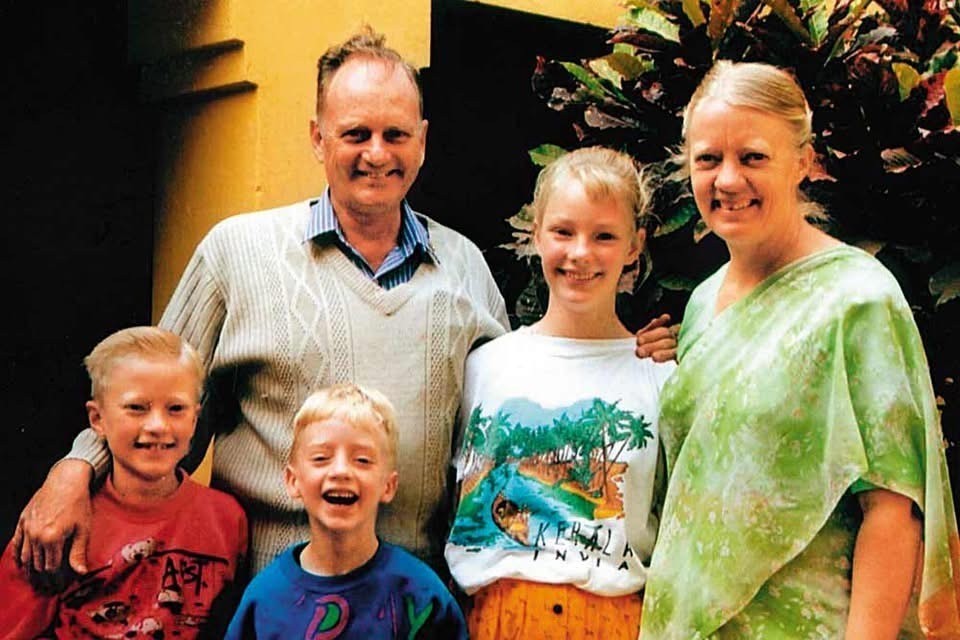
The killing was condemned worldwide. India’s own president, K.R. Narayanan, called it a monumental aberration of a long tradition of tolerance and said it belonged to “the world’s inventory of black deeds.”
India’s embassy in Washington circulated the phrase to assure Americans that the republic itself was appalled. Graham Staine’s widow, Gladys, publicly forgave the killers, stayed on to continue the leprosy work, and was later honored by the Indian state.
Twenty-seven years on, the man who led that mob is close to walking free. Odisha’s State Sentence Review Board has recommended the premature release of Rabindra Kumar Pal, known as Dara Singh, on grounds of good conduct, and the Supreme Court has told the state to decide by August 19. He has expressed remorse. He says he acted in a fit of rage.
I do not question the remorse. I question the rage.
A fit of rage explains a man who strikes. It cannot explain a crowd that surrounds a vehicle with two sleeping children inside and holds them in the fire. That takes something no individual temper can supply: a shared and patiently cultivated conviction that the people in the car were enemies of the nation. That conviction had a content, and the content was a lie — that Christians in India exist to erase cultures and harvest souls by fraud and force.
The lie did not survive contact with evidence. The judicial commission headed by Justice D.P. Wadhwa found no evidence that Staines had been engaged in forced conversion. Yet the government of the day did not dismantle it. It called instead for a national debate on conversions, treating the murderers’ pretext as a reasonable question. The pretext outlived the crime. It is with us still.
In the south and the northeast, where Indian Christianity is oldest, whole cultures have carried on intact — language, kinship, music, dress, cuisine, festival. Kerala’s Christians are Malayali. Nagas remain Naga and Mizos Mizo. Nothing was erased, because Christianity is not a culture. It is a faith and a way of life, carried for 2,000 years in Greek, Syriac, Tamil, and Malayalam without dissolving any of them.
The demonology has an intellectual source. M.S. Golwalkar, the Hindu nationalist movement’s second and most formative chief, wrote in 1939 that non-Hindus in India might remain only by claiming nothing and deserving no privileges. The organization now says the book does not represent its views, and has never said what replaced it. Those formed in that worldview transfer their anger easily from one designated enemy to the next: Muslims first, Christians after.
The last 12 years have made this worse. In West Bengal, where the Bharatiya Janata Party took power this spring, Christian bodies documented a wave of intimidation within weeks. Prayer meetings stormed, Bibles seized, a widow in Murshidabad pressed to give up her house for a temple, women interrogated over the bangles they wear. On June 27, a bishop of my own church movement, Bishop Anil Bhowmick, was dragged out of a prayer meeting in Arambagh and beaten, his clothing torn and the cross pulled from his neck. He was then taken to a police station and accused of conversion by the men who had assaulted him.
They produced no evidence of fraud or coercion. They did not need to. The accusation is the instrument.
A dozen states now have anti-conversion statutes. The violence does not begin when such a law is enforced but while it is being made, in the rhetoric that produces it. They invert the burden of proof on the most intimate decision a person can make, and no court has struck them down.
Genocide Watch has warned since 2002 that the early stages of the process are present in India. Its founder, Gregory Stanton, is careful to say genocide is not underway, and equally careful that if it comes, it will not be the state that commits it but mobs. My fear is for the small, poor congregations of north India, where the police already stand and watch.
India’s judiciary should act on its own motion, suo motu, on these laws and on the mounting reports of attacks against Christian nuns, schools, and hospitals. The constitutional questions are not obscure, and delay is not neutral.
One last fact from Manoharpur. When Staines was killed, roughly 22 households there were Christian. Today there are about 50. No one forced them. There is no money in it, no advantage, and, in today’s India, there is considerable risk. They chose, for their own reasons, as free people may. That is freedom of conscience, and Article 25 of India’s constitution places it beyond the reach of the state and of the mob.
Dara Singh may well be sorry. The societal extremist groups that formed him, however, have not repented.
Archbishop Joseph D’Souza is an internationally renowned human and civil rights activist. He is the founder of Dignity Freedom Network, an organization that advocates for and delivers humanitarian aid to the marginalized and outcastes of South Asia. He is archbishop of the Anglican Good Shepherd Church of India and serves as the President of the All India Christian Council.