A committee comprising three senior Iraqi figures is close to finalizing an “executive plan” to disarm factions within the Popular Mobilization Forces (PMF) that enjoy support from Iran, Asharq Al-Awsat reported on 8 May.
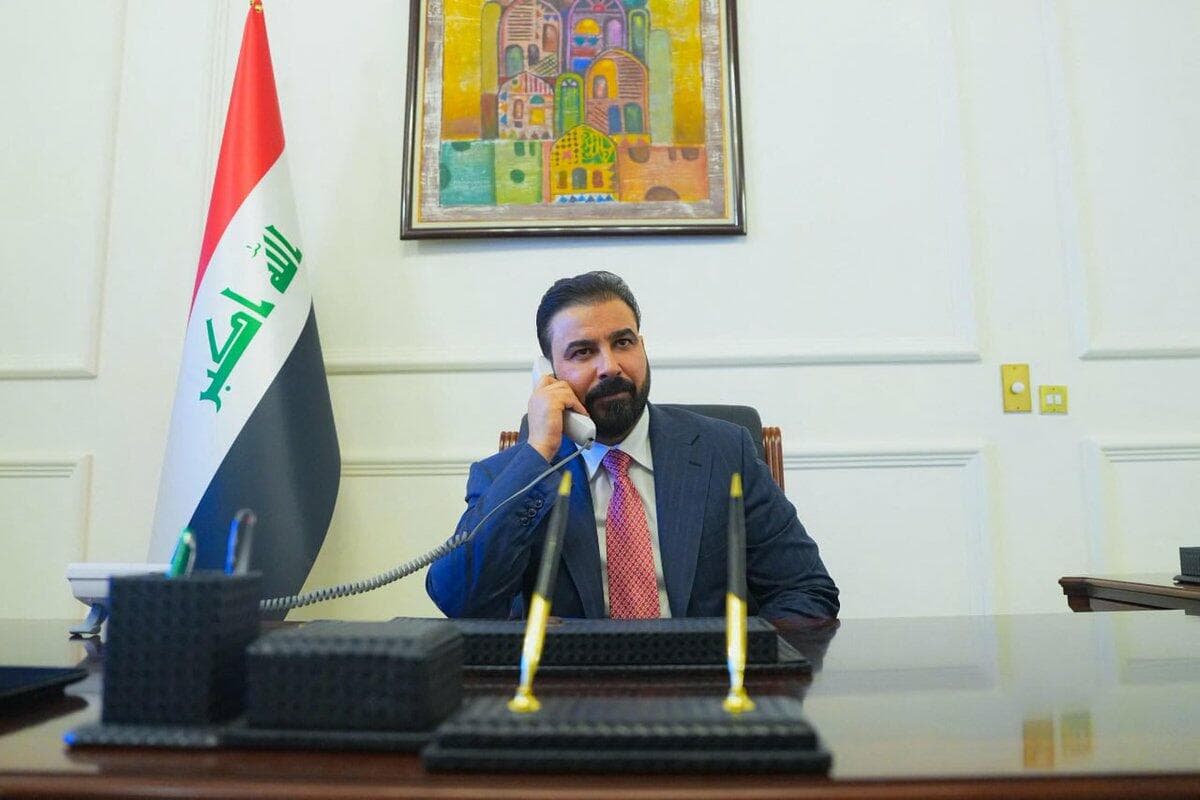
Development of the plan, which will be presented to US officials in the next few days, comes amid expected changes to the leadership of key security agencies under the incoming government of Ali al-Zaidi.

Zaidi was nominated by the Shia-majority Coordination Framework (CF) political bloc on April 27 as the consensus candidate to succeed Prime Minister Mohammed Shia al-Sudani. According to sources speaking to the Saudi newspaper, the three-member committee includes Zaidi, Sudani, and the leader of the Badr Organization, Hadi al-Amiri.
Washington has intensified pressure on Iraq’s ruling Shia political parties to disarm the anti-terrorist militias and prevent their representatives from participating in the new government.
The sources revealed that the committee has held secret negotiations with leaders of the factions, providing their leaders with “ideas on how to disarm and integrate fighters.”
Sources told Asharq Al-Awsat that the Badr Organization leader Amiri, who enjoys close relations with Iran, “was supposed to help build trust with the factions and persuade them to engage with the state.” However, some meetings “did not proceed calmly” due to the request to disarm.
A spokesperson for one faction within the PMF said that Kataib Hezbollah, Kataib Sayyid al-Shuhada, and Harakat al-Nujaba rejected handing over their weapons to any party whatsoever. The spokesperson, who spoke on condition of anonymity, said the three factions were “prepared to pay any price resulting from their refusal to disarm.”
The PMF were created in 2014 with support from Iran’s Islamic Revolutionary Guard Corps (IRGC) Quds Force to fight ISIS and were later formally incorporated into the Iraqi armed forces.
During the war between the US and Iran that began on 28 February, the US air force bombed PMF positions across the country, while the resistance factions carried out drone attacks against US bases in the Iraqi Kurdistan Region (IKR) and the US embassy in Baghdad.
In a phone call last Wednesday, US Secretary of War Pete Hegseth reportedly told Zaidi that Washington that the legitimacy of his incoming government would depend on its ability to distance the armed factions from the apparatus of the state.
A senior political official told Asharq Al-Awsat that the three-man committee had, under mounting US pressure, accelerated its work in recent weeks to disarm the factions. The official added that the executive plan included restructuring the PMF and ensuring it hands over its heavy and medium weapons, while the US is pressuring Baghdad to disband the PMF entirely.
Asharq Al-Awsat reported that former US General David Petraeus may visit Baghdad this week to ensure that “the new government fully severs its ties with the armed factions.
Petraeus, who holds no formal government position currently, commanded the 101st Airborne Division during the 2003 invasion that toppled the government of Saddam Hussein. He later became CIA director, overseeing the covert war in Syria in partnership with Al-Qaeda.
In 2004, he worked with some of the leaders of the Iran-backed armed factions, including Hadi al-Amiri, to establish a new Iraqi police force after Iraq’s army and police were disbanded by the US occupation head, Paul Bremer.
Iraqi police commandos operating under Petraeus and Iraq’s Ministry of Interior, in particular the Wolf Brigade, were known for abducting, killing, and torturing Sunni Muslims. Some of the police commandos were trained by US commander James Steele, who was known for running death squads in El Salvador in the 1980’s.

On Friday, Republican Party member Malik Francis told Shafaq News Agency that the US administration “appears so far to be cautious in its dealings with Ali al-Zaidi, but it is not showing a direct hostile stance towards him.”
Francis stated that Washington is not yet giving Zaidi a “blank check,” but at the same time, it is not treating him as an adversary. On Thursday, the US Treasury Department announced it had imposed new sanctions on a list of Iraqi individuals and companies for their alleged connection to Iran.
Politicians from the CF said the sanctions may have been intended to “block undesirable nominations” to posts in the new government and “steer the process toward other candidates.”
The PMU factions are reportedly exploring the possibility of avoiding direct participation in the new government, while backing figures described as independent for ministerial positions to maintain indirect influence over those posts.