Judith Moritzand
Daniel Wittenberg,BBC Panorama

 BBC
BBC
Amanda has been at the centre of her local community for years, as a volunteer and a governor at her two children’s school in a quiet London suburb. But over the past two years, she says simply going about her daily life has brought her abuse. She has been spat at in the street, branded a “baby killer”, and received a death threat, she says, all because she is Jewish.
Until recently, Amanda, 47, always openly wore a Star of David pendant around her neck. The Jewish symbol is a proud part of her identity and she had never thought twice about displaying it. Now, she tells BBC Panorama, she is afraid it marks her out as a target.
“It’s hard to be openly Jewish sometimes in everyday life,” she says. “Living in the UK now for Jewish people is very uncomfortable.”
In a WhatsApp group of about 20 of her Jewish friends – many of them children or grandchildren of refugees from the Nazis, who once saw the UK as a haven from antisemitism – she says conversations have shifted from neighbourhood chat to more existential questions.
“There aren’t any Jewish people I know that haven’t got plans to leave,” says Amanda. “The first thing we all talk about is: What is the exit plan? Where are you going? What will you do? When will you be going? Or they’re already moved or moving.”
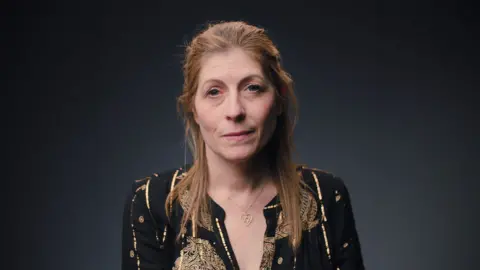
Amanda describes herself as Modern Orthodox – a section of Judaism that seeks to uphold Jewish traditions and laws, but with active engagement in the modern world.
While her WhatsApp group is not a representative sample of all Jews in the UK, Amanda says people in it are considering emigrating within the next few months, along with their families – mainly to Israel.
They are not alone. More British Jews have moved to Israel in the past 12 months than in any other year since the turn of this century, Israeli government migration statistics show.
There are peaks and troughs, and although the overall numbers moving to Israel are relatively small – 742 out of an estimated 300,000 population – that is double the number in 2023, the year of the Hamas-led attacks on 7 October and the Israeli military action in Gaza that followed.
And a recent survey by the Institute for Jewish Policy Research (JPR), shared exclusively with BBC Panorama, suggests antisemitism is pushing about one in five British Jews to think about leaving.
Amanda says growing fears about safety make life in the UK feel increasingly unsustainable for Jewish people.
When she tried to organise an event last year to celebrate the festival of Hanukkah for her community, Amanda says the venue she had booked cancelled at the last minute, citing security concerns following the deadly mass shooting at a Hanukkah party on Bondi Beach in Sydney.
Excluding Jews “doesn’t make us any safer”, she says. “It just removes us from life.”
 AFP via Getty Images
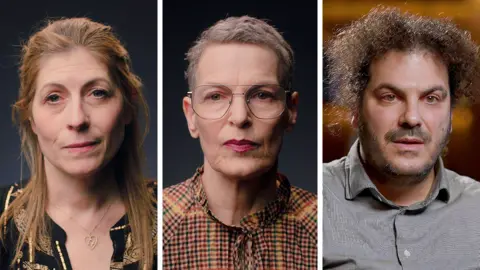
Amanda is one of more than a dozen Jewish people from a range of UK communities who have spoken to Panorama – including an NHS midwife, a student and a musician who was kidnapped.
They describe a rising undercurrent of antisemitism across society. Police and policy experts tasked with tackling antisemitism believe this has helped create the conditions for the most serious anti-Jewish hate crimes in recent British history, including the Manchester synagogue attack that left two men dead.
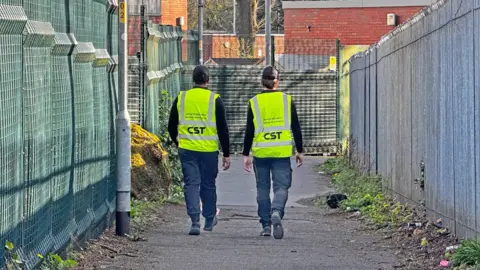
Last year, it received 3,700 reports of incidents of malicious acts aimed at Jewish people or organisations, it says, more than 10 a day – making the annual total second only to 2023, when there were almost 4,300.
 CST
CST
The Muslim community was the most targeted group with 4,478 cases – including a spike in Islamophobic hate crimes following the Southport knife attack.
However Jewish people, with a much smaller population, experienced more than eight times as many hate-crime incidents per head of population as Muslims.
Laura, 62, a midwife in London, says she feels unsafe going to work.
She has spent years campaigning for more culturally sensitive maternity care for Jewish mothers, including educating NHS staff on antisemitism. But following a number of incidents where doctors have been suspended and struck off over antisemitic remarks, she is worried some wards have become less safe for Jewish staff.
“I think it’s very hard to be openly Jewish in the NHS without feeling a degree of fear and that you may not be psychologically safe with some of your colleagues,” she says.

Laura posts about her work on social media and says she has also experienced personal abuse online – directed towards her and other Jewish midwives.
“I’ve been called racist. I’ve had various sort of slurs. I’ve been called a Zio.”
Zio is a pejorative abbreviation for Zionist.
“There are also Nazi-type tropes – that kind of inversion is incredibly distressing.
“All I’ve been trying to do is explain what the Jewish experience is, living through these very tumultuous times.”
Avital, 21, who studies at a university in the north of England, says some of her friends have had to leave their accommodation because of comments made by flatmates.
“It’s creating an environment where Jewish students are isolated from others purely because of the fact they are Jewish,” she says.
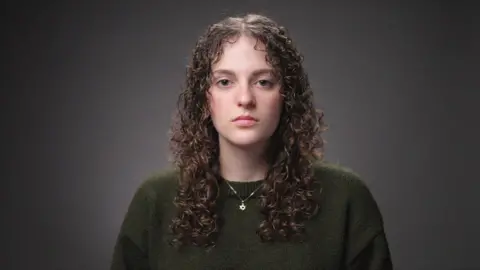
Avital organises events for her university’s Jewish Society and says she finds it depressing that their social events require security.
“When we host a party with drinks and music, which is meant to be entirely fun, a number of students have to stand outside with stab-proof vests and count the number of people going in and make sure that no-one’s trying to bother what is essentially a student house party.
One of the more extreme examples of antisemitic attacks was the kidnapping of London-based Israeli record producer Itay Kashti.
In 2024, Itay received an email from what looked like a record company inviting him to a songwriting camp at a property in the Welsh countryside.
When he arrived in a taxi, the driver helped him in with his luggage, at which point they were both attacked by three masked men. The driver managed to get away, but Itay was handcuffed to a radiator. He eventually managed to free himself and escape.
“I went out of the cottage and I was covered in blood and my shirt was completely torn,” he recalls.
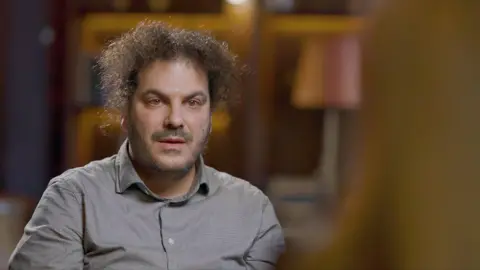
The taxi driver had alerted police, and three men were arrested. All three pleaded guilty to kidnap and were each jailed for eight years and one month.
The judge said Itay “was targeted due to his Jewish heritage”, with the kidnappers “motivated by events taking place elsewhere in the world”.
Itay says “there’s a lot of prejudice against Jewish people in general, and Israel in particular”.
“People may like or not like their politics in the same way I don’t like the politics in Israel,” he adds. “You can like or dislike the politics of the country. But it doesn’t mean you need to judge the individual people that come out of it on that basis.”
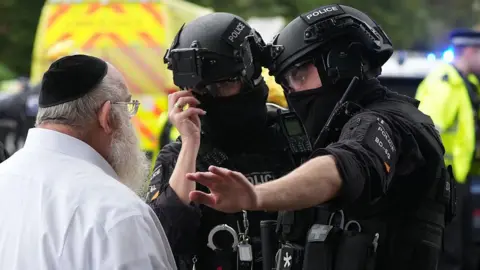
Cases like Itay’s are extreme and rare – but there are fears antisemitism is being normalised and that, in turn, could pave the way for serious violence, even terror.
 Getty Images
“I think that hatred in the public sphere towards Jews has made them more acceptable as a target for terrorism,” says Jonathan Hall KC, the government’s independent reviewer of terror legislation.
“The whole debate between freedom of speech and preventing hate cuts to the heart of what the government is now considering.”
Hall says existing laws are adequate and the challenge is for the police and Crown Prosecution Service to enforce them. There has been, he says, “undue caution”.
Laurence Taylor, head of Counter Terrorism Policing, told Panorama he was “acutely aware” of concerns from members of the Jewish community and “where people do break the law, we will put all our investigative effort into dealing with that”.
Tens of thousands of people, including some Jews, have taken to UK streets to protest against Israeli military action in Gaza and show support for Palestinians.
Some chants and placards have left many British Jews feeling under threat. According to some protestors, the phrase “Globalise the Intifada” is a call for an uprising against injustice. But for many Jews, it is seen as a call for violent action against them wherever they are.
Since 2023, more than 3,500 people have been arrested on pro-Palestinian protests and marches, nearly 3,000 of them in London, according to the Metropolitan Police.
The Palestine Solidarity Campaign (PSC) and the Stop the War Coalition have helped organise many of the marches. The PSC said in a statement, endorsed by Stop the War, that it “unequivocally condemns antisemitism, Islamophobia and all forms of discrimination” and it rejects “any suggestion that [its] marches constitute harassment of Jewish people”.
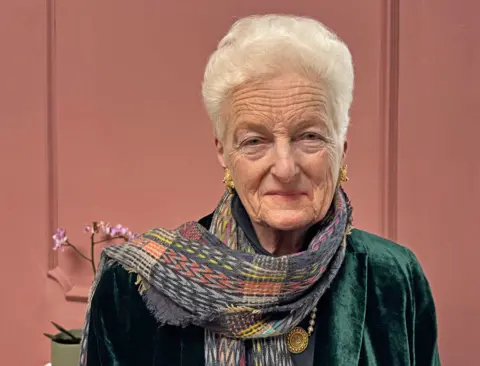
Community leaders from the Jewish faith and other religions agree on the importance of interfaith dialogue, but say this has become a lot more difficult since the the Hamas-led attack on southern Israel on 7 October 2023.
About 1,200 people were killed and 251 others were taken hostage. Israel responded by launching a military campaign in Gaza in which more than 72,330 people have been killed, according to the territory’s Hamas-run health ministry.
“I think a lot of Jews are quite frightened of making those relationships with Muslims and Christians. People are more worried about security,” says Baroness Julia Neuberger, who was ordained in 1977 as the second female rabbi in the UK.
“And the other thing is that I think there’s increasing nervousness, unwillingness, unhappiness, particularly amongst Muslims, but to some extent amongst Christians too, about entering this dialogue, because they don’t know what to do.
“Are they supposed to talk about Gaza? Are they not supposed to about Gaza? How do you deal with all of that?”
 Getty Images
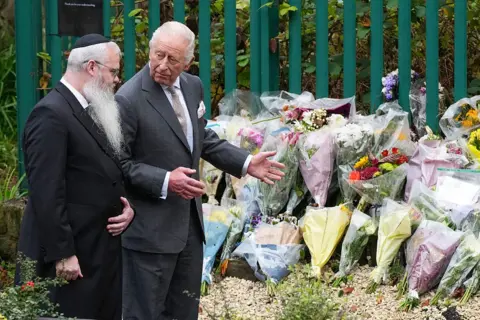
Daniel Walker, the rabbi of the Heaton Park synagogue in Manchester which was attacked last October, stresses the importance of dialogue between those of different faiths and perspectives.
“One of the beauties of our society was that we believed that we had the right to have hugely different opinions, to disagree entirely over very fundamental things, and yet still to do so with respect and with tolerance. I think we’re losing that as a society as a whole.”
However, while many Jews are mulling whether they see their futures in the UK, Rabbi Walker, remains hopeful.
“Whilst recognising that things are not OK, I am relentlessly positive,” he says.
“I’m often called naïve for that. But that’s what I believe, and I believe my personal experience and my community experience bears that out.
“There are lots of good people in this country, in our society, and I choose to believe… that society will become a better place.
“I’m going to pray that I’m right.”