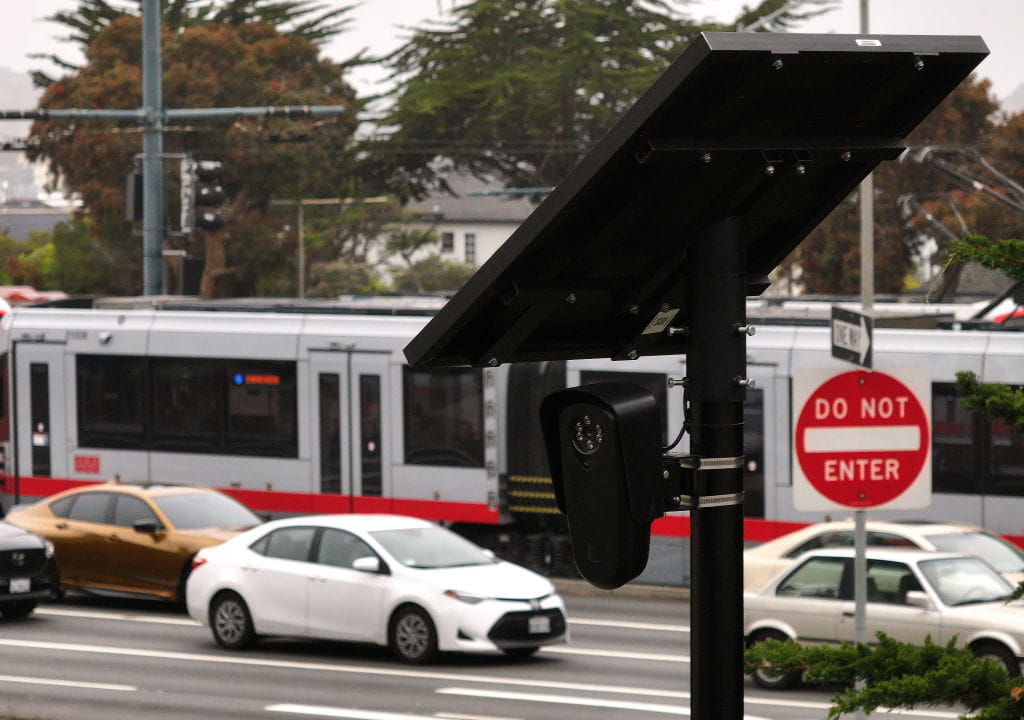
How much privacy should Americans give up in exchange for helping law enforcement solve crimes? License plate readers are a primary subject of debate because supporters say they catch dangerous criminals while critics argue they quietly create a database of innocent people’s movements. But does technology change what the Fourth Amendment protects, and can privacy protections exist without eliminating a valuable crime-fighting tool?
Automated License Plate Readers (ALPRs) aren’t new, but they continue to face increased scrutiny and attention. They “capture computer-readable images that allow law enforcement to compare plate numbers against plates of stolen cars or cars driven by individuals wanted on criminal charges,” the National Conference of State Legislatures explained. “The devices are mounted on police cars, road signs or traffic lights and capture thousands of images of plates.” Furthermore:
“The data collected can enhance law enforcement’s ability to investigate and enforce the law, but also raise concerns that the information collected may be inaccurate, placed into databases and shared without restrictions on use, retained longer than necessary, and used or abused in ways that could infringe on individuals’ privacy.”
According to a 2020 article from the Brennan Center for Justice, 83% of US adults drive a car at least several times a week. Harvard Law Review explained that “law enforcement scanned 2.5 billion license plates, 99.5% of which belonged to vehicles unassociated with criminal activity” in 2016 and 2017.
The Privacy Argument
Most privacy advocates aren’t against using license plate cameras to catch dangerous criminals. If police are searching for a kidnapper, a murder suspect, or a stolen vehicle, many people agree that the technology can be a valuable tool. Their concern isn’t about catching criminals; it’s about what happens to everyone else’s information.
The Federalist Papers
Unravel the Constitution
Hamilton, Madison & Jay’s complete case for America, free and searchable in the Publius Reader.
- All 85 essays, full original text
- Search and jump to any paper
- Read on your phone or desktop
Join the free Daily Briefing and your reading link arrives in your inbox.
Free with the Daily Briefing. Unsubscribe anytime.
Every day, ALPR cameras record the license plates of millions of drivers who have done nothing wrong. Over time, those scans can create a detailed record of where people go and when. Maybe it’s your weekly church service, doctor’s office visit, political gathering, or even your date night. One trip doesn’t reveal much, but hundreds or even thousands of trips collected over months or years can paint a detailed picture of someone’s personal life.
The legal understanding of this is called the “mosaic theory” of the Fourth Amendment. Imagine putting together a jigsaw puzzle. One piece by itself doesn’t tell you much, but as more pieces are added, the full picture becomes clear. The theory works the same way. A single camera scan of your license plate may not invade your privacy, but thousands of scans collected over time might.
Michigan Law Review explained this using the case of United States v. Jones, in which the judges worked to interpret the Fourth Amendment.
“Before Jones, Fourth Amendment decisions had always evaluated each step of an investigation individually. Jones introduced what we might call a ‘mosaic theory’ of the Fourth Amendment, by which courts evaluate a collective sequence of government activity as an aggregated whole to consider whether the sequence amounts to a search.”
Critics worry about how long the information is kept and how the images will be used. For example, will there be data sharing among agencies? Other concerns include misuse by unauthorized employees, indefinite storage, and government monitoring without suspicion.
The Law Enforcement Argument
License plate readers are simple in concept. As cars drive by, the cameras automatically snap a photo of the license plate, record where and when the vehicle was seen, and compare that information against law enforcement databases. Some systems also note details such as the vehicle’s make, model, and color to help officers identify the correct car.
Police say this technology has become an important crime-fighting tool. It can quickly alert officers when a stolen vehicle passes by, help locate missing people or kidnapped children, identify vehicles connected to wanted suspects, find cars linked to Amber Alerts, and even provide leads in hit-and-run crashes. Supporters often point out that the cameras are simply doing what an officer standing on the side of the road could do: read license plates that are already visible to the public. The difference, critics note, is that an officer isn’t likely to remember every car that passes by or keep a searchable record of millions of innocent drivers.

How well do these license plate cameras work? The 2025 San Diego surveillance report found that the system assisted in about 600 criminal investigations leading to more than 400 arrests. It helped locate more than $6 million in stolen property, recover more than 440 stolen vehicles, and contribute to six homicide arrests, four of which would likely not have been solved without the cameras, police claimed. Washington State’s 2024 annual report, covering September through December, showed that the ALPR cameras helped to find 57 stolen vehicles, make 74 arrests, and locate two missing persons.
Research shows that license plate cameras have resulted in higher arrest rates. A 2025 peer-reviewed study by Taylor & Francis found that patrol officers using the system were two to three times more likely to make arrests and recover stolen vehicles than those without the technology.
The debate has grown more heated in recent weeks after a Virginia Air Force engineer was charged with allegedly destroying multiple license plate reader cameras because he believed they were unconstitutional. Hundreds of people donated to his legal defense, highlighting just how divided Americans have become over the balance between public safety and personal privacy.
The Constitution protects Americans against unreasonable searches and seizures, but the Fourth Amendment was written in a very different era. The Founding Fathers could never have imagined technology capable of recording millions of vehicles each day. As a result, license plate readers have become more than a law enforcement tool. They have become part of a larger Fourth Amendment debate over when protecting the public begins to look like an invasion of privacy.
Dig Deeper Into the Themes Discussed in This Article!
Liberty Vault: The Bill of Rights