This article is part of Upstream, The Daily Wire’s new home for culture and lifestyle. Real human insight and human stories — from our featured writers to you.
***
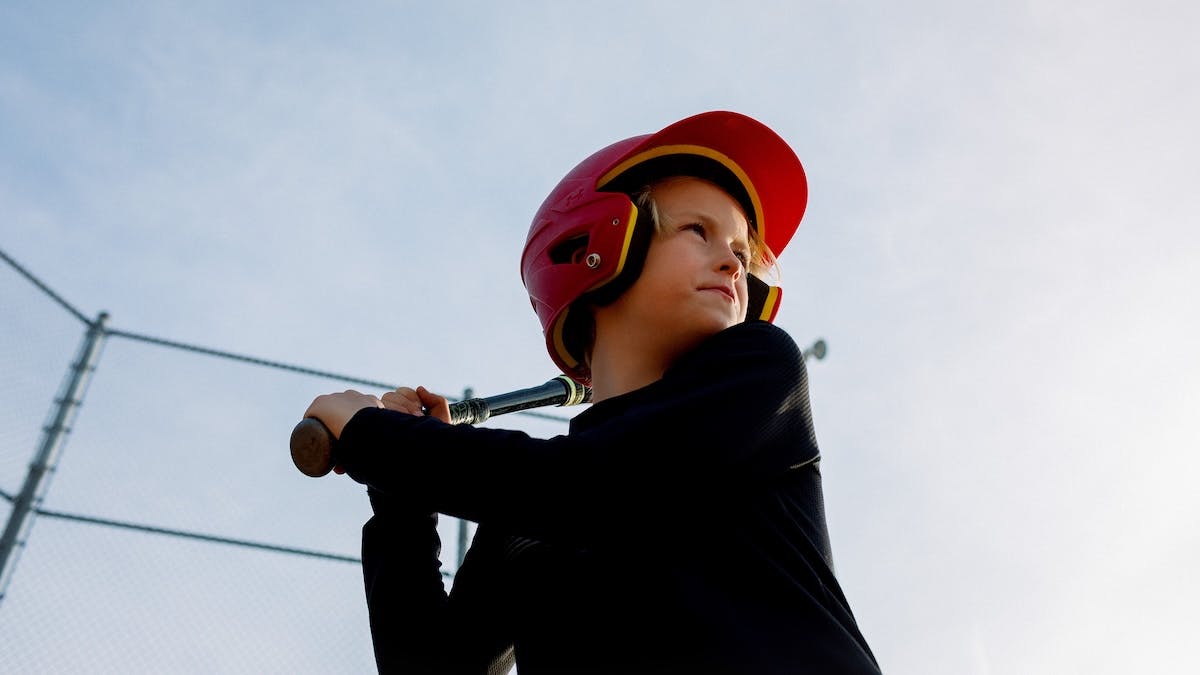
I coach Little League Baseball with one of my best friends, “Barney.” Before I considered him a friend, he played 10 years of pro ball. Shortly before our first practice this year, he called a coaching staff meeting. This would be the first season of kid-pitch, and the intensity would be different than in years past. This is the same guy who puts six hours of effort into compiling stats and providing each kid with a customized report on what he did well and what he needs to work on at the end of the season.
So, I leaned in when he announced we would have a coaching mantra for this season: “Make every kid want to come back tomorrow.” That was it. Meeting over. While I expected notes on mechanics, technique drills, and precision, instead, I got a lesson in the emotional experience.
The only kids who get good at baseball are the kids who keep playing baseball. And the only kids who keep playing baseball are the kids who love it. If you love something, you come back to it. Tomorrow.
While I am on the more intense end of the spectrum when it comes to my kids’ activities — youth sports led to me being a college athlete — over the years, I have become observant of the culture that has changed so much since my childhood. In modern youth sports, so many adults become obsessed with performance before kids ever fall in love with the game.
As a conduit between the parents in the stands and the kids on the field, I have to be aware of this, whether or not it is my approach. Thus, my expectation for this season was that I was here to teach baseball. What I learned instead was that if a kid quits, none of the instruction matters. So before we taught a kid how to throw from the mound, we vowed to teach him to enjoy showing up.
Now, all this is admirable in theory. But for many kids, including my son, winning is always the most “fun” part. And we were far from winning form at the start of the year. We began the season with multiple first-year ballplayers, but if I’m being honest, some of our veterans looked like rookies. Errors were abundant, our best sluggers were going down looking, and for the life of us as coaches, we couldn’t convey what a cutoff man’s job was.
After a 1-2 start, a little luck allowed us to win our fourth by one run. The dugout floor was damp with tears more than once.
Up to this point, we had yet to lock our kids into their best positions. Every team has that star shortstop, stud pitcher, and big first baseman. But if a kid lived in right field all season, would he want to “come back tomorrow”?
The easy approach would have been to panic and optimize. Lock everyone into their primary positions and prioritize winning immediately. But were we going to emphasize short-term efficiency, or continue to develop our kids over the course of the season? In a culture obsessed with early specialization, we chose patience.
We learned something else along the way. Fun doesn’t have to be a distraction from learning. In fact, with 8-year-old boys in the Florida spring sun, fun should be encouraged. Practices started with water balloon fights and ended with everyone competing for the fastest throw on the radar gun. This wasn’t unserious coaching. It was an understanding of childhood. Eight-year-olds don’t learn well when they are terrified of disappointing adults.
After the slow start, we sat the team down at Monday’s practice. Barney brought a picture from his time with the Brewers. In the clubhouse, a sign reads, “Effort Knows No Score.” He then gave a talk about effort and attitude being the only two things we can control. Wins and stats are outcomes. Effort and attitude are inputs. Choices. The two things we can control. We made each player vow to bring those two things to the field every day.
We immediately noticed the results. Kids were showing up early, asking for extra time in the cage; team chemistry was improving (watching two eight-year-olds at shortstop and second base communicate on a double-play is pretty darn cool). The point is, the transition started internally before it showed externally. The season turned on a dime.
The season ended with us riding a 9-game winning streak into the championship. That day began with me being awoken at 6 a.m. by my son, completely dressed in his uniform, asking if we could head to the cages two hours early to “warm up.” This is the kid who wasn’t sure if he wanted to sign up for this season.
We headed into the last inning down 4-1. The bats were ice cold. Adversity had hit us for the first time in a long time, and you could feel the pressure in the dugout. This would be our ultimate test: What does effort and attitude look like when things finally go wrong again?
What it looked like for us was our left-fielder, who was 0-6 in the playoffs, hitting a leadoff triple, followed by our right-fielder, who had learned how to swing a bat three months prior, following on with a double to spark a rally to send us into extra innings. My son, who is no Aaron Judge, smacked one down the line too for his first hit of the game.
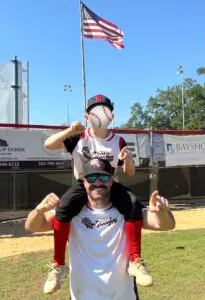
Photo courtesy of Gates Garcia
We won by one run in extra innings and were crowned champions. But “championship” is too small for this team. The championship became evidence of something larger. It was proof of what kids become when adults create environments where effort matters, failure is survivable, joy exists, belief is constant, and toughness is encouraged without humiliation.
I entered the season thinking my job was to help boys become better at baseball. I left realizing my real responsibility was to help shape how they experience challenge, failure, teamwork, accountability, and belief in themselves.
My son was in his uniform at 6 a.m., not because someone forced him — I was asleep. Not because of pressure — I was in no rush to be there that early. But because he had fallen in love with the process, and that goes for both of us.
At the end of every season, Barney defines the success of the season on one metric. How many of our 12 players are going to sign up again next year? While our record on the field was 18-3-1, we know we really went 12-0.
***
Gates Garcia is the host of the YouTube show and podcast We The People with Gates Garcia. Follow him on X and Instagram @GatesGarciaFL.