
 Reuters
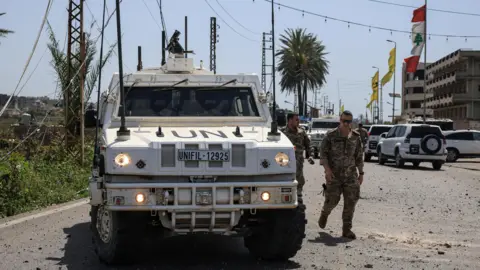
A French peacekeeper has been killed and three others wounded after a UN patrol came under fire in southern Lebanon, in what officials described as a deliberate attack.
The soldier was serving with the United Nations Interim Force in Lebanon (Unifil), which confirmed that one peacekeeper had died and three others were injured, two of them seriously, when their patrol came under small-arms fire.
French President Emmanuel Macron blamed the attack on Hezbollah. The Iran-backed armed group denied “any connection” to the incident.
It comes amid heightened tensions in southern Lebanon, where peacekeepers have faced growing risks since renewed fighting between Hezbollah and Israel erupted on 2 March.
A 10-day ceasefire between Israel and Lebanon came into effect on 16 April. The US, which announced the deal, urged Hezbollah to abide by its terms.
“Everything suggests that responsibility for this attack lies with Hezbollah,” Macron said.
“France demands that the Lebanese authorities immediately arrest the perpetrators and take their responsibilities alongside Unifil.”
France’s Armed Forces Minister Catherine Vautrin said the peacekeeper had been part of a mission to reopen access to a Unifil position that had been cut off by the recent fighting when it had been “ambushed by an armed group at very close range”.
Vautrin added that he was “hit immediately by a direct shot from a small arms weapon” and was pulled away by fellow soldiers, who were unable to revive him.
Unifil said the patrol had been clearing explosive ordnance along a road in the village of Ghanduriyah to reconnect isolated positions.
It said the team came under fire from what it described as non-state actors and condemned the attack as “deliberate”.
The Lebanese Armed Forces said the incident followed exchanges of fire with armed individuals, adding that it was co-ordinating closely with Unifil during what it described as a sensitive phase in southern Lebanon.
Lebanon’s President Joseph Aoun condemned the attack and told Macron during a phone call that those responsible would be brought to justice.
Prime Minister Nawaf Salam has also ordered an investigation.
Hezbollah issued a statement on Saturday denying it was responsible, describing them as “rushed” and “baseless accusations”.
It called for “caution in making judgements and assigning blame regarding the incident, pending the Lebanese army’s investigation to determine the full circumstances”.
The group urged both Unifil and the Lebanese army to continue co-ordinating with locals on manouevres “under these delicate circumstances”.
In late March, three Indonesian peacekeepers were killed in separate incidents – an explosion that destroyed a Unifil vehicle and a projectile strike a day earlier.
Unifil warned that under international law “all actors” were obliged to ensure the “safety and security” of UN personnel, adding that “deliberate attacks” on peacekeepers were “grave violations” of international humanitarian law and could amount to war crimes.
The peacekeeping force was first established in 1978 by the UN Security Council following Israel’s invasion of southern Lebanon, with a mandate to confirm Israeli withdrawal, restore peace and assist the Lebanese government in regaining authority in the south.
Its role was expanded after the 2006 war between Israel and Hezbollah, when Security Council Resolution 1701 strengthened its responsibilities in monitoring the ceasefire along the Blue Line – the de facto border between Lebanon and Israel – in co-ordination with the Lebanese army.
More than 330 peacekeepers have been killed since the mission was established.