This article is part of Upstream, The Daily Wire’s new home for culture and lifestyle. Real human insight and human stories — from our featured writers to you.
***
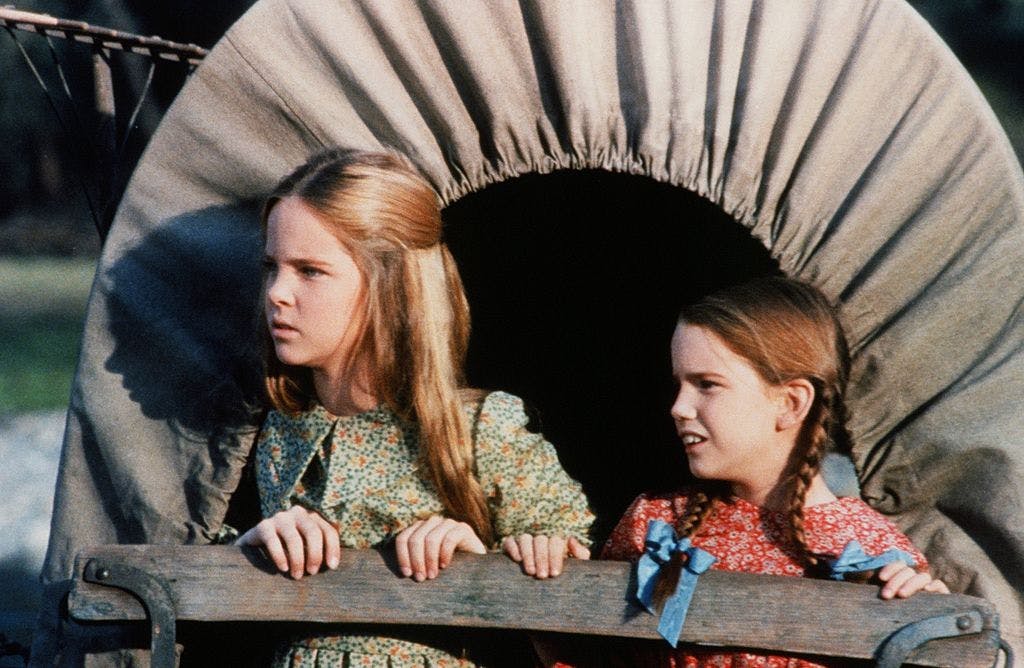
Laura Ingalls Wilder fans, myself included, have awaited Netflix’s new version of her iconic “Little House on the Prairie” story with both trepidation and tempered excitement. When the show airs on July 9, will it be a close adaptation to the novel? Will it incorporate more of the history of the real Ingalls family? Will it resemble the 50-year-old series directed by and starring Michael Landon?
As a scholar of both Laura Ingalls Wilder and her daughter Rose Wilder Lane, I’ve placed my cautious hopes on fidelity to the books with inclusions of details from real life that Wilder chose to leave out of her novels. Netflix’s teaser for its new version of “Little House on the Prairie,” released Monday, provides enough tantalizing scenes to make both fans of the books and fans of the original series wonder about the show’s direction and overall vision. It’s an intriguing bite, promising some fidelity to the novel but also completely new story lines. Despite my personal preference for faithful book adaptations, I’m willing to give it a chance.
Here is your first official look at Little House on the Prairie.
Meet the Ingalls family as they discover what “home” really means. Little House on the Prairie, based on the beloved books, premieres July 9, only on Netflix. pic.twitter.com/epUjaJL3RG
— Netflix (@netflix) April 13, 2026
Appropriately enough, Laura’s voiceover begins with the same phrase that opens “Little House in the Big Woods,” the first novel in the autobiographical fiction Little House series, written by Laura Ingalls Wilder in 1932: “Once upon a time…” Beginning the novel and now the new series with these words evokes a fairy tale quality, which the video sequence and the music behind the words support. So far, so good. Laura’s voiceover offers a preview of the new series that is an apt summary of the book:
Once upon a time, Ma and Pa and Mary and Laura left the Big Woods of Wisconsin and moved to the prairie, where a new life was waiting for them. Every day and every night was an adventure. And even though they were all alone, and very small against the sky and the stars, they were happy because they were a family – and they were together.
The video sequence depicts the Ingalls family leaving the Big Woods by wagon, majestic scenes of a prairie with a river cutting through it, and a town teeming with people where the Ingalls girls, wearing straw hats, step out of their covered wagon and into the dusty streets. Laura exchanges glances with another child, perhaps meant to be from the Osage tribe, and Mary shares a longing look with a teenaged boy. Other scenes feature Laura and Pa running through a cornfield, Pa and Ma rolling a log, probably to build their cabin, and Pa joyfully swinging Ma around inside the completed “little house.” The emotional roller coaster continues as Pa looks at a distraught Ma with tears in his eyes and the girls giggle while wearing flower crowns. The final scenes show the Ingalls family around a campfire against the backdrop of an enormous Kansas sky filled with stars while Pa plays his fiddle. All in all, more positives than negatives.
The teaser is a complete package, introducing the characters, the story background, the location, and important themes of adventure, isolation (despite the town scene), family togetherness, and love. The music is fast-paced and vaguely 19th-century in tone, while the scenes form a rapid montage of both iconic and tantalizing images proclaiming that this version of “Little House on the Prairie” is something altogether new, neither a “by the book” rendition nor a reboot of the classic series that premiered in 1974 and lasted for 12 years.
Predictably, fans of both the books and the classic series have raised calls of alarm over the Netflix trailer and details that have leaked out. On the “Little House on the Prairie” Facebook group page, members declare their undying loyalty to the original series, expressing doubt that departing from Michael Landon’s story lines will benefit the new show.
Some posts declare it scandalous that the Olesons don’t appear to be part of the Netflix series. Never mind that the Oleson family is not introduced in the “Little House on the Prairie” novel, only in the following book, “On the Banks of Plum Creek,” where they own the town mercantile. A “Little House” show without Harriet, Nels, Nellie, and Willie is beyond imagination for Landon “Little House” loyalists, as is a town that is not Walnut Grove, Minnesota. But the original television series sowed the seeds of its fans’ confusion regarding the location and story line of the Netflix version of “Little House on the Prairie.” It used the title Wilder employed for her book about the Ingalls’ pioneer days in Kansas but centered the story on Wilder’s book about the family’s years along Plum Creek in southwest Minnesota, near the town of Walnut Grove.
Laura fans (many of whom happily call themselves “bonnetheads”) are hoping for a rendition of the story that runs much closer to the Little House books or the real lives of the Ingalls family than that offered by Michael Landon. However, the Netflix trailer appears to reveal a different intent. There are some bothersome inconsistencies with the novel. Netflix Mary’s hair is definitely not blonde. The girls should be wearing cloth bonnets, not straw hats. Their ages are all wrong, and where is Baby Carrie?
Both sets of Laura fans have missed the pivotal moment in cultural literacy that the Netflix series represents. The “Little House” story and characters have become so iconic since their first appearance in 1932 that the details of how the story is told can be changed without altering the characterization, the overarching story, and, most importantly, its themes or lessons.
The themes of all three “Little House on the Prairie” versions are the same: simple, family-focused pleasures and adventures in a new land of opportunity that will require hard work and perseverance from its new residents. In a speech to the Detroit Book Fair in 1937, Laura Ingalls Wilder explained her motivation for writing the Little House series. “I wanted the children now to understand more about the beginning of things, to know what is behind the things they see — what it is that made America as they know it.”
Based on the just-released teaser, Netflix’s version of “Little House on the Prairie” seems poised to tell Wilder’s story, though the strands it weaves together might not be the same ones used by Michael Landon in the original television series or by Wilder herself. Even for a purist like myself, Netflix’s new way of telling an old story might be just right.
***
Dedra McDonald Birzer is director and editor-in-chief at the South Dakota Historical Society Press and a lecturer in history at Hillsdale College. She serves on the executive boards of the Laura Ingalls Wilder Pageant Society and the Middle West Review. She is currently writing an intellectual biography of Rose Wilder Lane.