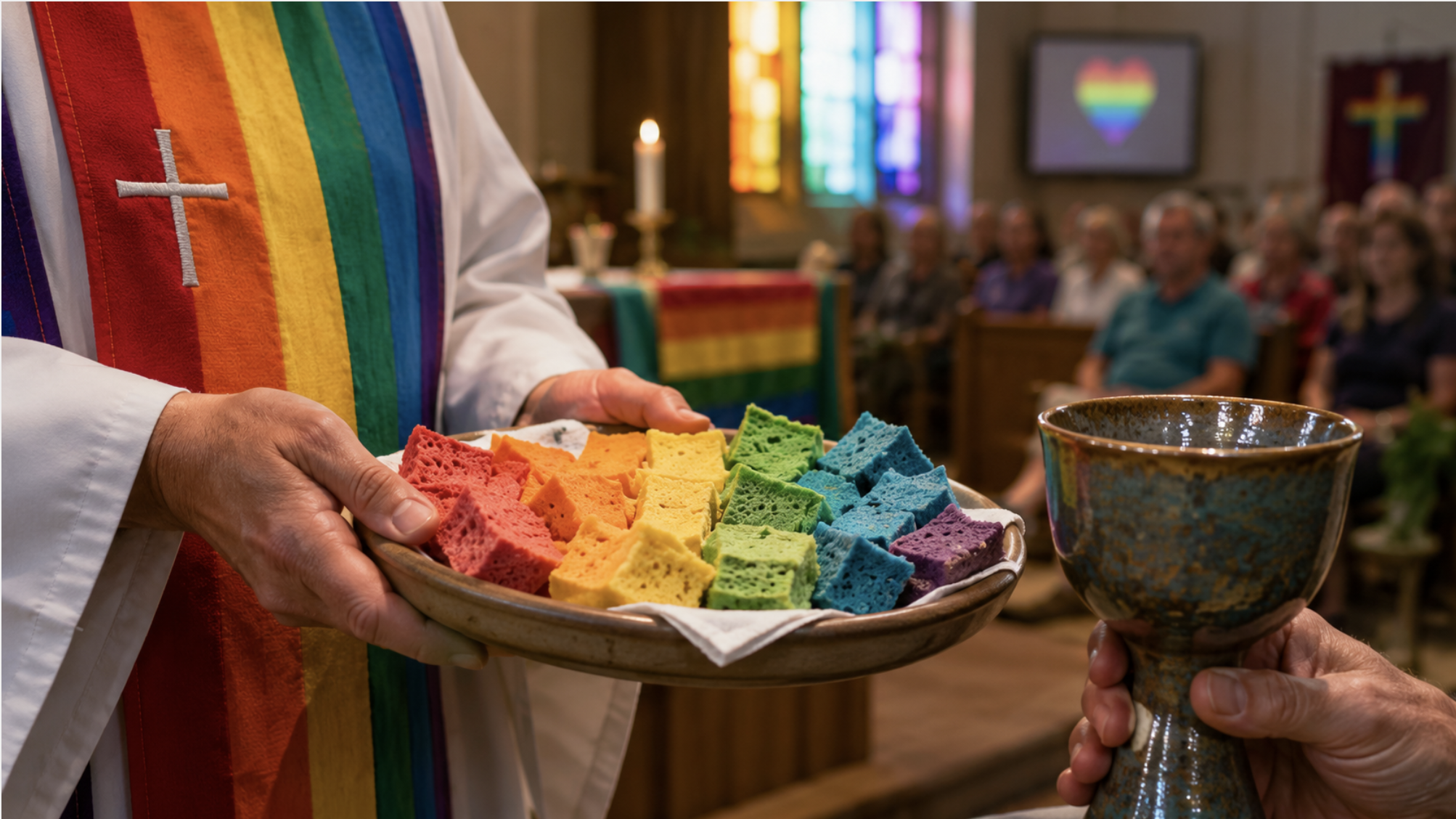
*Image generated by ChatGPT
According to a report from Prophecy News Watch, Christ Episcopal Church in Dayton, Ohio, has drawn sharp criticism after incorporating rainbow-colored communion bread into its recent Pride celebration. The move, intended to affirm and include LGBTQ members, has ignited debate over the sanctity of one of Christianity’s most revered sacraments.
The incident occurred as the church sought to celebrate diversity and welcome during the Pride observance. Instead of traditional plain bread symbolizing Christ’s body, congregants received loaves dyed in vibrant rainbow hues. Church leaders explained the choice as a gesture of inclusion for LGBTQ participants, but many believers viewed it as an inappropriate blending of sacred ritual with contemporary cultural symbolism.
For nearly two millennia, Communion has held a central place in Christian worship, directly tied to Jesus’ final meal with His disciples before the crucifixion. The bread and cup serve as powerful reminders of His sacrifice.
As the original reporting notes, Jesus declared of the bread, “This is My body, which is given for you. Do this in remembrance of Me.” This act was meant to focus solely on the cross and the redemption it offers, not to reflect shifting societal trends or affirm particular identities.
The controversy extends beyond a single congregation in Ohio, highlighting broader tensions within parts of the modern church. Critics argue that repurposing the communion elements to incorporate symbols strongly associated with the LGBTQ movement redirects attention from Christ’s atoning work toward human causes and celebrations.
“The issue here is not food coloring,” the report emphasizes. “The issue is what the rainbow represents.” For decades, the rainbow flag has served as the primary emblem of the LGBTQ movement, making its use in this context a profound shift in the ordinance’s meaning.
Scripture repeatedly cautions against conforming worship to surrounding cultural practices. Historical examples from ancient Israel illustrate how such adaptations often led to spiritual compromise rather than renewal. The article underscores that once sacred symbols are repurposed for contemporary messaging, it opens the door for any prevailing cause—whether political, social, or ideological—to claim space at the Lord’s Table.
Supporters of the rainbow bread frequently point to Jesus’ practice of welcoming sinners of all kinds, including tax collectors, prostitutes, and others.
The reporting affirms this truth but draws a clear distinction: Jesus’ welcome always paired with a call to repentance and transformation. To the woman caught in adultery, He said, “Neither do I condemn you; go, and from now on sin no more.” Grace and truth remained inseparable in His ministry.
The use of rainbow communion bread raises fundamental questions about the purpose of Christian symbols and ordinances. Throughout church history, believers have fiercely defended the integrity of worship, understanding that altering core elements risks diluting the Gospel’s focus on the cross. The bread and cup are intended to direct hearts toward Calvary, not toward self-affirmation or current cultural movements.

End Time Headlines is a ministry founded, owned, and operated by Ricky Scaparo, established in 2010 to equip believers and inform discerning individuals about the “Signs and Seasons” of the times in which we live. Ricky authors original articles and curates news from mainstream sources, carefully selecting topics, verifying information, and utilizing artificial intelligence tools to ensure content is both timely and accurate. Every piece is personally reviewed and edited by Ricky to align with the ministry’s mission of providing a prophetic perspective on current events.