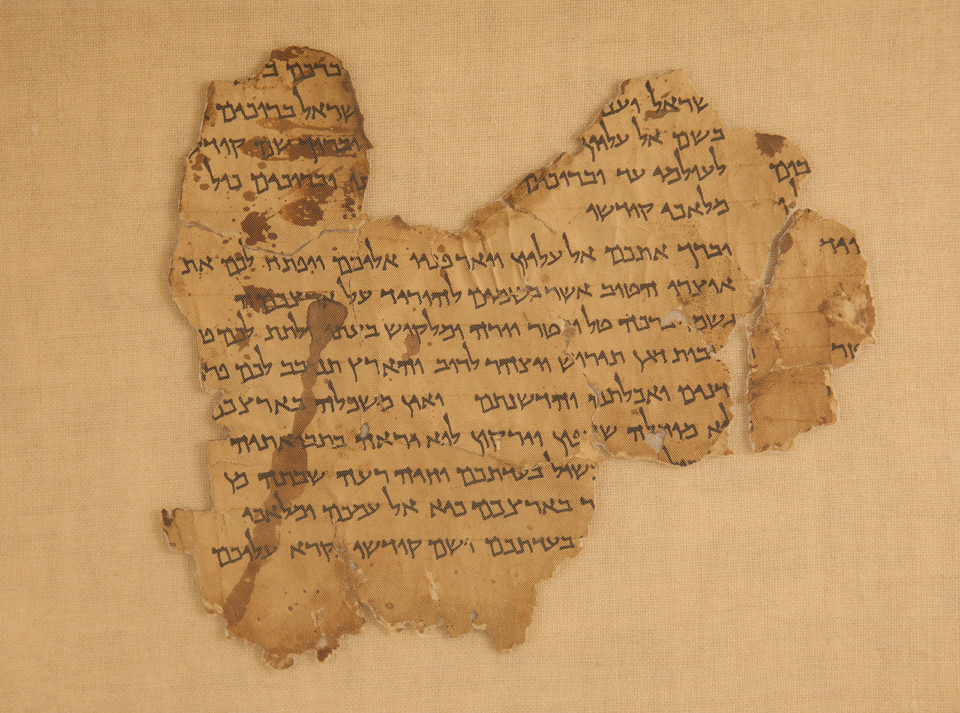
A five-year project examining the origins of the famous Dead Sea Scrolls is to begin, thanks in part to a 2.5 million euro grant from the European Research Council.
The scrolls were discovered in the mid-20th century and date back to the time of Jesus, with some being dated to the 3rd century BC. Many of the scrolls are copies of books included in the Old Testament. The scrolls represent possibly the most significant archaeological find in Christian and Jewish history as they confirm that the scriptures that have been in use for millennia are virtually unchanged from the time of Jesus and earlier.
The new research project will try to determine where the scrolls were created and what this might tell us about scribal culture and the transmission of knowledge in the ancient world.
The project is being spearheaded by Professor Mladen Popović of the University of Groningen, who will also be working with the Israel Antiquities Authority, who are custodians of the scrolls, and a range of other scientists and historians.
By using chemical analysis, AI, paleography, and codicology, the researchers hope to gain some insight into not only where the scrolls were produced, but why they were placed in the caves. Their research may help to answer the question of whether the caves were hiding places or simply low-tech libraries.
It is hoped that the project will allow for the mapping of over 25,000 scroll fragments, with the eventual aim being to place individual manuscripts and scribes by their geographical and chronological locations.
Professor Popović commented, “This is the largest research project to date to use artificial intelligence to investigate the cultural context of the Dead Sea Scrolls. These manuscripts provide an extraordinary window into the intellectual world of ancient Judea.
“By combining advanced laboratory analysis with the study of ancient handwriting and the remarkable advances in artificial intelligence made in recent years, we are now able to address questions that were previously beyond our reach: who copied these manuscripts, where they were produced, how knowledge circulated, and the role these texts played within the society of their time.”
Also joining the project is Dr Ilit Cohen-Ofri of the Israel Antiquities Authority, who said the research will create an “unprecedented database” on the chemical composition of samples from the Dead Sea Scrolls.
“The Israel Antiquities Authority is entrusted with the preservation, documentation, and study of the Dead Sea Scrolls, and we continue to invest significant effort in advancing their scientific investigation,” she said.
“In recent years we have come to recognize the wealth of information that can be recovered from the materials themselves – parchment, papyrus, and ink – revealing hidden insights preserved within thousands of manuscript fragments that have survived for more than two millennia.
“Participating in an international project of this scale enables the Israel Antiquities Authority to contribute its expertise in material analysis of artifacts to some of the most important questions in Dead Sea Scrolls research, benefiting both the scholarly community and the broader public.”