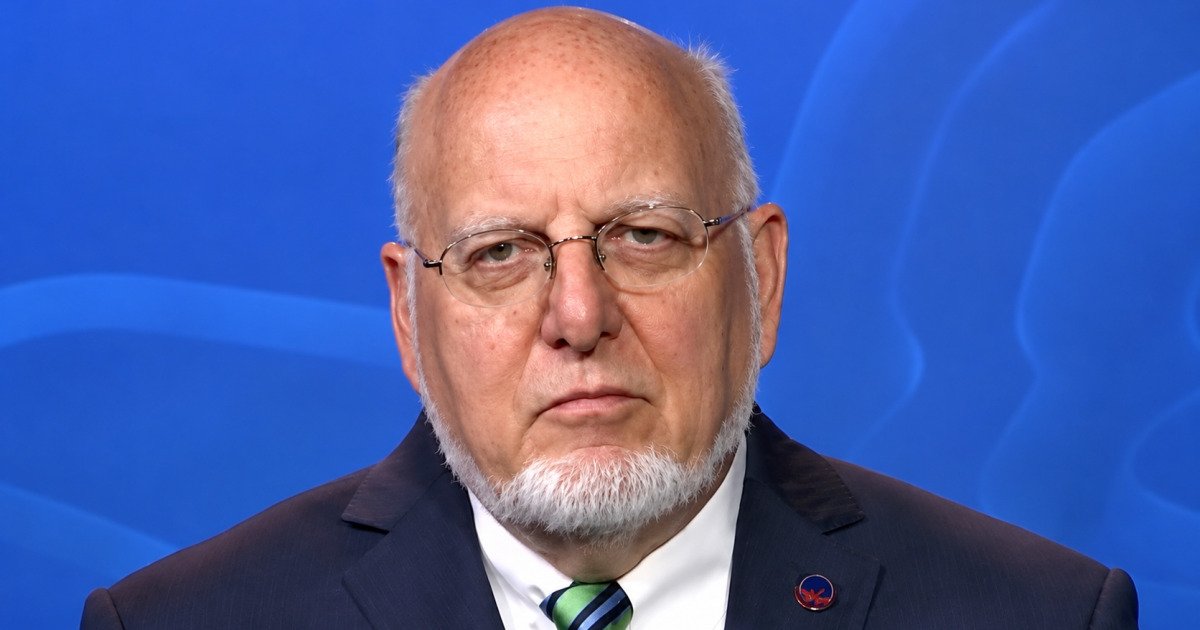
Former Centers for Disease Control and Prevention (CDC) Director Robert Redfield said he expects the Ebola outbreak in Africa to be a “very significant pandemic.”
“I suspect this is gonna become a very significant pandemic, probably going to leak into Tanzania, leak into Southern Sudan, maybe leak into Rwanda,” Redfield said, according to The Hill.
“So, it’s going to be very disruptive,” he added.
Former CDC director on Ebola outbreak: ‘I suspect this is going to become a very significant pandemic’https://t.co/WxZAe2n3mu
— The Hill (@thehill) May 21, 2026
The Hill shared further:
A majority of the Ebola cases caused by the Bundibugyo virus are in the Democratic Republic of Congo (DRC) and Uganda.
Local health officials in the two nations reported 536 suspected cases, 105 probable cases, 34 confirmed cases and around 134 suspected deaths from the outbreak, according to the CDC.
“This is an outbreak right now that is really a significant outbreak that’s of significant public health international concern, partially because what you said, it wasn’t recognized very quickly. I’m not sure why,” Redfield told anchor Elizabeth Vargas.
“Normally when we have these Ebola outbreaks, and I had three of them when I was CDC director, all of which were in the DRC, normally we recognize them when we have five, ten cases, you know, at most,” he continued. “This one really wasn’t picked up until there was over 100 cases.”
The former CDC director added, “As you said, now there’s over 500 cases. There’s close to 150 deaths already, and it’s moving very rapidly.”
The World Health Organization (WHO) previously declared a “public health emergency of international concern” due to “Ebola disease caused by Bundibugyo virus in the Democratic Republic of the Congo and Uganda.”
“Public Health Emergency Of International Concern” Declared By World Health Organization
“Pursuant to paragraph 2 of Article 12 – Determination of a public health emergency of international concern, including a pandemic emergency of the International Health Regulations (2005) (IHR), the Director-General of the World Health Organization (WHO), after having consulted the States Parties where the event is known to be currently occurring, is hereby determining that the Ebola disease caused by Bundibugyo virus in the Democratic Republic of the Congo and Uganda constitutes a public health emergency of international concern (PHEIC), but does not meet the criteria of pandemic emergency, as defined in the IHR,” the WHO stated in a release.
Watch some of Redfield’s comments below:
Health officials are raising concerns as Ebola outbreaks continue to spread in the Congo and Uganda. Former Centers for Disease Control and Prevention Director Robert Redfield joins @EVargasTV to weigh in.
MORE: https://t.co/a9mKmzG61i pic.twitter.com/4Rw5uFMh5O
— NewsNation (@NewsNation) May 21, 2026
NewsNation has more:
The head of the World Health Organization said Wednesday the risk of global spread of the Ebola outbreak in Congo and Uganda is high at national and regional levels but low at the global level despite more than 130 deaths.
WHO Director-General Tedros Adhanom Ghebreyesus said that so far, 51 cases have been confirmed in Congo’s northern provinces of Ituri and North Kivu, “although we know the scale of the epidemic is much larger.”
He said Uganda has also told the U.N. health agency of two confirmed cases in Uganda’s capital, Kampala.
“Beyond the confirmed cases, there are almost 600 suspected cases and 139 suspected deaths,” he said. “We expect those numbers to keep increasing.”
Bundibugyo, the virus causing an outbreak, is less common than others that cause Ebola disease, which is complicating the response because there are no specific treatments or vaccines.
The virus is spread through close contact with sick or deceased patients’ bodily fluids, such as sweat, blood, feces or vomit. Healthcare workers and family members caring for sick patients face the highest risk, experts said.