The White House is reportedly weighing oversight of new artificial intelligence models before release, in a reversal of its hands-off stance
The White House is weighing the possibility of reviewing new artificial intelligence models before official release, marking a potential shift from its current hands-off approach, the New York Times reported on Monday, citing sources.
According to the outlet, the administration of US President Donald Trump is mulling the creation of an AI working group that brings together officials and tech executives to explore oversight options, including a possible formal review process.
Sources say the push aims to avoid political fallout from a potential AI-enabled cyberattack, while also giving officials early access to new models to assess whether they could offer cyber capabilities useful to the Pentagon.
The system could give the government early access to advanced models, though not necessarily the power to block them. Officials reportedly discussed the plans last week with representatives from Anthropic, Google, and OpenAI.

The approach could mirror the UK’s AI Security Institute, which evaluates advanced models for risks and advises the government on guardrails. In the US, major labs already voluntarily test models with the federal Center for AI Standards and Innovation, but it takes a more pro-business approach, framing safety as a tool to build trust.
It remains unclear how the reviews would work or which agencies would run them. Any mechanism would likely be introduced via executive order, though no timeline has been set.
Requiring formal reviews would mark a reversal in Trump’s AI policy. Since returning to office, he has championed minimal regulation, calling AI “a beautiful newborn baby” that is key to competing with China and warning against “politics or stupid rules” that could hinder its growth.

The New York Times claims the shift gained urgency after Anthropic unveiled a powerful new model, Claude Mythos, which it chose not to release publicly, warning it could expose critical software vulnerabilities.
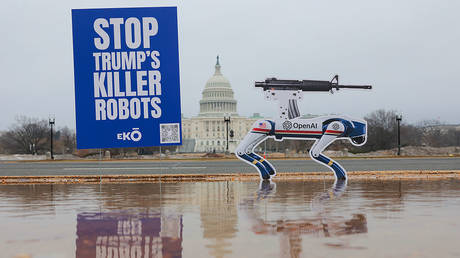
The debate also follows a row between Anthropic and the Pentagon, after the firm refused to loosen safeguards on surveillance and autonomous weapons. The Department of War labeled it a “supply-chain risk,” sidelining it from contracts – a move Anthropic is now challenging in court.
The Pentagon has been rapidly expanding AI use in its operations, recently securing deals with Google and OpenAI for classified models.
Concerns over AI risks have been mounting in the US for some time. A Pew Research Center poll last year found 50% of Americans were more concerned than excited about AI, up from 37% in 2021. A March Gallup poll showed Gen Z sentiment turning more negative, with optimism falling and anger rising.
Public skepticism over the Pentafon’s AI push also remains high. A February ITIF survey found 79% of Americans believe a human should make final decisions on lethal force, while 75% said AI is not reliable enough for life-or-death use. The same poll showed broad support for limits by tech firms, with 67% saying companies should restrict how their products are used, even by the government.