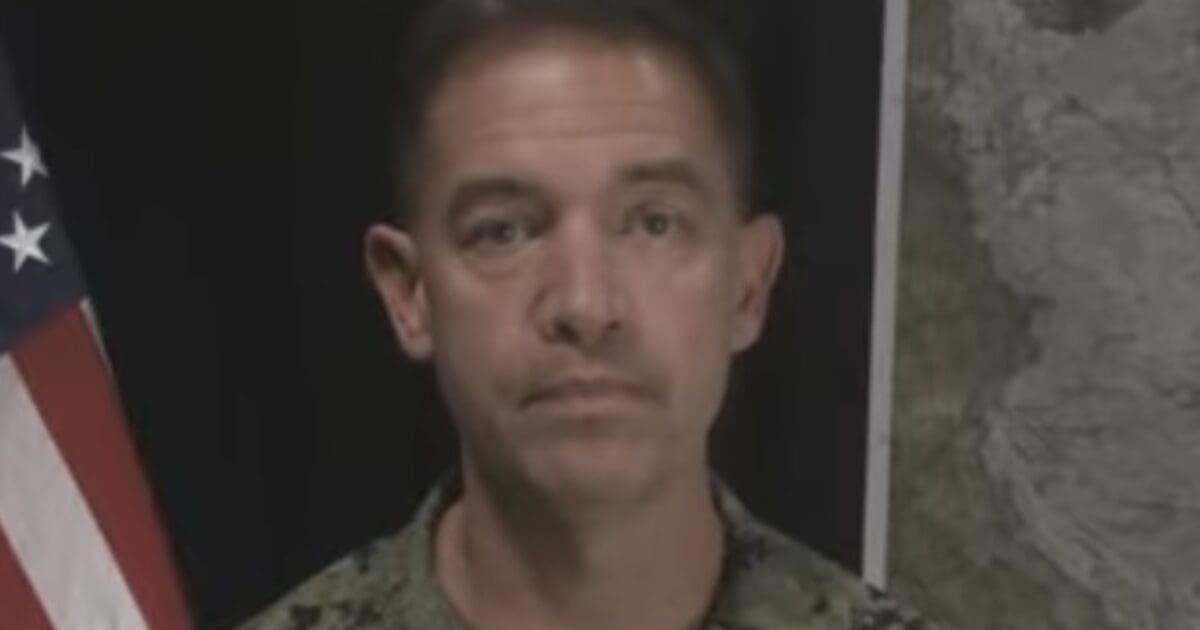
U.S. Central Command reportedly is prepared for the war against Iran to possibly last through September.
CENTCOM requested the Pentagon send more intelligence officers to its headquarters in Tampa, Florida, to support operations against Iran for at least 100 days, but likely through September.
NEW – U.S. Central Command is requesting that the Pentagon send more military intelligence officers to its HQ in Tampa, Florida, to support Iran war operations for at least 100 days, but likely through September — Politico pic.twitter.com/JGnI4WWs54
— Disclose.tv (@disclosetv) March 5, 2026
NewsNation has more:
U.S. military officials at MacDill Air Force Base serve as the brain for the entire operation in the Middle East. Every strike order, logistics move and battlefield update for the so-called “Operation Epic Fury” has been coordinated and communicated from the team’s headquarters in Tampa, Florida.
Defense Secretary Pete Hegseth will meet with officials at MacDill on Thursday for operational updates as the war widens abroad and Americans scramble to evacuate the region.
The U.S. has conducted more than 2,000 strikes on Iran since Saturday. Throughout it all, officials based in Tampa have publicly shared updates and remained the mouthpiece for most developments.
But some say the military is being stretched thin. Retired Col. Joe Buccino, who once served as the command’s communications director, tells NewsNation that current assets in the region are the most since the 2003 invasion of Iraq.
“This is a very heavy lift,” Buccino said. “This is a very big focus for CENTCOM.”
President Trump on Friday said that there would be “no deal with Iran except unconditional surrender.”
President Trump: “No Deal With Iran Except UNCONDITIONAL SURRENDER!”
“There will be no deal with Iran except UNCONDITIONAL SURRENDER! After that, and the selection of a GREAT & ACCEPTABLE Leader(s), we, and many of our wonderful and very brave allies and partners, will work tirelessly to bring Iran back from the brink of destruction, making it economically bigger, better, and stronger than ever before,” Trump said.
“IRAN WILL HAVE A GREAT FUTURE. ‘MAKE IRAN GREAT AGAIN (MIGA!),’” he added.
“There will be no deal with Iran except UNCONDITIONAL SURRENDER!… IRAN WILL HAVE A GREAT FUTURE. ‘MAKE IRAN GREAT AGAIN (MIGA!).’” – President Donald J. Trump 🇺🇸 pic.twitter.com/H2HKkBVkww
— The White House (@WhiteHouse) March 6, 2026
CNBC shared further:
Since the U.S. and Israel launched surprise strikes on Iran last weekend, Washington has been keen to stress that the military action will be over in a matter of weeks and won’t turn into a so-called forever war.
But experts say the U.S. could easily get bogged down in “Operation Epic Fury” if the Iranian regime proves more resilient than expected.
“What we’re seeing is going to be more complicated than the White House may have hoped,” Suzanne Maloney, Brookings Institution vice president and director of foreign policy, told CNBC Tuesday.
“Obviously, the start of the conflict appeared to be tremendously successful with the very quick announcement that Ayatollah Ali Khamenei, the supreme leader of Iran, had been killed, that was a huge breakthrough in many respects and the U.S. and Israel have been able to do immense damage to Iran’s military capabilities.”
“But the day after is going to be immensely complicated as well, and I am not optimistic that we’re going to see a quick end to this conflict, because the Iranians are escalating across the region and that is their long-standing game plan,” she said.
When airstrikes began to target Iran’s leadership and military sites last Saturday, killing Khamenei in his compound within hours, it quickly became apparent that the attacks would not be a case of “one and done.”
But U.S. President Donald Trump has said in the last week that the military operation in Iran would be over in “four to five weeks” and top officials, from Vice President JD Vance to Defense Secretary Peter Hegseth, have stressed that this will not be a prolonged, low-burn conflict of the type seen in Afghanistan or Iraq.
Watch an update from U.S. Central Command below: