Op-Ed
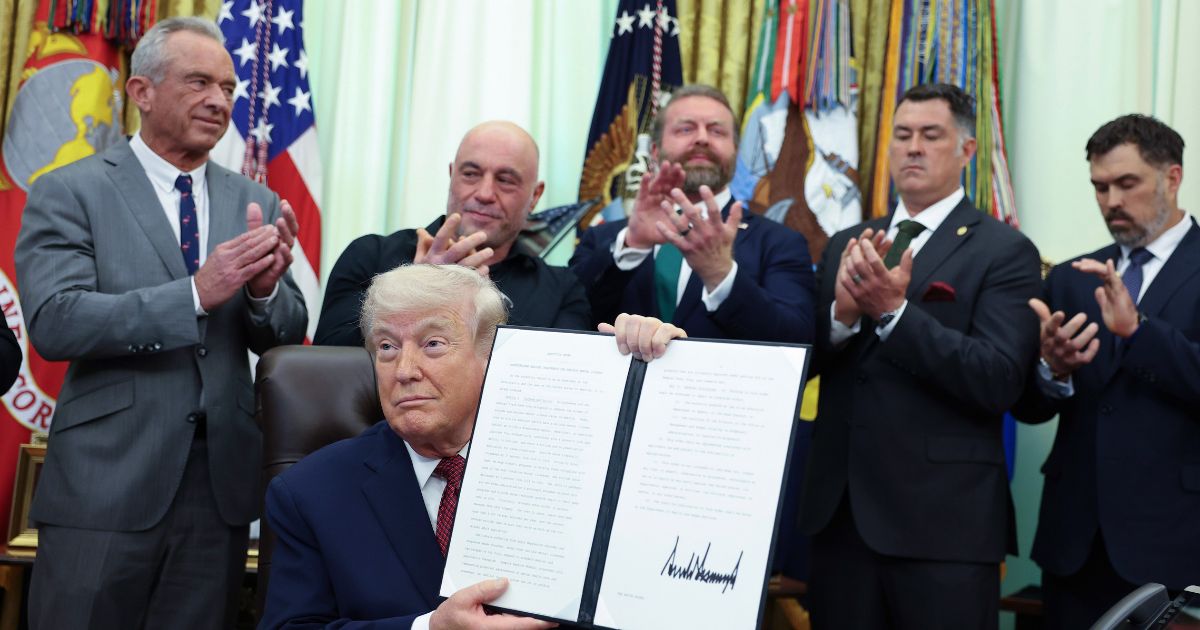
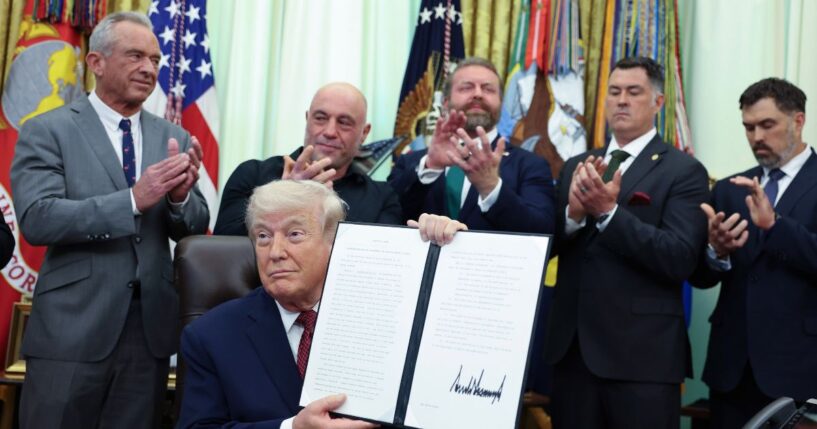
President Donald Trump shows his signature in the Oval Office after signing an executive order April 18 directing the Food and Drug Administration to issue new guidance on the use of psychedelic drugs intended for clinical trials for U.S. veterans suffering from Post Traumatic Stress Disorder. (Tasos Katopodis / Getty Images)

By Zach Drew May 6, 2026 at 5:28pm
There’s no question about it — this administration has stepped into a crisis many have ignored for decades. Veterans. PTSD. Depression. Suicide. These are not abstract issues. They are real, and they are destroying lives.
So when Donald Trump signed a recent executive order directing federal agencies to accelerate the review and development of psychedelic-assisted therapies — while also encouraging expanded research funding at the state level — it came from a place many conservatives understand: We need solutions, and we need them now.
The order directs federal agencies to speed up review of psychedelic therapies and expand research funding — especially for those suffering from treatment-resistant conditions. Supporters argue early studies show promise, particularly for veterans who haven’t responded to traditional treatments.
And if this continues on its current trajectory, it won’t stop at research. It will move into clinical trials — and eventually into mainstream medicine, where doctors could one day prescribe substances drawn from the same category as ayahuasca and similar psychedelics.
That matters. But there’s a question almost no one in Washington is asking:
What exactly are we opening the door to?
We are being told this is about medicine — about healing, about breakthrough. But psychedelics are not new. Long before they were discussed in labs, they were used in spiritual rituals — ceremonies that openly acknowledged something deeper was happening. And now, suddenly, we’re supposed to believe this is just chemistry?
I’m not speaking about this from a distance. I’ve been in the middle of it.
In the jungles of Peru — one of the global epicenters of ayahuasca (eye-uh-WAH-skuh), a powerful psychedelic brew traditionally used in spiritual ceremonies — people travel from around the world looking for healing, truth, and spiritual breakthrough. Many go because they believe it can heal trauma, reveal deeper meaning, or offer a kind of spiritual awakening they haven’t found anywhere else.
This isn’t recreational. It’s taken in guided rituals led by shamans, where participants expect not just altered perception, but spiritual experience. Many come away believing they encountered something divine — some even describe meeting what they interpret as “god.”
What they experience isn’t described as medical — it’s described as encounters. Not just altered perception, but interaction: voices, visions, a sense of intelligence beyond themselves. People don’t come back saying, “I saw colors.” They say, “I met something.”
And that matters.
Because Scripture gives a warning that modern culture has almost completely ignored:
“Do not believe every spirit, but test the spirits to see whether they are from God.” — 1 John 4:1
That’s not metaphor. That’s instruction. Because not everything that feels like healing comes from God — and not everything that presents itself as light actually is.
Now let me be clear. Wanting to help the wounded is right. Fighting PTSD, depression, and suicide is right. But there is a difference between treating wounds and opening spiritual doors we do not fully understand.
Right now, this entire conversation is happening in medical and political terms — while ignoring the spiritual dimension entirely.
And if you think this is fringe, look around. Psychedelics are no longer hidden in the shadows. They’re being discussed by celebrities, promoted on major podcasts, studied at universities, and increasingly backed by policy. This isn’t a subculture anymore. It’s becoming mainstream.
Here’s the tension conservatives need to be honest about: You can support an administration and still ask hard questions. You can agree with the mission and still question the method. In fact, that’s what responsibility looks like. Because if we get this wrong, we’re not just talking about policy — we’re talking about real people, desperate for healing, who may be stepping into something far deeper than they realize.
There is no shortcut to true transformation. No chemical can replace truth. And no experience — no matter how powerful — can replace discernment.
This moment doesn’t just demand action — it demands wisdom, because not every open door is one we should walk through.
The administration is right to care about the wounded. But compassion without discernment is not wisdom. And if we’re not willing to ask where this path ultimately leads, we may find ourselves opening doors we don’t know how to close.
The views expressed in this opinion article are those of their author and are not necessarily either shared or endorsed by the owners of this website. If you are interested in contributing an Op-Ed to The Western Journal, you can learn about our submission guidelines and process here.
Advertise with The Western Journal and reach millions of highly engaged readers, while supporting our work. Advertise Today.
Zach Drew is the host of “The Zach Drew Show” and an expository Bible teacher with IGBY International Ministries. His work examines current events through a biblical lens, including a recent documentary on spiritual practices in the Amazon jungle. More of his work can be found at ZachDrewShow.com and across major social media platforms.