
The following content is sponsored by Americans for Limited Government and written by the organization’s executive director, Robert Romano.
Last year, as part of the largest health care fraud takedown in history, prosecutors charged Haitian national Jean Jethro Alexandre with a scheme that ran two clinics as fraudulent prescription mills. On paper, the clinics treated patients for HIV and other sexually transmitted diseases. In reality, according to the Department of Justice prosecutors, the clinics existed to harvest the deep discounts that the 340B Drug Discount Program confers on HIV medications. This spring, Alexandre was sentenced with prison time and ordered to pay $14.3 million in restitution.
If you’re wondering how Alexandre, a citizen of Haiti, can come to the United States and easily rake in tens of millions of dollars of taxpayer money through criminal fraud, your answer is the 340B Drug Discount Program.
The 340B Program was built so that theoretically clinics could buy medicines cheaply and stretch those savings to make treatment affordable for lower-income patients. This may have been a noble goal, but unfortunately the program is rife with abuse. And as the Alexandre case shows, this goes well beyond wasteful practices, clerical errors, or improper billings.
In the Alexandre case, federal prosecutors in Florida described in granular detail how criminal fraudsters can loot the 340B Program of millions of dollars.
The mechanics are worth understanding, because it’s highly likely they are being replicated elsewhere. Alexandre’s clinics allegedly paid kickbacks to recruiters and to “patients” willing to request prescriptions. They falsified dispensing records. And they disposed of the medications because actually supplying patients with life-saving drugs wasn’t part of the scam. Prosecutors put the fraud at roughly $58 million in false claims.
Let that sink in. Drugs meant for low-income HIV patients were bought at a taxpayer-subsidized discount and then thrown away, while the fake clinics submitted bills as if the medicine had been dispensed to patients.
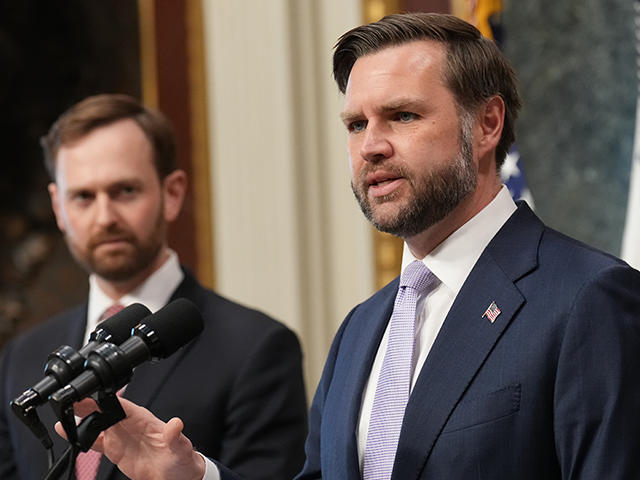
This is precisely the kind of case the White House Fraud Task Force chaired by Vice President JD Vance and FTC Chairman Andrew Ferguson was created to pursue. It has already shown it can move money and attention quickly across agencies. It should treat these Florida clinics not as a one-off, but as a model that almost certainly exists elsewhere.
There is good reason to assume this type of scheme is widespread. 340B has exploded from roughly $5 billion in discounted purchases in 2010 to more than $66 billion in 2023, across thousands of covered entities and contract pharmacies. High-cost specialty drugs and antiretrovirals, the focus of the Haitian fraudster in Florida, can be especially lucrative.
The program has long run with thin verification of where the drugs actually end up. When a subsidy is that large and that lightly policed, it’s practically inviting criminal fraudsters in the front door. The Department of Health and Human Services is aware of the risk — it’s why a pilot program was run to reform the rebate system and ensure integrity of the payments. Unfortunately, this was held up under litigation and has not yet been fully implemented.
Alexandre has been sentenced and ordered to pay restitution, and justice has been served in this one instance. But his scheme is not exotic or hard to execute. On the contrary, it’s the obvious play when the 340B Program offers huge handouts with few questions asked. The Vance-Ferguson task force should take this playbook and ensure that this prosecution is not a one-off, but rather the first of many.

