When I first saw the Atlantic headline “The End of Reading Is Here,” I felt a familiar sense of dread. If Rose Horowitch’s viral essay is to be believed, America’s reading habit is in a death spiral, and the TikTok generation doesn’t seem particularly concerned. Many students now rely on AI to write papers and summarize novels instead of curling up in an armchair and cracking a dusty spine.
The statistics Horowitch cites are sobering. According to the National Endowment for the Arts, fewer than half of American adults read a book in 2022. The American Time Use Survey found that the share of Americans who read for pleasure on any given day fell from 28% in 2004 to just 16% in 2023.
But after sitting with the article, I found myself less convinced by its underlying premise. Reading isn’t disappearing because books have become relics of another era. Instead, books are becoming yet another element of our culture that must be preserved through thought and effort. And like most things, that all starts and ends in the home, with families.
Reading is a learned skill. More importantly, it’s a habit. Sustained attention doesn’t come naturally in a world full of notifications and endless scrolling, but it can be strengthened with practice. Like exercise, reading becomes easier and more enjoyable the more we do it. The love of reading typically begins in childhood, and parents have far more influence over that process than some people may realize.
That’s why parents start reading to children long before they can understand the words. Expectant parents read to pregnant bellies. Newborns are surrounded by board books. Baby shower invitations increasingly ask guests to bring a favorite children’s book instead of a greeting card. The implication is clear: the more books, the better.
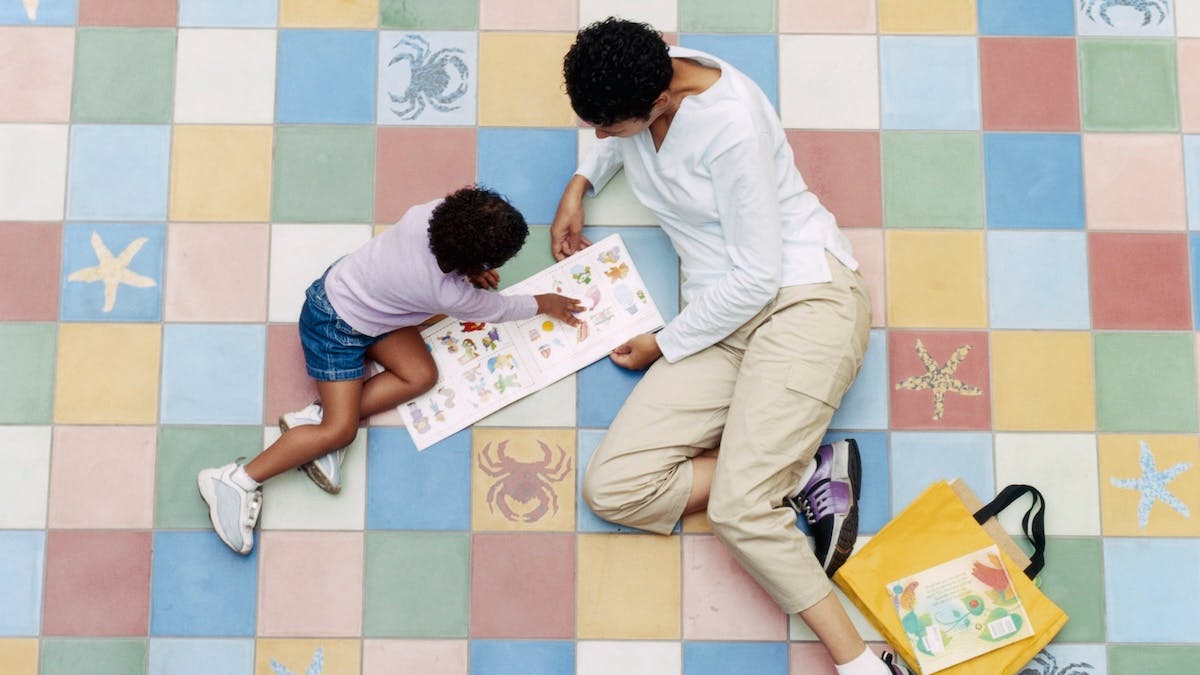
Children also learn by imitation. No one is surprised when the son of an avid fisherman grows up loving the outdoors or when the daughter of a musician starts playing an instrument. Reading is no different. If children grow up seeing books treated as a normal and enjoyable part of daily life, they’re far more likely to develop that habit themselves.
At our house, the screens go off two hours before bedtime and everyone must read books. I have conceded to my children’s preference for graphic novels even though they’re not my favorite genre. To counteract this nonsense, we also read books together as a family, working our way through the “Little House on the Prairie” series, “The Chronicles of Narnia,” “Charlotte’s Web,” “The Secret Garden,” and most recently, “Stuart Little.”
We love going to the library, the bookstore, and local book-themed or reading events when they arise. We even have a membership to Epic – a digital reading platform – so that some of their allotted screen time is devoted to reading, too.
I am not crunchy, nor am I anti-screen. My kids have tablets and gaming systems. Our goal is not to reject modern technology, but rather to manage it and retain the best parts of life, which include reading. Several of my kids are natural readers who love to get lost in the pages of a book. Others struggle to focus and would rather be doing other things. That’s OK. They keep reading even when it’s hard or they don’t feel like it because habits are often built long before they’re appreciated.
I’ve noticed benefits that extend beyond the page. My older children are articulate, curious, and comfortable discussing ideas well beyond what many people expect for their age. I don’t think that’s a coincidence. Reading has almost certainly played a meaningful role in shaping how they think and communicate, just as it did for me growing up.
Research points in the same direction. One study highlighted by Education Week describes the “million-word gap,” finding that children who are read to frequently from an early age are exposed to dramatically more language before they even enter kindergarten than children who are rarely or never read to.
And for anyone freaking out about the Atlantic article, it’s also not entirely true that reading culture has disappeared. It merely changed with the times.
Reading isn’t dying; it’s evolving. I know because my personal algorithm is chock-full of book-themed reels, ranging from bestseller recommendations to modern interpretations of classics. BookTok is real, and it’s huge. According to 2026 data, BookTok-recommended titles sold more than 50 million copies across Europe in 2025, generating a little more than $900 million. The same phenomenon is happening in the United States and around the world.
Consumers are shelling out hundreds or even thousands of dollars for high-end luxury books. Audiobooks, controversial as they may be, are having a real moment: a recent report found that audiobook sales grew 9% in 2025, to $2.43 billion.
Every generation decides which parts of civilization are worth preserving. Reading will live on because people, especially parents, pass it down to future generations.
If we want our children to become readers, the solution isn’t especially complicated. Open a book. Read it. Let your kids see you enjoying it. Read out loud to your kids even when they’re teenagers. The future of reading will be determined by ordinary families who choose to keep the habit alive.
***
This article is part of Upstream, The Daily Wire’s new home for culture and lifestyle. Real human insight and human stories — from our featured writers to you.