By Karan Singh


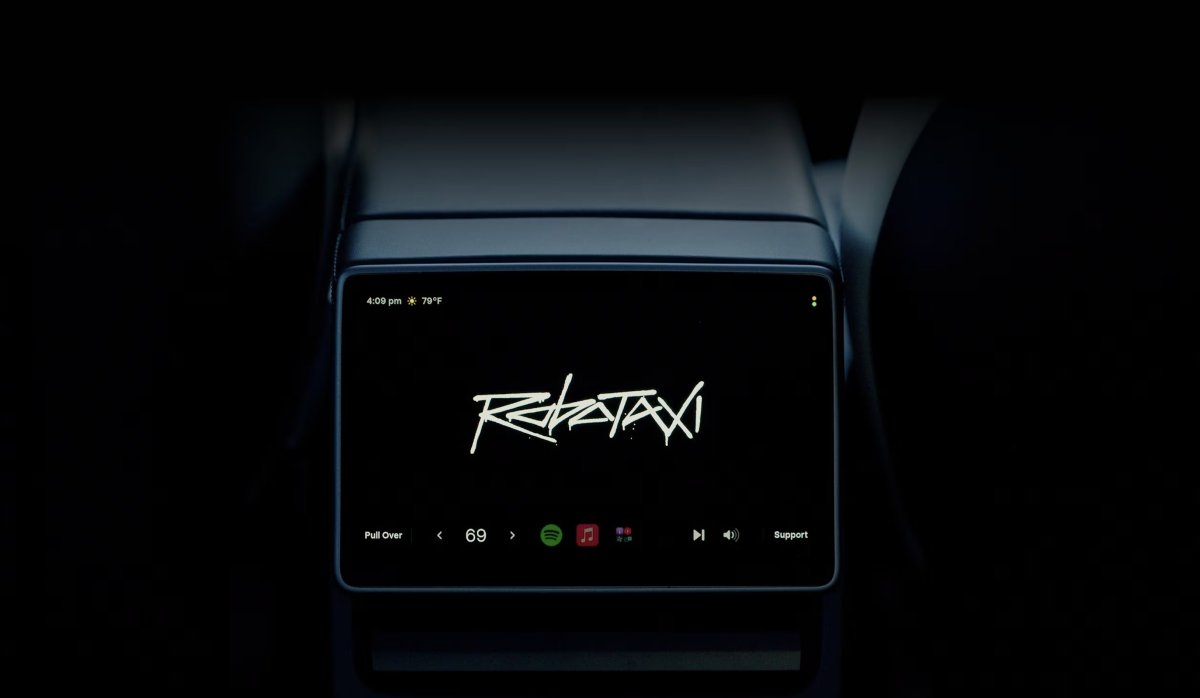
Tesla has lost another long-time engineering veteran. Thomas Dmytryk, a director who played a foundational role in building the company’s over-the-air (OTA) infrastructure and the newly launched Robotaxi ride-hailing service, has officially announced his departure from Tesla.
Dmytryk leaves the company after an impressive 11 years. While his exact title for the past seven months was simply “Director,” his previous role was Senior Software Engineering Manager.
From Niche to 10 Million
In a heartfelt farewell post on LinkedIn, Dmytryk reflected on just how drastically Tesla has scaled since he first joined the engineering team in early 2015 — back when Tesla only had the Model S and Model X.
“When I joined, Tesla was a niche luxury automaker with only 50K cars delivered and lots of ambitions,” Dmytryk wrote. “My 5-person team owned OTA, connectivity, and commands running on a very simple stack. My ambitions at the time were simple: Automate everything. Pioneer software-defined vehicles. Modernize apps and infra.”
Under his leadership, that original 5-person team expanded and scaled its architecture to support a fleet that is now rapidly approaching 10 million vehicles globally. If you have ever used your Tesla app to send a command to your car or downloaded an OTA software update, you have interacted directly with the infrastructure Dmytryk’s team helped pioneer.

The Ride Hailing Moonshot
Perhaps Dmytryk’s most significant contribution to Tesla’s current valuation came in the latter half of his tenure, when his team was tasked with building the software backbone for the Robotaxi network.
“Then came our moonshot: create ride-hailing capability and bring it to the world in a way that has never been seen before,” he wrote. “Quickly, we evolved from proof of concept to a full-blown production-ready solution, bringing in more and more teams in the picture until we finally released it to the world.”
His departure comes at a fascinating time, as the very ride-hailing network he helped build is currently expanding and calibrating its pricing model in early markets like Austin.
Retirement
Despite writing that Tesla’s future is extremely bright and that Tesla is just getting started, Dmytryk noted that he is stepping away from the relentless pace of Tesla’s engineering culture to focus on his family, rather than take up a new position elsewhere.
“Human life’s always been my North Star, right now I need to be with mines [sic],” he explained.
He closed his announcement by praising the tenacity, brilliance, and devotion of the frontline engineers at Tesla, stating that he will be cheering them on from the sidelines as they push Tesla even further into the world of AI and robotics.
Ordering a New Tesla?
Use our referral code and get 3 months free of FSD or $1,000 off your new Tesla.
Tesla’s ‘Haha, Yes’ Hedgehog: What It Means and Where It Came From
By Nehal Malik

Tesla isn’t your typical car company, and that becomes immediately obvious the moment you actually buy one. While other automakers might send you a formal, corporate email with legal jargon, Tesla chooses to celebrate your multi-thousand-dollar purchase with a meme of a hedgehog.
If you have ordered a Tesla in recent years, you have likely seen the meme: a small, white hedgehog making the “okay” hand sign with the words “haha, yes” floating above its head. It’s a whimsical and somewhat confusing way to confirm an order, but it has become a staple of the Tesla ownership experience.
The ‘Haha, Yes’ Hedgehog: Origins and Tesla’s Adoption
The “haha, yes” hedgehog is a relic of mid-2010s internet culture. The specific image of the hedgehog making the hand sign appears to have originated from a YouTube video from more than 9 years ago (see video below).
The video, which has amassed over 12 million views, depicts the image being shared on Facebook by a user named Randolph Cotter. In the clip, another user named Thomas Bagels discovers the “excellent” image and asks for permission to share it online.
From there, the hedgehog took on a life of its own, eventually becoming a favorite. Tesla began using the meme on its order confirmation pages several years ago to lean into the company’s online-first, meme-heavy brand identity. Fans often speculate that the move was intended to make the brand feel more relatable to Millennials and Gen Z buyers.
Tesla, as a company, often acts like a high-tier internet troll, not unlike its CEO, and this confirmation page is the ultimate example. It’s a sign that you aren’t just buying a vehicle; you’re joining a community that doesn’t take itself too seriously.
A Penchant for Pop Culture and Whimsy
The hedgehog is just one small part of Tesla’s broader sense of whimsy. The company has a well-documented history of naming features after pop culture references, particularly those from 1980s sci-fi and comedy.
For instance, the “Ludicrous Speed” and “Plaid” acceleration modes are direct nods to the Mel Brooks film Spaceballs. Even the confirmation menu for Ludicrous mode features “Yes, bring it on!” and “No, I want my Mommy” options, referencing the classic Wolfenstein video game, which had similarly named difficulty modes. Beyond speed modes, Tesla’s Sentry Mode takes its name from the automated turrets in the Portal video game series, but there are countless others.
This sense of fun extends to the Easter eggs hidden in the software, from a sketchpad that lets you draw on the center screen to “Mars Mode,” which turns your GPS map into the surface of the red planet. It is this unique personality that separates Tesla from legacy brands that often struggle to communicate with a younger, tech-savvy audience.
The Cybertruck Exception
While the hedgehog handles order confirmations for most of Tesla’s fleet, the Cybertruck has its own unique treatment. If you place an order for Tesla’s stainless steel pickup, you will instead receive a cyber hedgehog.

While the hedgehog feels like a piece of internet history, the cyber hedgehog feels more aligned with the Cybertruck’s “low-poly” aesthetic. It’s a more aggressive, modern image that fits the truck’s unique design language.
As Tesla continues to release new features, we’re likely to see even more nods to popular memes and pop culture.
Watch SpaceX’s Most Incredible Moments [Videos]
By Nehal Malik

SpaceX is currently operating at a pace that was once considered impossible, turning orbital rocket launches into something that feels more like a daily airline schedule. This relentless operational cadence was recently on full display during a doubleheader weekend, when the company successfully launched two Falcon 9 rockets from opposite sides of the country and landed both first-stage boosters at sea.
As the company prepares for the first flight test of Starship V3, it’s the perfect time to look back at the milestones that brought us here. From catching falling boosters to historic private spacewalks, these are the moments that defined a new era of space exploration.
The First Successful Landing
Before SpaceX, the idea of a rocket landing itself vertically on a pad after delivering a payload to space was science fiction. That changed on December 21, 2015, when a Falcon 9 first stage returned to Landing Zone 1 at Cape Canaveral. This moment proved that orbital-class rockets could be reused, fundamentally changing the economics of space travel.
Simultaneous Landings
If one landing was incredible, two at the exact same time were legendary. During the maiden flight of the Falcon Heavy in 2018, the world watched in awe as two side boosters touched down in perfect unison at Cape Canaveral. It wasn’t just a technical feat; it was a visual masterpiece that showcased the sheer precision of SpaceX’s autonomous landing systems.
Starship: The First High-Altitude Flip
Starship is the world’s most powerful launch vehicle, and its development has been a “test-and-learn” journey. In December 2020, the SN8 prototype soared 12.5 kilometers into the air before performing a wild “belly flop” maneuver to control its descent. While it ended in a “hard landing,” seeing a rocket of that size flip itself from horizontal to vertical and back again for the first time was an epic milestone in aerodynamic control.
SN15: The First Starship to Nail the Landing
After several prototypes ended in spectacular fireballs, SN15 finally broke the cycle in May 2021. The vehicle completed its high-altitude flight and successfully landed on the pad without exploding, marking the first time a Starship prototype survived the entire test sequence. This proved that the complex landing flip maneuver was not just a theory but a repeatable reality.
Mechazilla’s Chopsticks: Catching a Giant
Perhaps the most “insane” moment in aerospace history occurred during Starship’s fifth flight test in October 2024. Instead of landing on a pad or a ship, the vehicle’s massive Super Heavy booster returned to the launch site and was caught mid-air by the giant mechanical “chopstick” arms of the launch tower. This “Mechazilla” catch is a central enabler for rapid reusability, allowing SpaceX to launch, return, and launch again at a rate never before seen.
SpaceX is already looking to push the boundaries of Mechazilla even further by attempting its first “catch” of a returning Starship upper stage. This milestone is expected to take place between Flight 13 and Flight 15, depending on the performance of the upcoming Starship V3 flights.
Looking even further ahead, SpaceX is already developing Starship V4, a massive iteration featuring 42 Raptor engines, targeted for a 2027 debut.
Polaris Dawn: The First Private Spacewalk
SpaceX isn’t just revolutionizing hardware; it’s also advancing human spaceflight for private citizens. In September 2024, the Polaris Dawn mission made history when Jared Isaacman and Sarah Gillis performed the world’s first commercial spacewalk. Exiting the Crew Dragon hatch high above Earth, they tested new SpaceX-designed EVA suits that the company hopes will one day be worn by people walking on Mars.
The “Pez Dispenser”: First Starship Payload Success
Another pivotal moment occurred last year on August 26 during the Starship Flight 10 mission, which featured the first successful “Pez dispenser” test. After reaching its planned suborbital trajectory, the Starship upper stage successfully deployed eight Starlink satellite simulators in a unique, dispenser-like fashion. This was a critical demonstration of the spacecraft’s ability to deliver massive payloads to orbit. SpaceX intends to use this capability to supercharge the expansion of its Starlink constellation and begin deploying large amounts of AI compute in space following its recent acquisition of xAI.
— SpaceX (@SpaceX) August 26, 2025
After Starship completed the deployment, it successfully performed a landing burn and splashed down in the ocean, captured in this amazing footage below.
Building the Future of Connection
Beyond the launches and advancements in spaceflight, SpaceX is creating a planet-wide internet network. Through its Starlink constellation, the company is now delivering high-speed broadband to homes, businesses, ships, planes, and more. It is even aiming to beam 5G connectivity directly to unmodified cell phones from space, on top of its Starlink Mobile service that currently offers satellite texting and low-speed data to eliminate dead zones globally. To power these ambitions, SpaceX acquired Elon Musk’s AI startup, xAI, to integrate massive AI capabilities into its orbital satellite network.
SpaceX’s ultimate vision is to make life multiplanetary. Each of these moments — the catches, the landings, and the spacewalks — is a stepping stone toward a future where exploring the stars is a routine part of human existence.