Order Anni Cyrus’ new book, The Architecture of Jihad: HERE.
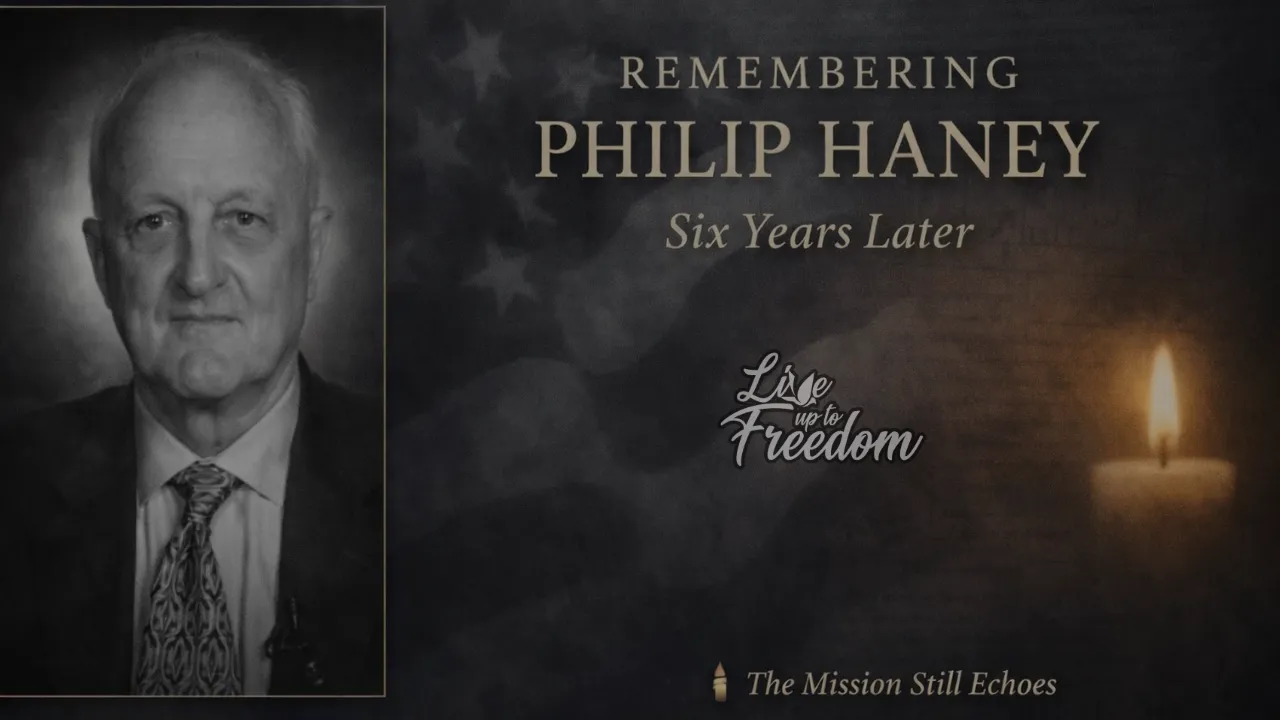
Last Saturday, February 21, marked six years since Philip Haney was taken from us, and the mission he left behind still echoes.
I met Phil after the storm had already started. After the investigations. After the attacks. After the isolation. I did not know him in his institutional rise; I knew him in his trial. And in that short but meaningful season, he was the closest thing I ever had to a father figure. He believed in me when believing in me carried risk. He corrected me when I was careless. He pushed me when I was tired. He demanded precision, not performance.
Phil did not teach fear. He taught discipline. He taught patience in research. He taught clarity in language. He taught that courage is not loud; it is steady. He cared about stopping preventable violence, not about applause.
And yes, I still regret that I never delivered the tahdig he once asked me for. It sounds small, but it is not small. That simple request reminds me that he was not only a national security professional. He was human. He appreciated culture, friendship, and the simple joy of sharing a meal. That unfinished tahdig sits in my heart as a reminder that time is never guaranteed.
Philip Haney was not a low-level employee. He was a founding member of the Department of Homeland Security in 2003 and later served as a terrorism analyst at the National Targeting Center. He received commendations for his work, including recognition for identifying hundreds of individuals with possible connections to terrorism. In a letter from CBP leadership, he was specifically praised for his research into Tablighi Jamaat and for assisting in identifying over 300 persons with possible terror ties.
Then the political climate shifted.
In 2009, Haney later wrote that he was ordered to “scrub” several hundred records from the Treasury Enforcement Communications System database, records tied to individuals connected to designated Islamist terror groups such as Hamas. He publicly stated that the investigative material he had compiled was being deleted or modified.
He objected. He filed an Inspector General complaint.
Instead of being protected, he became the subject of investigations. According to his own account and congressional statements entered into the Congressional Record, he was isolated, reassigned, and pressured. A grand jury inquiry reportedly examined him, but no indictment resulted. Eventually, he was effectively pushed into retirement.
He described watching data being deleted in real time, information he believed could prevent future attacks.
He later testified before a Senate Judiciary subcommittee on political Islam. He alleged that political correctness had influenced national security policy and that investigative leads tied to Islamist networks had been deliberately downplayed.
He was not vague. He named policy decisions. He described systemic pressure. He did so publicly, under oath.
After retirement, he wrote See Something, Say Nothing. The title was a direct rebuke of the federal slogan “If You See Something, Say Something.” His argument was simple: when he saw something and said something, he was punished.
He did not attack private faith. He analyzed ideological networks and doctrinal movements. That distinction mattered to him. It still matters.
By late 2019, he was reportedly preparing a second manuscript. According to reporting at the time, he had told contacts that the next book would “name names” and go deeper into what he described as institutional submission and internal suppression.
On February 21, 2020, he was found dead from a single gunshot wound in Amador County, California. His death generated intense speculation and public debate. Two years later, in 2022, after assistance from FBI crime scene investigators and outside analysts, the Amador County Sheriff’s Office officially ruled the death a suicide.
The ruling closed the case.
But those of us who knew Phil, who spoke to him in the days before his death, including me, who spoke with him two days before, struggle deeply with that conclusion. He was planning a wedding. Preparing for work. Organizing manuscripts. Discussing what came next.
Whether one accepts the official ruling or believes deeper scrutiny was warranted, one fact remains: a man who exposed institutional blindness died after years of pressure and isolation, and the official process moved on.
That reality demands vigilance.
Institutions do not respond kindly to internal dissent, especially when that dissent challenges political narratives.
Philip Haney moved from a decorated analyst to institutional liability. The system he helped build treated him as a problem to be contained rather than a voice to be heard.
And that is a matter of record.
Philip Haney warned that ignoring doctrinal motivations behind violent extremism would lead to preventable tragedy. Since his death, the West has continued to struggle with the very patterns he documented.
His research was not driven by hatred. It was driven by clarity. He understood the difference between private faith and organized political Islamism. He insisted that policymakers understand that difference as well.
He was not reckless. He was disciplined. He was not angry. He was resolved.
And he was brave enough to stand alone.
You can challenge a man’s conclusions. You can dispute his analysis. But you cannot erase his record of service, his commendations, his testimony, or the documented internal conflicts he endured. And most certainly, you cannot erase his legacy.
Philip Haney stood when standing was costly. He spoke when silence would have been safer. He documented what others preferred not to see.
Personally, I carry his instruction with me. He did not train me in truth so that I would retreat. He did not teach me discipline so that I would compromise.
We will carry the torch. In his name. In his honor. With the steadiness he modeled.
My dearest Phil, six years later, you are not forgotten. You are not erased. And your work did not die with you.
In order to eliminate spam comments that have historically flooded our comments section, comments containing certain keywords will be held in a moderation queue. All comments by legitimate commenters will be manually approved by a member of our team. If your comment is “Awaiting Moderation,” please give us up to 24 hours to manually approve your comment. Please do not re-post the same comment.