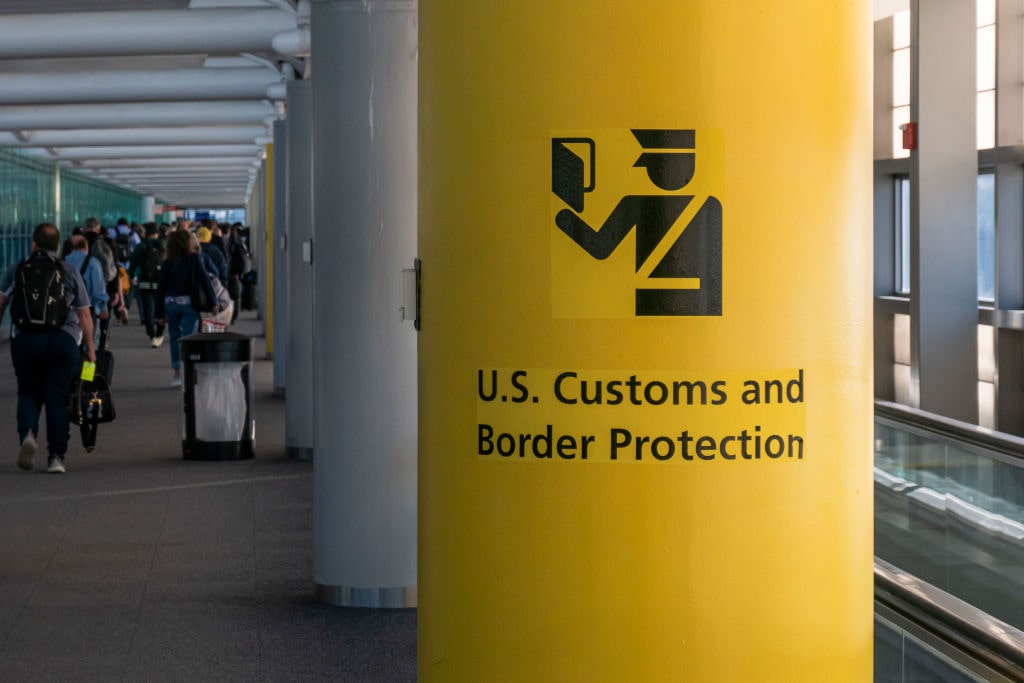
Want to visit the US? You’d better come prepared to share your social media history going back five years and a decade worth of contact information. And this isn’t about foreign nationals from terrorist hot spots, either. It’s specifically a rule change to the US Visa Waiver Program (VWP), which allows visitors from a list of 42 friendly countries to come and stay up to 90 days for tourism or business in America without a visa. Is this a violation of would-be guests’ rights to privacy and free speech? Some say yes. Others, however, argue it’s a necessary – and even quite reasonable – national security measure.
Social Media – A Blessing and a Curse
Ah, social media – the golden child of the internet age that allows friends and family to stay connected wherever life may take them. It can help maintain relationships over vast distances or even find new ones. It can also destroy them. Imagine if all crazy, embarrassing, or downright stupid stuff you did as a teen or young adult had been recorded on a smartphone and uploaded to a publicly viewable social media platform.
Legions of Gen Z and younger Millennial folks have posted videos on YouTube or messages on Facebook or Twitter (now X) over the years, only for them to resurface later – sometimes after a very long time – and cost them relationships, jobs, or even fame itself. Indeed, plenty of older Millennials, Gen Xers, and Boomers have fallen for this trap as well – all of whom should have been old enough to know better before technology even made it an option.
The new CBP rule requiring foreign visitors to share their social media histories and phone numbers going back five years and ten years’ worth of email addresses isn’t about finding their cringiest teenage moments. Rather, they’re looking for posts or content suggesting radicalization or “hostile attitudes” against America. It’s a new measure to try to screen out potential national security threats – people who may have shared online either terrorist-linked ideology or actual plans to commit violence. Remember, whether you’re a goofy kid livestreaming all your stupid mistakes or an active supporter of ISIS who’s ready to get in on the action, the internet is forever.
A Matter of Rights
Which brings us to the question of legitimacy – an issue that can be explored in two ways, logically and legally. The legal is arguably more important. Let’s first address the right to come in the first place. The US Supreme Court ruled in Dep’t of Homeland Sec. v. Thuraissigiam (2020) that an alien seeking entry to the US for the first time has “only those rights regarding admission that Congress has provided by statute.” In the 2018 case Trump v. Hawaii, the Court ruled that “foreign nationals seeking admission have no constitutional right to entry.” It’s entirely up to the government who is allowed in and who is not – a sentiment the Supreme Court called in the 1982 Landon v. Plasencia ruling “long recognized” as a “fundamental sovereign attribute exercised by the Government’s political departments largely immune from judicial control.”
So, is any non-citizen entitled to entry? According to the High Court, the answer is a clear-cut no. But what about free speech and privacy concerns? Do non-citizens have such rights? At the risk of oversimplifying the issue, yes when they’re here but not when they aren’t. The Supreme Court has ruled in various cases over the years that the First Amendment protects anyone in the US, whether they’re citizens or not – as does the Fourth, the Fifth, the Eighth, and the 14th, at least. This is because the wording describes people not citizens.
The same consideration wasn’t extended to the Second Amendment, despite similar language and the mention of people rather than citizens. Still, much of the Bill of Rights does apply to visitors – even those who came illegally – once they’re in the US. Before entry, however, there is no such legal protection. The United States is not required to somehow grant free speech or privacy rights to non-citizens who aren’t even here. As well, the government isn’t forcing people to release such information; it’s simply saying applications for entry will be denied without it.
Crazy or Common Sense?
And this isn’t happening in a vacuum. In the UK, people have been arrested for social media posts. Two prominent examples are Irish comedian Graham Linehan and British IT consultant Jon Richelieu-Booth. Linehan, a co-creator of the UK sitcom Father Ted, was arrested at Heathrow Airport on Monday, September 1, for posting anti-trans content on social media – despite not being a citizen of the UK. Booth, who was a citizen, was arrested and then released multiple times earlier in the year after posting pictures of himself with firearms while vacationing in Florida.
As well, the UK has “acknowledged using online content in national security screenings since around 2015,” according to a report from WERC, an organization dedicated to assisting professionals engaged in what it calls “global workforce mobility.”
Still, there are those who call such measures a violation of the spirit of the Bill of Rights, if nothing else – especially when taken in context with the Declaration of Independence, which states that all men are “endowed by their Creator with certain unalienable Rights.” And there is some merit to that. However, an equally valid argument is that ignoring threats and other signs of violent intent is foolish. Imagine a neighbor standing out on the lawn chanting death to [insert your name here] or telling another neighbor he plans to commit some violent act against you. What, then, would be your response when he shows up on your doorstep asking to come in for a friendly chat?
Is it really crazy to deny someone who has demonstrated a hatred for America or an affiliation with extremist ideology entry to the US when their public displays indicate a desire for violence? The true lunacy would be doing anything else.
Dig Deeper Into the Themes Discussed in This Article!
Liberty Vault: The Declaration of Independence
Liberty Vault: The Bill of Rights
~
Liberty Nation does not endorse candidates, campaigns, or legislation, and this presentation is no endorsement.
x
Comment
Do you have an opinion about this article?
We’d love to hear it! If you send your comments to editor@libertynation.com, we might even publish your edited remarks in our new feature, LN Readers Speak Out. Remember to include the title of the article along with your name, city, and state.
x
Republish
LibertyNation.com welcomes the republication of our content consistent with the following guidelines:
We permit the republishing of up to 250 words of newly published LN articles (the day of), provided the content is directly and obviously hot-linked to our site.
After 24 hours, Liberty Nation welcomes and permits sites to republish articles in full, provided the content is directly and obviously hot-linked to the original.
Please Respect Our Original Content!
LibertyNation.com and its parent One Generation Away have and will take action to see our copyrighted property is used in accordance with these terms.
We do not exercise editorial control over any site that republishes our work. Permission to republish is no endorsement or approval of any site or organization that republishes Liberty Nation’s content.
x
Disclaimer
All opinions expressed are those of the author and do not necessarily represent those of Liberty Nation.