Jewish academic and Hebrew scholar Irene Lancaster reflects on the profound prophetic vision in Isaiah 40.
The Fast of Av is the day we mourn the destruction of the two Temples in Jerusalem and subsequent exiles enforced by the Babylonians (586 BCE) and the Romans (70 CE).
Two days later we begin reading the Haftorahs of Consolation leading up to Rosh Hashanah, Jewish New Year.
The first Haftorah is Isaiah 40 and accompanies the reading from Deuteronomy (3:23-7:11) known as ‘VaEtchanan’ (‘And Moses implored’).
My grandson has his bar mitzvah this year and will be reading these passages on Shabbat ‘Nechamu’, this Shabbat of comfort (July 25).
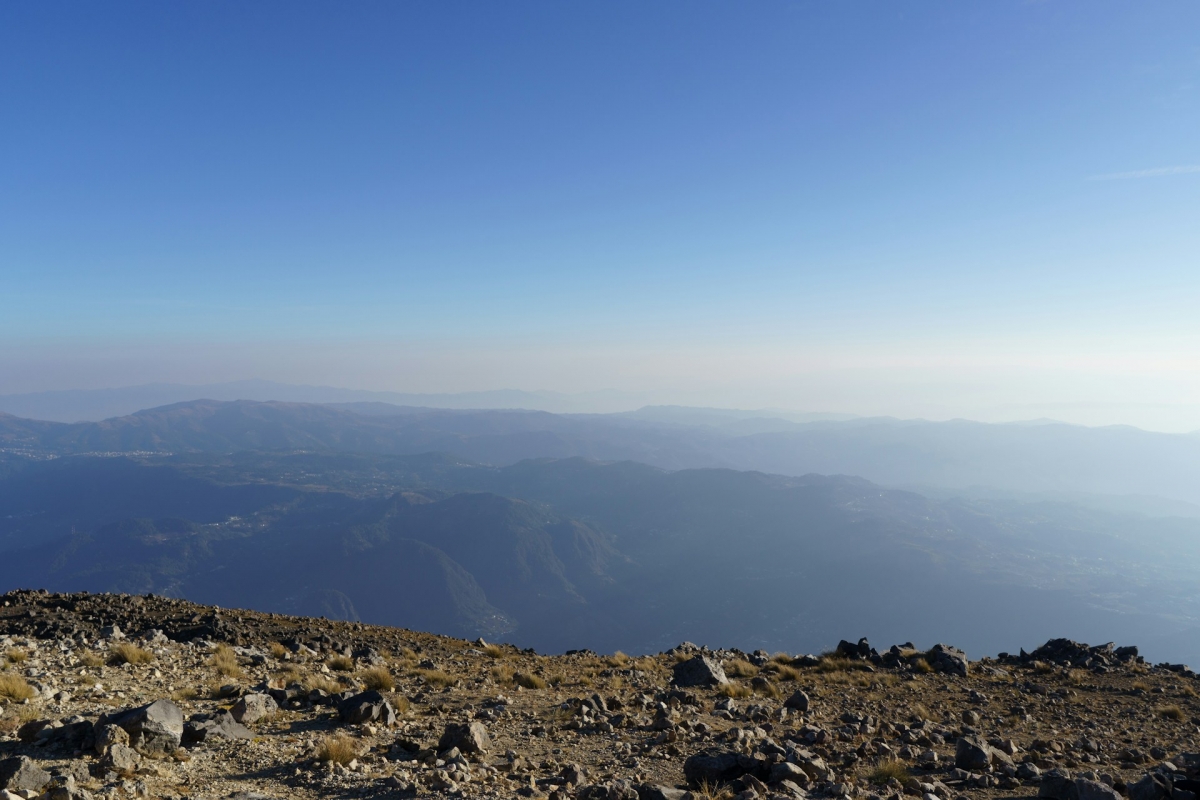
The Deuteronomy passage begins with Moses imploring G-d to let him enter the Land of Israel. G-d becomes angry and instructs Moses to ‘ascend to the top of the cliff’ in order to view the whole Land from an elevated vantage point.
The Hebrew for ‘cliff’ is Pisgah. In our June article on Robert Browning and the Jews, Rowan Williams and I discussed Browning’s poem on this very subject, entitled ‘Pisgah-Sights (1876). The Pisgah experience is also repeated at the end of Moses’ life in Deuteronomy 34.
Our own reading continues with a repetition of what G-d has done for the children of Israel up until this moment and urges gratitude for the joint gift of Torah and Land. The reading repeats the 10 Commandments, with a few changes from the first reading in Exodus 20.
Instead of ‘remembering’ the Shabbat day, they are now to ‘safeguard’ it (Deuteronomy 5:12). This change of perspective is a profound acknowledgement of the passage of time. Memory leads to habit forming – internalization leads to safeguarding.
In Deuteronomy (6: 4-9) we have the Shema prayer: ‘Hear Oh Israel …!’ This prayer is directly related to the Land of Israel; the strictures against idolatry and a reminder that we were once ‘slaves in Egypt’.
The reading ends with the children of Israel being called ‘holy’ and ‘chosen’ by G-d as ‘a treasured people for Him’ (Deuteronomy 7:6-7).
But this people is also termed ‘the least of all peoples’ – this phrase may mean ‘smallest of nations’. Currently the global Jewish population stands at around 15 million people out of more than 8 billion.
Israel itself has reached a population of around 10 million, 8 million of whom are Jewish. Therefore, the country itself is smallish in population and remains very small in geographical size.
However the phrase may also signify that the Jewish people will always be underestimated by the rest of the world.
And that is why G-d loves the children of Israel and ‘safeguards the oath He swore to your ancestors’, so that he removed them from Pharaoh’s hold. He also ‘safeguards the covenant and loving kindness for those who love Him and [in turn] safeguard His injunctions for 1,000 generations’.
There appears to be a strong link between the injunction to ‘safeguard the Shabbat day’ (Deuteronomy 5:12) and the subsequent promise from G-d to ‘safeguard’ and preserve’ what is already ‘remembered’. The main lesson is not to allow things to grow stale once the Promised Land is finally accessed.
This reading from Deuteronomy provides the context for the Haftorah reading of Isaiah 40, the start of a new section in the Book of Isaiah.
The Isaiah chapter includes many of the most famous biblical passages of all time, in large part through popularization in Handel’s oratorio, The Messiah (1742).
This is particularly the case in Britain, where the German composer (1685-1759) made his home in 1712. Handel popularized performances of biblical oratorios in the theatre and drew huge crowds. On his death he was given a state funeral and buried in Westminster Abbey.
However, despite Handel’s grandeur and the grandeur of English choral music in general, when we read Isaiah 40 we must bear in mind that this reading was chosen by learned rabbis to accompany the Deuteronomic teaching that it was written for ‘the least of all peoples’ and not for a Great Britain which was to ‘rule the wave’ (Thomas Arne 1740) and then lose their most promising colony, the USA, also under the Hanoverian dynasty (1776).
In fact my previous article celebrated the 250th birthday of that great country, born 17 years after the death of Handel!
Isaiah 40 starts with the double injunction to ‘comfort comfort My people.’ This double injunction may allude to the two destructions of the Temple in 586 BCE and 70 CE. ‘Speak to the heart of Jerusalem’ in order to soothe her. But now ‘her period of exile has been completed.’
‘A voice calls out into the wilderness’. This wilderness is either the desert or the state in which Jerusalem finds herself. This wilderness is to be ‘cleared’ and ‘straightened’ and turned into ‘a highway for our G-d.’
Interestingly, my grandson has reminded me that ‘highway’ (‘mesilah’) is translated in modern Hebrew as ‘rail-track’. The image is that of G-d accompanying His people back from exile on one of modern Israel’s fast trains!
Then we have the famous passage of verse 4: ‘Every valley will be raised and every mountain and hill will be made low.’ The journey back from exile will go smoothly. Figuratively, the high and mighty will be ‘lowered’ and those who are unassuming will be ‘raised up’.
The weak and lowly exiled children of Israel will now be brought back to their Land where they will be raised to their proper level, whereas their persecutors, formerly as high as ‘mountains’ will be ‘brought low’ by their own downfall.
Isaiah 40 is a profound prophetic vision, linking the envisaged change in the world order to the Deuteronomic ‘safeguarding’ of G-d’s injunctions to the children of Israel. If we really want to understand this ‘Shabbat of Comfort’, the key may well lie in the safeguarding of our traditions through all life’s ups and downs, irrespective of what the world throws at us.