Note: This post contains spoilers for Pragmata.
Pragmata is a “dad” game, but it is part of a broader lineage. In Pragmata, the player protects and guards an NPC throughout its runtime, like many other of the most popular games of recent years. Possible entries in this subgenre include God Of War (2018), Bioshock: Infinite, Resident Evil 4, The Last Of Us, A Plague Tale, Prince Of Persia (2008), and several more. Many of these games’ marketing campaigns touted how little their NPCs got in the way, in contrast to oft-maligned escort quests, which offer a multitude of frustrations. But Ico, still easily the best and most profound of these games, features constant interruptions. Companion Yorda is in frequent danger. If the player lets go of her hand, they’ll have to call her back to them or make a path for her to follow. Though Pragmata lacks that exact sort of friction, it emphasizes a symbiosis which recalls the genre’s roots, even as it also underlines the gap in power between parent and child.
In Ico, both the player and the NPC companion are children. They have different abilities, different roles, which are cut along gendered lines. But they are also equally vulnerable beings, who must protect each other to survive. In most of the games inspired by Ico, the player is a parent or otherwise experienced person, guiding a child. These are two very different configurations. One is about power. The other is about vulnerability.
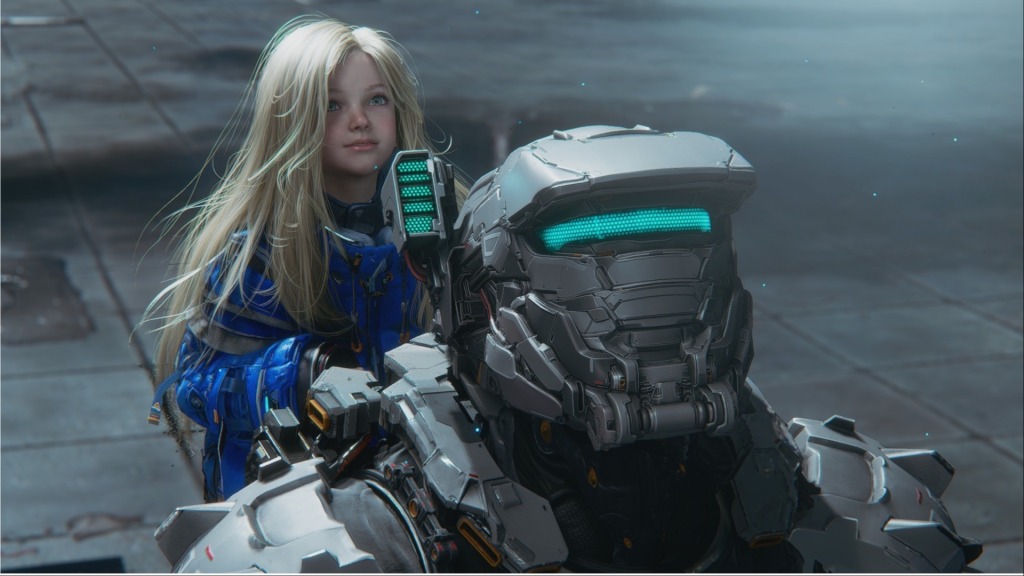
Pragmata is at the intersection of both these models. In plot, Pragmata borrows from western games more readily. Hugh, a regular guy and software engineer, accompanies a team of tech officers to a moon base. After a massive moonquake, the rest of his team dies and vicious robots stalk Hugh through the corridors of the base. But one such robot is friendly. Diana, modeled after a little human girl, is a titular Pragmata. She can hack the bots which populate the moon base and let Hugh take them out with heavy weaponry and thruster dodges. The primary difference between Pragmata, and say, The Last Of Us, is that Hugh is not really sad or tortured. His adoption at the hands of a loving family gives him the right tools to relate to Diana and their relationship is easy-going and excitable. Diana has only known a small part of the moon base, so Hugh is her portal to a broader world. To her, he represents the freedom the life of an ordinary girl might grant. So far, Hugh is both mentor and protector to Diana, fully the weaker party.
 Keep scrolling for more great stories.