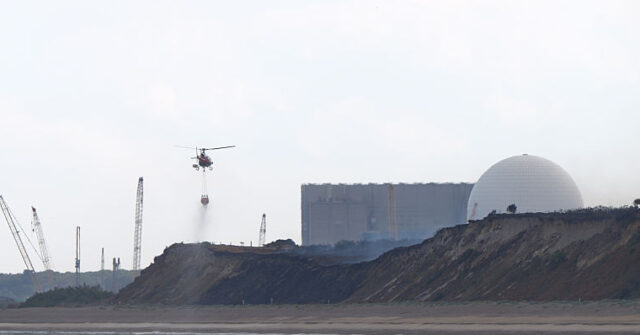
A British nuclear power plant is on alert as a rapidly expanding wildfire threatens the facility, with concern changing weather over the course of the day could overwhelm air filters with smoke.
Sizewell B nuclear power plant in Suffolk, one of the few remaining operational plants in the United Kingdom and one which has only started to come back online this month after a two-month refuelling shutdown is just three miles away from a major wildfire burning on Dunwich Heath. French energy giant EDF, which owns the plant, has said it is “monitoring” the situation and for the time being the wind is blowing the smoke and driving the flames out to sea, and not towards the site.
They said: “The fire at Dunwich Heath is not currently affecting operations at Sizewell B power station but we are continuing to monitor the situation — we are not on high alert.”
Yet as reported by The Daily Telegraph, weather forecasting services state it likely the wind direction is due to change this evening, and wind speed is due to pick up, meaning the fire could both intensify and send its smoke inland towards the Sizewell area. The fire has already grown in size ten times over, through the course of the morning and hundreds of people have been evacuated from their homes.
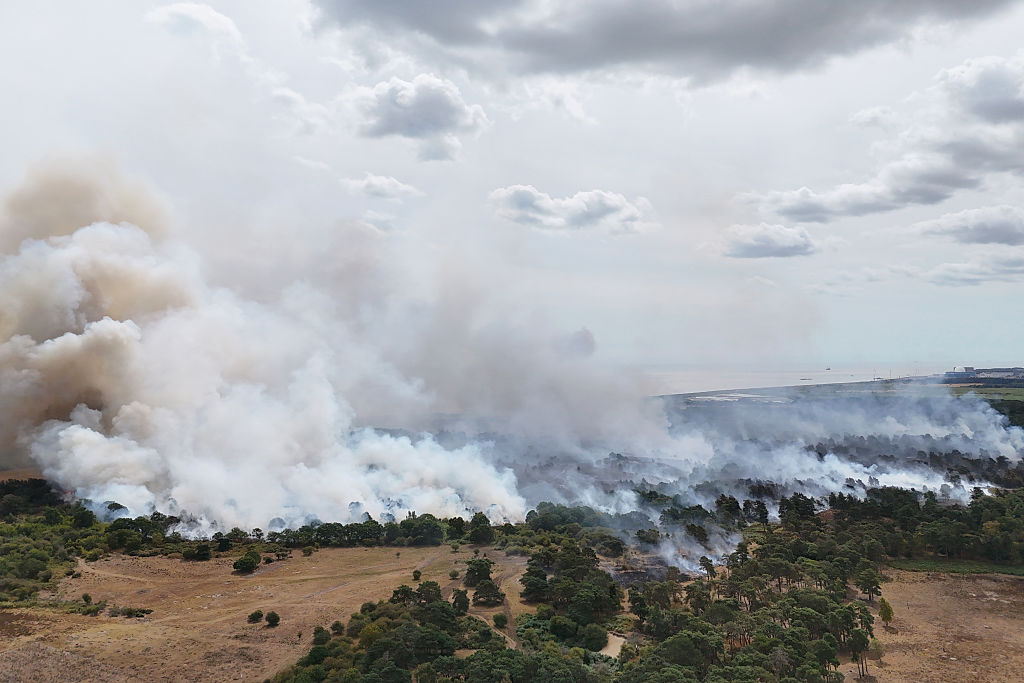
Smoke rises from a wildfire at Dunwich Heath, near Leiston, where a major incident has been declared as firefighters battle a large heathland blaze on the Suffolk coast. Picture date: Thursday July 30, 2026. PA Photo. Photo credit should read: Joe Giddens/PA Wire (Photo by Joe Giddens/PA Images via Getty Images)
If the plant’s air system begins to ingest smoke, it could block filters, meaning diminished cooling for ancillary systems that serve and control the water-cooled reactor. While this wouldn’t directly endanger the reactor, it could force a temporary shutdown of energy generation. A nuclear energy expert speaking to The Times noted the power plant itself and its operating systems were more robust than the people working there, and a shutdown would be caused by staff having to evacuate from choking smoke, not by systems failing.
There is no serious risk of the present wildfire reaching the plant itself given the presence of the remains of the River Minsmere that runs between the Dunwich Heath fire and the Sizewell nuclear plants.
The Prime Minister, Andy Burnham said “obviously” the government is closely monitoring the situation, calling it a “very serious incident” and promising the county fire brigade, Suffolk Fire and Rescue Service, support. Burnham said this could include mutual aid from neighbouring fire services as well as “any other resources that need to be brought to bear” and “all of the support needed will be there.”
The chief of the Suffolk fire brigade said in a press conference on Thursday that while it is too early to positively identify the cause of the wildfire, he nevertheless instructed public to obey instructions on not using disposable barbeques in this weather, even on their own property. The fire brigade said the blaze could last for days yet.
As earlier reported, government studies have elsewhere concluded that the vast majority of wildfires are not spontaneous acts of nature, but caused by human hand, either through negligence or by deliberate arson.
Sizewell B is the second of three power plants built over the historic fishing village of Sizewell in Suffolk, England. Construction began on the first, Sizewell A, was one of the UK’s first nuclear plants, and it generated power until 2006. Decommissioning is underway, a marathon endeavour which may not see the final buildings demolished for decades.
Sitting next door to that historic facility, Sizewell B is Britain’s youngest operating nuclear power station and came online in the 1990s. It was due to be decommissioned in the coming years but has been granted a life extension plan, meaning it should continue to generate electricity until 2055.
Sizewell C, which is presently under construction, will be considerably more powerful than earlier generations of British nuclear plants and is due to come online in the mid-2030s, with an expected service life of 60 years.
The Dunwich area where the wildfire is presently burning is known predominantly for the historic lost town, which slowly fell into the sea over the course of centuries. Thought to have once been the capital of an Anglo-Saxon period heptarchy kingdom, the fact ‘Britain’s Atlantis‘ remained a legal entity into the pre-modern era despite it having been reclaimed by the waves led to it becoming one of the most infamous ‘rotten boroughs’, an electoral district with no electors where a seat in parliament could be had by questionable means.