This post was republished with permission from Zero Hedge

Something researchers have observed for decades is finally crystallizing into a measurable cultural phenomenon. Political conservatives consistently report higher levels of happiness, better mental health, and stronger psychological well-being than their liberal counterparts.
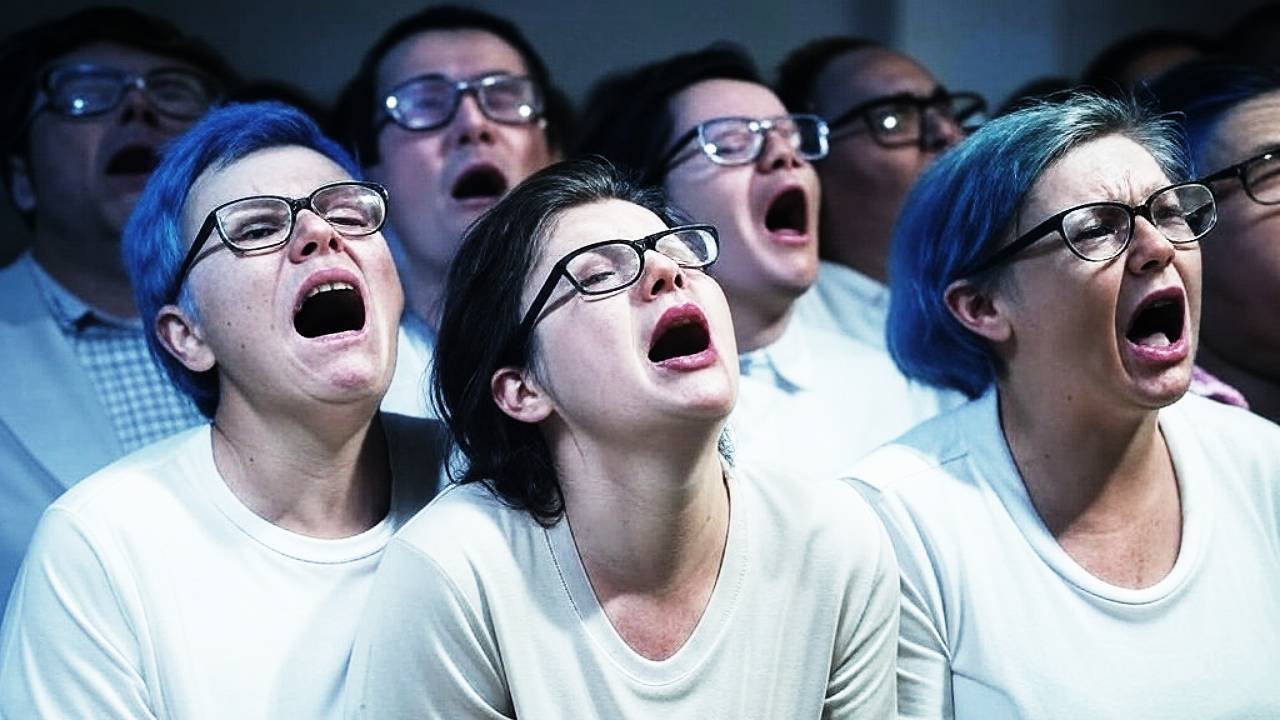
A new study published in Political Behavior takes that finding several steps further, arguing that mental illness has begun functioning as its own political identity, and that identity clusters most tightly on the left.
Columbia University’s magazine originally flagged the underlying trend back in 2023, reporting that “American adults who identify as politically liberal have long reported lower levels of happiness and psychological well-being than conservatives,” Based on the data of four different studies, researchers from the Universities of Florida and Toronto, found an explanation: conservatives tend to exhibit greater personal agency, religiosity, moral clarity, self-worth, and a more optimistic general disposition.
The Political Behavior study was conducted by Prof. Lauren Van De Hey of Utah State University, and the implications of her findings were significant. “I further find that there is an emerging mental health political identity that is most pronounced among younger (Gen Z) and more liberal Americans,” she said.
She also noted that “the political predictors and political consequences for the emerging mental health identity differ from those for physical disability and serious physical illness categorization and identification,” suggesting that mental health, unlike physical illness, has acquired a distinctly ideological character in American life.
Approximately half of the study participants with mental illness reported that their identity as a person with a mental health condition is “very important or somewhat important” to them. Meanwhile, conservatives are less likely than liberals to categorize anxiety and depression as mental health conditions and seek clinical treatment at lower rates. Van De Hey speculates this may reflect a “personal responsibility ethos: they do not seek help when they think they can resolve the issues on their own.” That framing, notably, does not treat the conservative approach as a pathology.
The study concludes that “these findings have far-reaching consequences for mental health advocacy, and the role mental health identity will play in the political sphere – especially as Gen Z matures as a cohort,” with conservative and specifically Christian beliefs credited as having a stronger track record for producing happiness and well-being than leftist counterparts.
“It is becoming increasingly clear which ideas do what! Conservative, and specifically Christian, ideas have a much better track record than their leftist counterparts,” writes Glenn T. Stanton of Daily Citizen. “This has deep personal and political implications.”
The gender dimension of this divide deserves its own examination. Academic literature going back to the 1970s establishes that women generally report worse mental health than men. A separate body of research establishes that conservatives report greater happiness than liberals. Among young liberal women, both trends converge. Last year, the Institute for Family Studies report found that 37% of conservative women report being “completely satisfied” with life, compared to 28% of moderates and just 12% of liberal women. Young conservative women are more than three times as likely as liberal women to report feeling very happy, and IFS found that “liberal women are two to three times more likely to report they are ‘not satisfied’ with their lives, compared to conservative women.”
The loneliness numbers were just as striking. Among women ages 18 to 40, 29% of liberals reported feeling lonely many times a week. Among conservative women, that figure dropped to 11%. The explanatory variables IFS identified were that young conservative women are far more likely to be married, far less likely to be cohabiting, and nearly five times more likely to attend weekly church services.
IFS concluded that closing the happiness gap “will seemingly require not only a change in thinking but also a renewal of young liberal women’s connection to America’s core institutions – family and faith.” That’s a direct challenge to a progressive framework that has spent years telling young women that traditional institutions are the source of their suffering rather than the solution.
Your support is crucial in helping us defeat mass censorship. Please consider donating via Locals or check out our unique merch. Follow us on X @ModernityNews.