A report submitted to the Methodist Conference on its environmental plans has recommended abandoning the target of reaching Net Zero by 2030, arguing that sustained progress is more valuable than unrealistic goals.
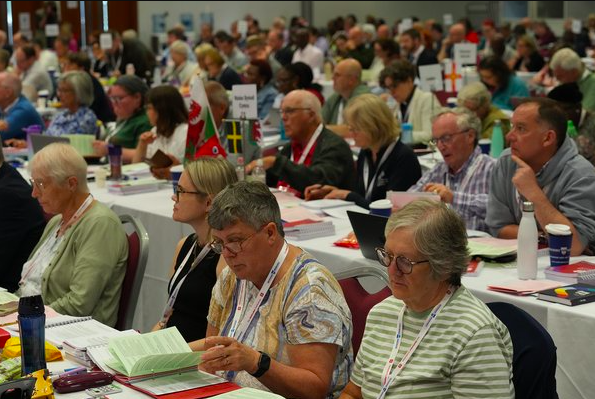
The report followed an update on the Church’s progress towards attaining its goal at its annual assembly. The update stated that while Methodist churches up and down the country have made some progress towards achieving Net Zero, some have experienced difficulty in forming effective strategies.
The Connexional Council, which is responsible for actioning decisions by The Methodist Conference, advised with regret the abandonment of the 2030 target. Retaining the target placed the Church at risk of “undermining credibility” and opening itself to accusations of “greenwashing”, it said.
Instead of a fixed target, the council recommended a “more flexible” approach that emphasised ongoing and sustainable progress to carbon reduction. This approach, it was argued, would be more honest and sustainable, even if it appeared to be a step backwards in the short term.
Dr Hamish Leese, Director of Environmental Engagement at the Methodist Church, said, “In 2021 the Methodist Conference agreed and affirmed that the global climate emergency is a crisis for God’s creation and a fundamental injustice.
“It is, therefore, not only a practical issue but a deeply spiritual one, which is inextricably linked to discipleship and God’s mission which we are called to join. At the same Conference, an aspirational target was agreed for the Church to aim to become net zero by 2030.
“In the years since 2021 a great deal of work has been undertaken by churches, circuits and districts all across the Connexion, and I want to say a big congratulations to all those who have made progress.
“We have seen churches all over the country making environmental concerns part of their worship and teaching life and reduce the amount of energy they are using, as well as sourcing it from renewable sources.
“Many churches have added solar panels or heat pumps, and many more have taken the first steps that will enable them to travel further on their sustainability journey. Over 1,300 Methodist churches in Great Britain are now registered with Eco Church, and this number is growing all the time. ”
Leese added that much of the progress would not have happened without the 2030 target. Nevertheless, Leese conceded that Net Zero by 2030 was not going to happen.
“The target was an aspirational one precisely because we knew the scale of the challenge in achieving it, and it is one which the Church has not had the capacity to achieve,” he said.
“To retain a target we know we are unable to achieve would undermine our credibility on this incredibly important issue and would open us to accusations of ‘greenwashing’.”
He said the decision to move away from a time-bound target was “in no way an indication that these issues are any less important to the Church”.
“Climate change is inherently and inescapably an issue of mission, discipleship and justice,” he said.
“Indeed, this proposed change is a recognition that an issue of this importance requires a realistic and practical approach which moves beyond an aspirational target which is out of reach.”