Order Jamie Glazov’s new book, ‘United in Hate: The Left’s Romance with Tyranny, Terror, and Hamas’: HERE.
On April 24, 2026, 11-year-old Nesya Karadi of Bnei Brak died from wounds sustained in an Iranian cluster-munition attack three weeks earlier. On April 1, hours before Passover, a submunition struck her family’s home, critically injuring her and wounding others, including her father. The facts were reported, the loss was mourned, and then, as with so many such cases, the story began to fade away.
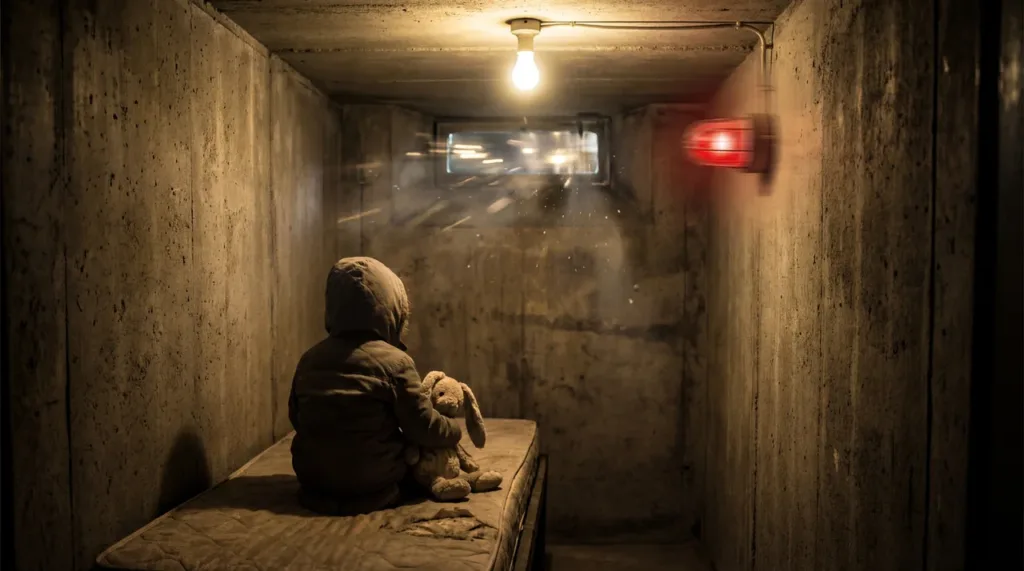
That pattern—brief visibility followed by disappearance—captures something essential about how harm to children is understood in modern conflict. When a child is killed, the event is noted. What receives far less sustained attention is the life that surrounds such moments: the repeated sirens, the rush to shelters, the interruption of school, the displacement of families, and the steady normalization of danger. For Israeli children growing up under recurrent missile fire and periodic waves of violence, these are not isolated disruptions; they are the conditions of childhood and everyday life.
It is common to measure civilian harm in discrete units: an attack, a casualty count, a news cycle: for children, however, harm accumulates as days of school are lost not once, but repeatedly. Nights are broken by alarms that demand immediate action and play is conditioned by proximity to shelters and the time it takes to reach them. Parents map routes not for convenience but for safety and even when no one is killed, the structure of daily life bends around the expectation of attack. Children are, at times, effectively immured in shelters while adults elsewhere debate the meaning of civilian protection.
International law, on its face, is not ambiguous about this: Civilians may not be targeted and the use of inherently indiscriminate weapons in populated areas is restricted and widely condemned. Children, as a class, are entitled to special protection, and across conventions, protocols, and customary law, the principle is clear: those least able to defend themselves should be shielded from the effects of war to the greatest extent possible.
Yet there is a persistent gap between what the law recognizes and what analysis tends to measure. International mechanisms track certain harms to children closely. They count those killed and maimed, monitor attacks on schools and hospitals, and document the recruitment and use of minors by armed groups as grave violations. These categories matter, and the attention they receive reflects their severity.
However, they do not capture the full reality of sustained exposure and the cumulative effects of living under repeated attack without a single defining incident. They do not measure the erosion of normal life caused by recurring disruption, nor do they fully register what it means for a generation of children to grow up within range of rockets and missiles that can arrive with little warning.
The events of October 7th underscored the extent to which core protections can be violated outright. Children were among those killed, and others were abducted from their homes and taken across the border. Among the most widely recognized cases was that of the Bibas family, whose very young children were not only taken into captivity, but later savagely murdered in cold blood. These are not marginal breaches of legal norms; they strike at the center of what the law is meant to prevent—violence against those who are most vulnerable.
And yet, even in such cases, the path from violation to accountability is tentative. The international system is capable of issuing statements, conducting inquiries, and documenting abuses; however, it especially struggles to produce consistently in enforcement. Arrests are rare, prosecutions are limited, political constraints and jurisdictional complexities interpose, and the realities of asymmetric conflict complicate the application of law. The result is a pattern in which clear prohibitions do not reliably lead to visible consequences.
That gap has effects of its own when violations are documented but not pursued to the point of accountability, the signal is ambiguous. The law is affirmed in principle but not enforced in practice. Over time, that distance between rule and action risks becoming normalized, and for those living under repeated threat, the absence of enforcement is not an abstract concern. It is a vital part of the environment in which these attacks occur with seeming impunity.
There is, moreover, a noticeable disparity in how attention is distributed. The protection of Palestinian children rightly receives sustained international focus. Reports are produced, statements issued, and coverage remains continuous; however, the effects of unrelenting missile attacks and terrorist violence on Israeli children—sheltering, displacement, and psychological chronic exposure to threat—receive far less sustained analysis. The contrast is not in whether children are acknowledged as victims, but in how consistently their experiences are examined and followed through.
In this environment, Israel often encounters immediate obloquy when it responds militarily, with legal and moral scrutiny applied in real time. International officials and commentators unfailingly fulminate over the conduct of operations and the protection of civilians. Such scrutiny is not, in itself, unwarranted; it is part of how the laws of war are meant to function. The asymmetry arises and becomes apparent, however, when attacks on Israeli children, even when clearly implicating those same legal principles, do not generate comparable urgency in investigation or enforcement.
This is not a claim about the absence of law as internation law is consistently clear and explicit, nor is it a claim that harm to Israeli children is never recognized. It is. The issue is how that recognition is sustained, measured, and acted upon. Certain categories of harm trigger ongoing attention and institutional follow-through; while others, even when repeatedly documented, tail off more quickly into the background.
The consequences are not merely rhetorical. How harm is measured shapes how policy is formed. It influences diplomatic pressure, legal initiatives, and public understanding. When cumulative exposure to violence is undercounted, it risks being treated as less significant than it is and when enforcement is inconsistent, it alters expectations about accountability. Over time, this can produce a pattern in which some violations are pursued vigorously while others generate far less visible response. The result is moral decline: a collapsing belief that Justice will ever be applied equally.
There is also a second dimension that complicates the picture further: International frameworks devote considerable attention to the recruitment and use of children in armed groups, recognizing it as a grave violation. Reports have documented environments in which children are exposed to militant messaging and drawn toward participation in conflict from a young age. This, too, is part of the broader landscape of harm affecting children in the region, and it underscores that vulnerability can take different forms.
Taken together, these realities point to a broader pattern that the international system is not indifferent to children: rather, it has developed detailed rules and monitoring mechanisms. It is selective, however, in what it emphasizes and how it responds to these particular circumstances. Acute events are counted and categorized, while certain violations trigger sustained scrutiny, and other forms of harm—chronic, cumulative, and less easily quantified—receive less consistent attention.
For Israeli children living under recurrent attack, that distinction matters as their experience is not defined by a single moment of crisis but by a sequence of disruptions that shape daily life. The law recognizes their vulnerability and the headlines occasionally capture their losses. What remains underexamined is the continuity of their exposure and the limited follow-through when clear violations occur.
A dissolute international conscience is not the result of a single failure, but of a pattern in which principle and practice diverge. The question is not whether the rules exist? They do. However, the germane question is whether they applied with consistency, and whether the full spectrum of harm—especially that which accumulates over time—is given the attention it warrants.
Pending the enforcement of international law, innocent children like murdered eleven-year-old, Nesya Karadi, will continue to enter the record briefly, only to disappear from it just as quickly. The law will remain intact on paper, while the reality it is meant to govern will remain unevenly seen.
Law not applied equally ceases to be Justice and becomes a weapon of politics. Until the perpetrators of these war crimes face indictment, prosecution and conviction, condemnation remains theater. To refuse enforcement is not neutrality; it is tacit permission.
In order to eliminate spam comments that have historically flooded our comments section, comments containing certain keywords will be held in a moderation queue. All comments by legitimate commenters will be manually approved by a member of our team. If your comment is “Awaiting Moderation,” please give us up to 24 hours to manually approve your comment. Please do not re-post the same comment.