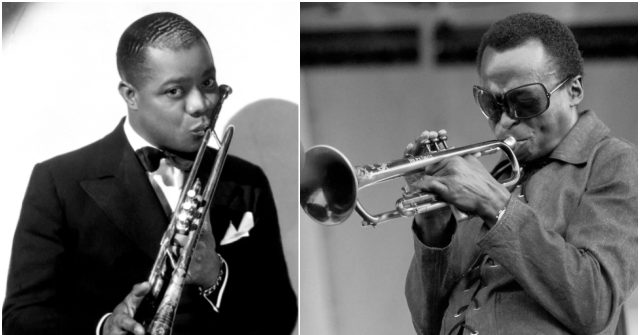
It is without dispute that America invented the musical genre known as “jazz” and spent the entire 20th century exporting it across the world.
In fact, the development of this new musical art form more than 100 years ago relied almost entirely on the American experience at its best and its worst — the latter of which it would help to rectify.
It is a stubborn myth that jazz was invented — as trumpeter Wynton Marsalis put it — by “noble savages” in brothels and speakeasies who were “untutored” musical “semi-literates.”
In reality, both formally trained and non-reading musicians (who nevertheless had a deep knowledge of melodies, harmonies, and rhythms) joined forces to give birth to what would evolve into one of the world’s most complex and challenging musical forms through decades of relentless exploration and development.
One thing is perfectly clear. Not every musician, even among the most highly trained, are even able to play jazz.
That was clearly demonstrated to me one night in Detroit about 30 years ago.
For a good 25 years I led and played lead guitar in a popular blues band in the Motor City. For several of those years our five-piece played weekly at the Soup Kitchen Saloon in the city’s warehouse district at a gig we christened the “Wednesday Night Blues Cruise.”
As our name, the Progressive Blue Band, implied, we largely stuck with big city “jump” blues but also covered some of jazz’s easier creations by Big Joe Williams, Mose Allison, and a tune from Miles Davis’s iconic Kind of Blue album.
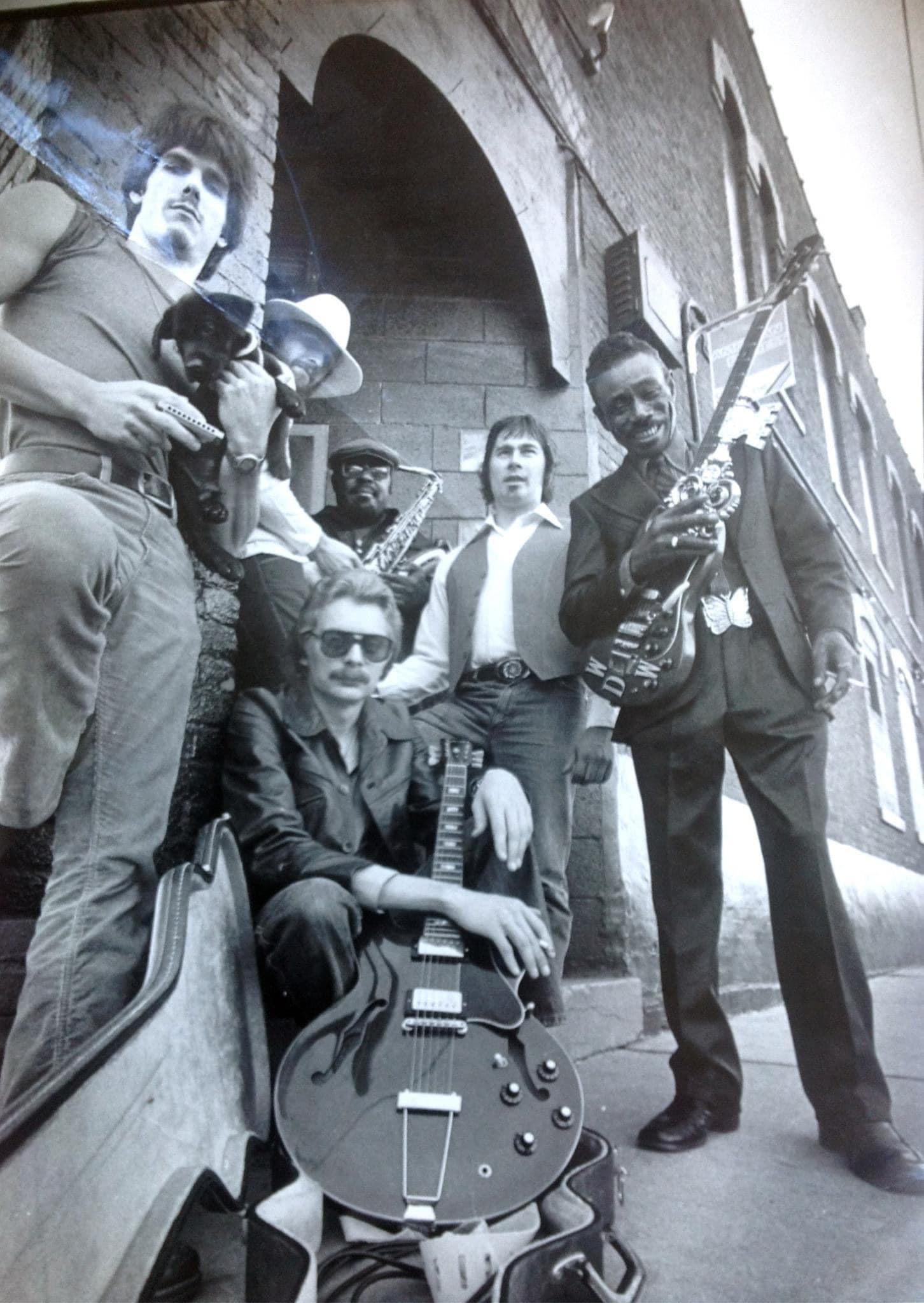
Lowell Cauffiel (center guitarist) and his Progressive Blue Band outside Detroit’s Soup Kitchen Saloon in 1982. (Photo courtesy of Lowell Cauffiel)
One fall, I began to notice a group of well-dressed patrons who were regularly showing up at midnight to catch our last set.
They turned out to be string and horn players from the world class Detroit Symphony Orchestra, capping their evenings at our club after playing classic compositions by Bach, Beethoven, Chopin, and the like.
Only the most accomplished musicians, typically trained at demanding music schools like Juilliard and Berkley, qualify for those kind of orchestra gigs, which is why I was shocked when a couple of them approached me during a break.
“God, we love you guys,” a trumpet player told me. “I wish I could play that.”
“I’m sure you can,” I said. “Just put a band together.”
“That’s not what I’m saying,” he said. “Where are your music stands? You guys are making this stuff up as you go along.”
“Yeah, the solos are all improvised,” I said. “I’m sure you guys could handle it.”
He shook his head, saying, “I wouldn’t know where to start.”
He had a sad look on his face.
In that moment it hit me: The music we were playing — ironically, its origins coming from slaves and their descendants in the Jim Crow South — was the product of freedom.
But the classical musicians were chained to sheet music, the compositions the product of established by Europe’s rigid class structure and aristocracy. Musicians were trained to play the notes that were written and kept in line by a “conductor” who made sure all went as planned. Only the maestro was granted a small measure of liberty to apply some “interpretation” to a classical piece.
Other than its folk music, why had Europe not evolved beyond that? Why had we?
The answer is found in the melting pot of African, European, Latin American, and Caribbean cultures that converged in New Orleans at the turn of the 20th Century – a meeting of time, place, and opportunity that could only have happened in the USA.
Ground zero, according to historical accounts, was a place there called Congo Square, where enslaved blacks were allowed only one day of the week to assemble and would walk miles on Sunday afternoons to play music and dance there.
They brought with them the blues scale from the field “hollers” and the God-praising emotions of “negro spirituals” from the black churches, eventually to be joined by schooled marching band musicians who were yearning for a way to express their instruments.
The result was New Orleans, or “Dixieland,” jazz.
In time it produced Louis Armstrong. It was just a start.
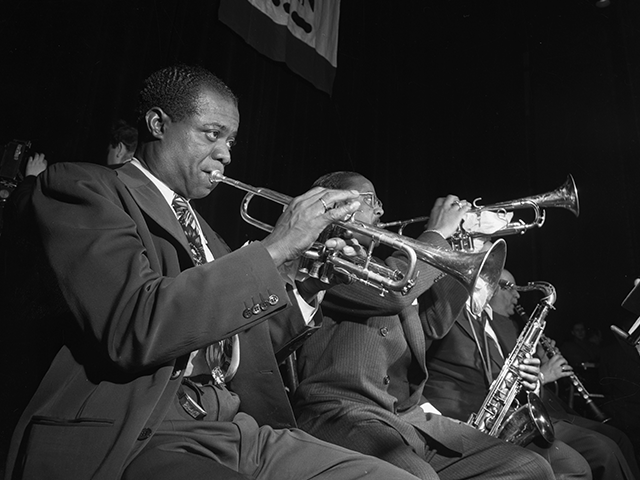
Louis Armstrong in a jazz concert at the Metropolitan in 1944. (Bettmann/Getty Images)
Jazz began improvising itself into new forms: the dance music of the “jazz age” in the 1920s, the big bands of the 1930s, the fast and furious of bebop in 1940s, the birth of “cool” in the 1950s, and the ethereal, spiritual explorations of John Coltrane in the 1960s, culminating in the iconic jazz prayer A Love Supreme.
All, including fusion jazz that followed in the 1970s, have an essential element in common: the liberty of soloists to create in the moment or a composer’s ability to rework even a Disney song, as Miles David did, with “Some Day My Prince Will Come.”
Improvisation.
Ask any player who is blessed with that ability, and he’ll tell you that’s only a ticket to the grounds.
Speaking for myself, I find learning to play modern jazz on any one of my seven guitars, with its complex chord changes and array of both complimentary and discordant scales, is like tackling music’s version of quantum mechanics.
It is technical, calculating, and often mind boggling, which you must ultimately then ignore to release what you’re feeling and thinking during a solo.
For years, I’ve found Miles Davis the most astute and listenable purveyor of the genre. Leaving 1940s bebop behind, he went on to established several jazz movements from the early days of “cool” to the understated modal playing of Kinda Blue to the fusion of Bitch’s Brew.
Song off of Kinda Blue like “So What,” which also featured then band member John Coltrane, spun on turntables from Harlem to the penthouses of Manhattan and continue to animate stereo speakers worldwide 66 years later.
Despite all that genius, it was in New York in 1959 that Davis experienced the violent end of one the most shocking incidents in jazz history.
Davis, 33, already an international star, was enjoying the release eight days earlier of Kinda Blue, which would go on to be the best-selling jazz album of all time.
That night, the trumpeter had just finished a set at Manhattan’s Birdland Jazz Club on 52nd Street, walked a white woman to a cab, and dressed impeccably in sport coat and tie, stood smoking a cigarette, taking a break before his next set.
That’s when a New York police officer approached and told him to move along. Davis explained he was on a break and was headlining at the club behind him. He even pointed to his name on marquee and his performance photos on the lobby card.
It apparently didn’t matter with that cop in 1959.
When Davis refused to move, the policeman lunged at him as an inebriated detective came up behind and took a blackjack to Davis’s skull. A hospital visit and several stitches later, he was photographed with his sport coat and white shirt covered with blood, and booked for disorderly conduct.
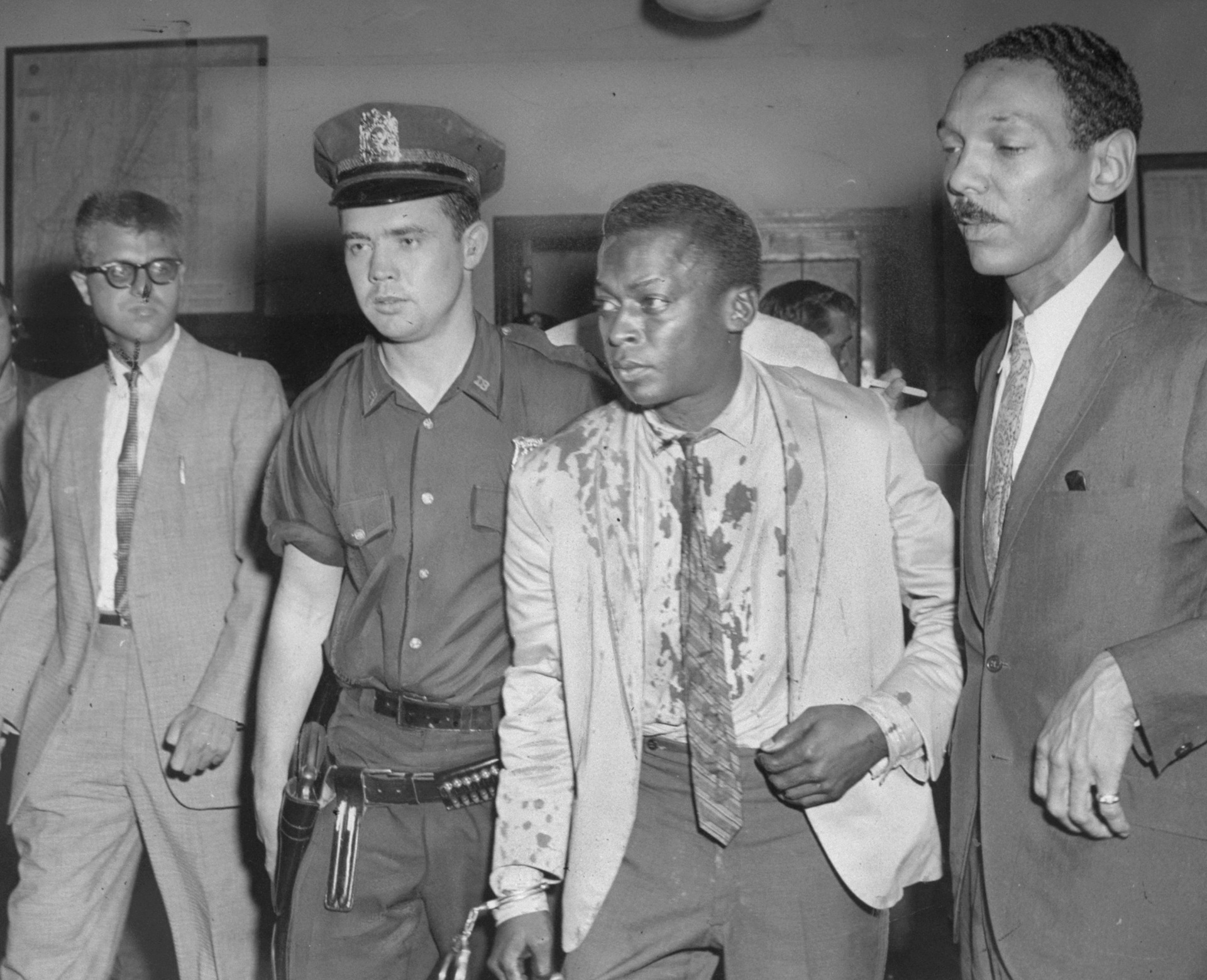
A bloodied Miles Davis with attorney Harold Lovette and patrolman Gerald Kilduff in the 54th Street Precinct after Davis was arrested in 1959 in New York City. (Jerry Kinstler/NY Daily News Archive via Getty Images)
The incident and photos made embarrassing international headlines and brought national attention to the way black musicians were treated in their own country. Many also couldn’t stay in some hotels in the South where they headlined shows.
The beating was another atrocity that helped fuel the civil rights movement in the 1960s and particularly shocked the millions of white fans who bought Davis’s records.
Davis later wrote in his autobiography, “That incident changed me forever. Made me much more bitter and cynical than I might have been.”
But one thing did not change.
Despite his legendary gruff demeanor, and a persistent resentment for being pulled over “weekly” as an auto theft suspect in his Ferrari in Malibu in the 1980s, Davis continued to offer up the most sensitive, often beautiful, line and phrasing in all of jazz.
What Miles also certainly did not do was buy into the notion that victimized blacks created his genre and only they were entitled to play it, labeling it a racist cliché, and taking any opportunity to tell an interviewer that.
He rejected the notion that slavery or any “suffering” made him or others better players. He pointed out that his parents were well off and he’d been schooled at Juilliard.
Davis even bristled at the word “jazz,” saying it pigeonholed innovation and caused musicians to rely on “riffs” and boilerplate musical phrases.
He called what he did musically his “study.” And study he did.
Not long after Miles Davis would create a new milestone, he was off exploring in search of another.
“Miles Davis was arguably the most influential jazz musician in the post-World War II period, being at the forefront of changes in the genre for more than 40 years,” the National Endowment of the Arts wrote, bestowing on him in 1984 the title of Jazz Master.
“Knowledge is freedom, and ignorance is slavery,” Davis wrote in his autobiography.
And that’s what brings me back to that night in our club with the classical musicians.
Jazz not only captures the essence of the American value of freedom. It grants a right — the right to the individual to explore, to innovate, to “study,” unrestricted by someone else’s rules or notes on a page.
Jazz evokes the same relentless spirit that gave us the first airplane, the light bulb, organ transplants, mass production, and countless other U.S. inventions – not to mention the Declaration of Independence and the U.S. Constitution.
And that, in my book, is what makes jazz uniquely American.
Lowell Cauffiel is the recipient of Columbia University’s prestigious Paul Tobenkin Memorial Award for his series that reduced racial conflict in the Motor City in the 1980s. He’s been a musician for more than 60 years, including playing professionally in Detroit blues clubs. He’s the best-selling author of Below the Line and nine other crime novels and nonfiction titles. See lowellcauffiel.com for more.