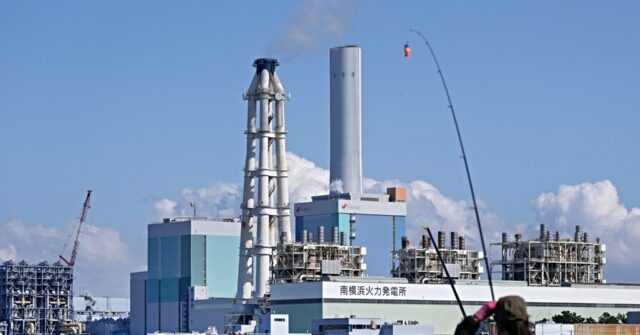
Restrictions on Japan’s coal-fired power plants were relaxed Friday as the Asian industrial giant seeks to ease an energy crunch caused by the Middle East war choking oil supplies.
AFP reports the plan was made official at a meeting of a panel of experts, who approved the proposal, the government industry ministry said on its website.
“Given the current situation in the Middle East affecting fuel prices, we believe that uncertainty regarding future LNG procurement is increasing,” an industry ministry official said at the meeting, as Japan looks to follow other countries in returning to burning coal for a reliable source of energy in a troubled world.
“We think it will be necessary, by increasing the operation of coal-fired power plants, to… ensure the reliability of stable supply,” he said.
Power suppliers have previously been required to keep the operating rate of coal-fired thermal power stations that emit large amounts of carbon dioxide at or below 50 percent, AFP notes.
But the government now intends to allow the full operation of older, less efficient coal-fired plants, for a year from the new fiscal year starting April, according to the plan presented at the meeting.
The emergency measure to boost reliance on coal is estimated to “result in an LNG savings effect of approximately 500,000 tonnes”, the official added.
Tokyo purchases nearly 80 percent of its coal imports from Australia and Indonesia, according to the Agency for Natural Resources and Energy.
Japan on Thursday said it had also started to release another part of its strategic oil reserves as it faced supply challenges to its oil imports caused by the Strait of Hormuz chokepoint.
AFP contributed to this report