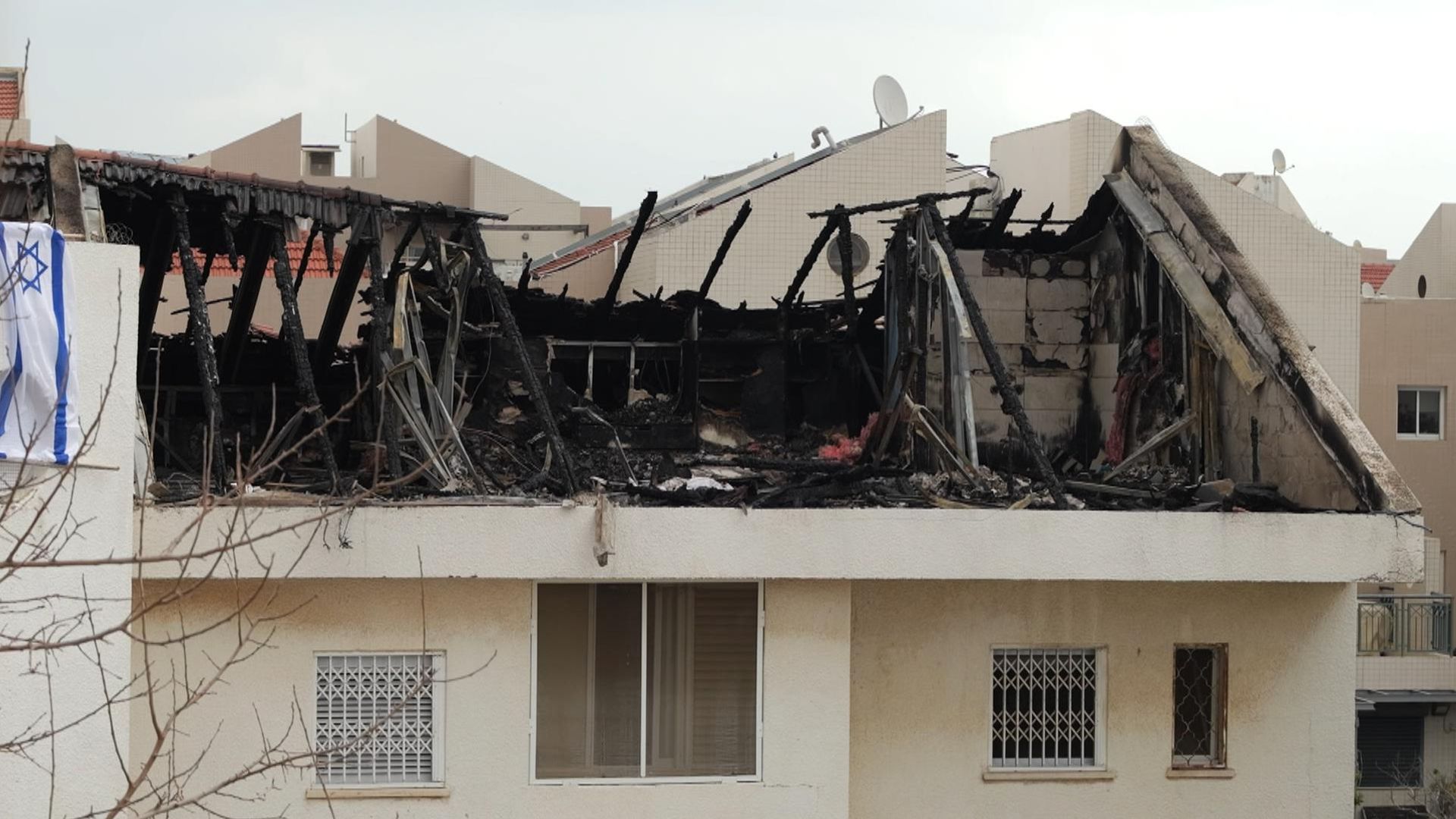
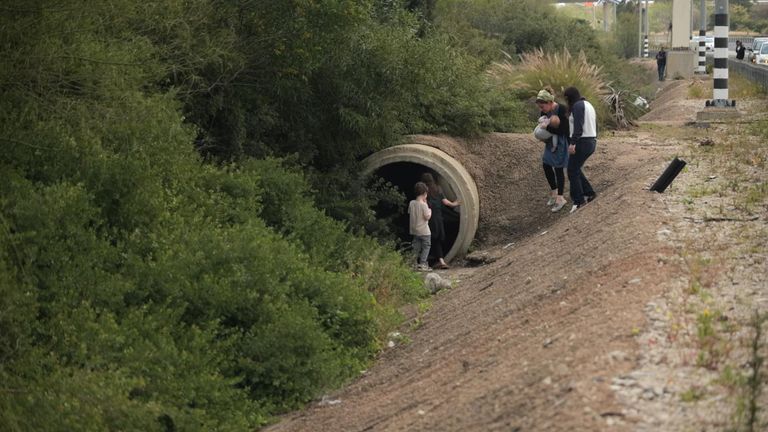
A woman scrambles down the steep embankment cradling a baby in her arms.
A man extends a hand to someone else whose step quickens. The sirens start blaring, a warning that incoming missiles are just minutes away.
We’ve all just pulled over at the side of a busy motorway on the outskirts of Tel Aviv.
The usual rules to head down to a bunker are out of the window – all we can do is find a ditch.
That’s the pattern of life in Israel right now, with alerts still ringing out through the day and night, right across the country.
After the all-clear, we realise missiles have hit neighbourhoods a couple of kilometres away from us.
We head to a built-up area where firefighters are dousing down the flames of cars that have caught fire. The local population has escaped injury.
It’s quite a chaotic scene when we arrive as soldiers seal off the area, warning people to get back.
A 21-year-old woman called Keshet tells us part of an Iranian cluster bomb landed right by her home.
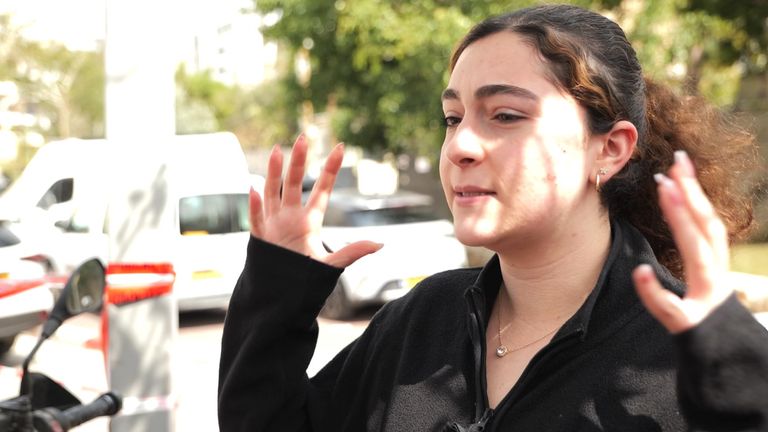
“There was a boom,” she says. “We ran outside and saw the fire. It was like an earthquake – it was very frightening.”
There’s not much complacency. The war is into its third week and people have confidence in Israel’s defence systems to intercept missiles.
Some are getting through and there’s the other very real danger of falling debris from the skies after an interception.
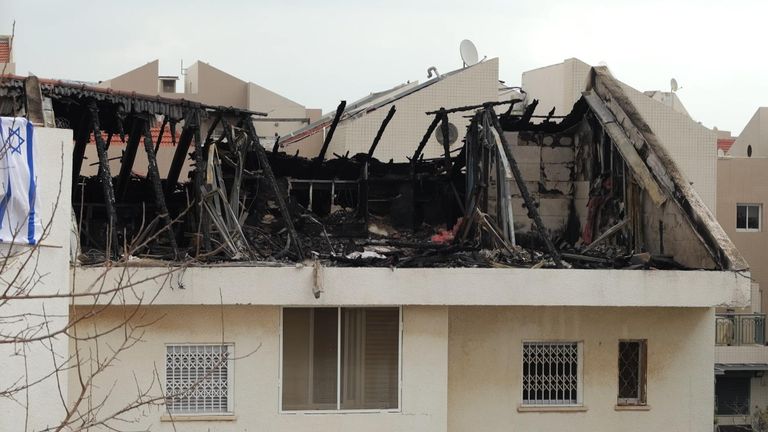
Israel’s defence missiles collide with the incoming missiles from Iran or Hezbollah – and the debris can land absolutely anywhere.
Kobi Hassonah is angry. He lives next door to a storage container which was destroyed in a blaze when debris fell from an intercepted missile.
When we speak to him, the acrid smell of smoke is still in the air.
“Do they [the Iranians] even know what they’re aiming at?” he says. “They just fire. It landed right next to my house. Of all the places.”
But that notion – that nobody wants to be the unlucky one – is largely still driving people to shelters. Safe spaces underneath their homes or beneath the ground. Not everyone has a safe room in their home.
In an underground car park, we meet 46-year-old Alex Proskurov from the city of Rishon LeZion, just south of Tel Aviv.
“We don’t really care about sitting in a bomb shelter for months,” he says defiantly. “As long as we finish the job once and for all.”

His advice: “Don’t be a hero and it’s going to be fine.”
Iran isn’t causing large-scale casualties in Israel – unlike Israel’s bombs launched on Iran and Lebanon.
But it is successfully engaging in psychological warfare.