
Iranian Warship Surrenders to Sri Lankans, First Time Ship Interned By Neutral Nation Since Second World War
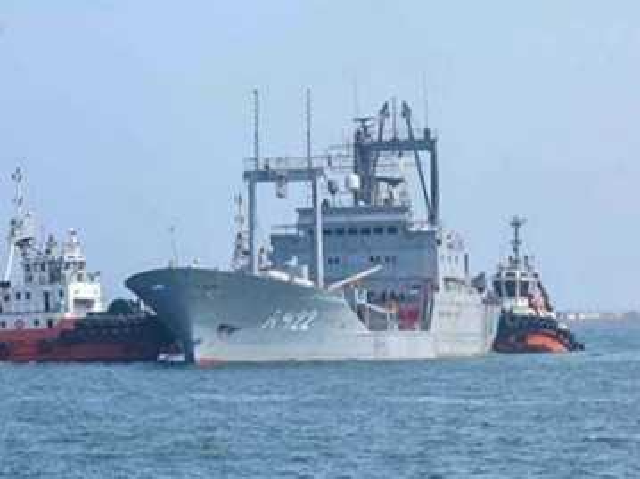
The captain of a ship of the Iranian Navy has handed his vessel over to the Sri Lankan government, a neutral party, for internment, saving the lives of his crew hours after another Iranian warship was destroyed nearby by the United States Navy.
Sri Lanka (Ceylon) has assumed control of the Islamic Republic of Iran Ship (IRIS) Bushehr, a fleet supply ship (oiler). Sri Lanka has sent craft to receive the 1970s-era ship within its territorial waters and, per local media, has taken off 208 officers and men, who are to be sent ashore. The ship will now be taken by the Sri Lankans to Trincomalee for internment for the duration of hostilities.
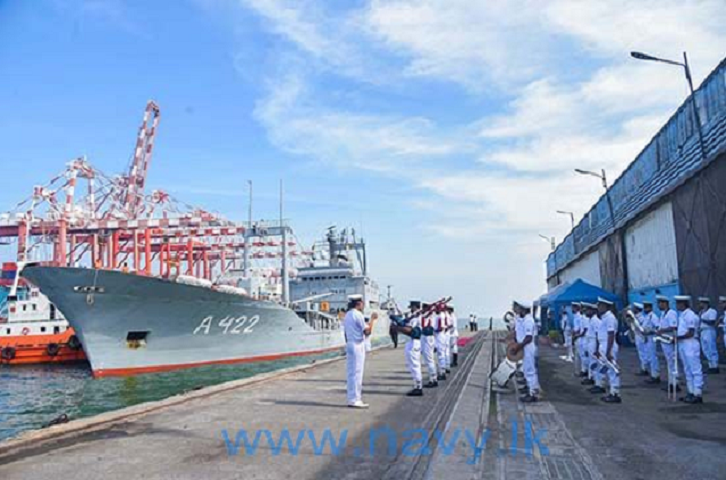
IRIS Bushehr at the port of Colombo on a formal visit to Sri Lanka in February 2024. According to the Sri Lankan Navy, at that time the ship had a crew of 270 and was commanded by Captain Mahdi Balvardi. / Picture Credit: Sri Lankan Navy
The Sri Lankan President Anura Kumara Dissanayake said his government had selected the historic port of Trincomalee due to the risk of disruption to maritime traffic by the presence of the inactive warship, so they wished to keep it away from the country’s primary commercial port, Colombo. The Times of India reports Dissanayake said: “we are not taking sides in this conflict, but while maintaining our neutrality we are taking action to save lives.”
Neither Sri Lanka nor Iran have yet officially confirmed that the ship was surrendered by her captain. Yet the ship only arrived in Sri Lankan waters this morning and according to the long-established laws of armed conflict at sea the Bushehr would have been entitled to spend 24 hours in the waters of a neutral country without fear from attack.
The fact the ship has been handed over to the Sri Lankan authorities so quickly strongly suggests the captain took the decision to preserve the life of his men by opting out of the conflict.
Had Sri Lanka not interned the ship within 24 hours, or compelled the Iranians to leave their territory, the United States would have been free to sink the ship, even inside Sri Lankan territorial waters or harbours. The International Red Cross states on this subject:
It is generally accepted that if belligerent forces enter neutral territory and the neutral authority is unable or unwilling to expel or intern them, the adverse party is entitled to undertake their hot pursuit and attack them there. It may even seek compensation from the neutral State for this breach of neutrality. The mere presence of belligerent forces does not justify hot pursuit, there must be some failure by the neutral State to uphold its neutrality.
Under those same laws of war, the cost to the captain and crew is that they too are to be interned in Sri Lanka for the remainder of the conflict. The officers may be given parole, but would not be free to leave the territory of Sri Lanka.
Given the facts as known, this is the first time since the Second World War that a warship has been interned by the government of a neutral power. During the Second World War, several damaged U-Boats were able to limp to neutral harbours and turn themselves over to the authorities after being damaged in attacks, preferring to see out the remainder of the war in captivity rather than the certainty of death at sea.
The internment of the IRIS Bushehr follows by a day the destruction of the Iranian frigate IRIS DENA in international waters to the south of Sri Lanka. The first sinking of an enemy ship by a United States submarine since the Second World War and the first officially acknowledged such sinking anywhere since 1982, the U.S. Department of War published periscope footage of the moment of destruction.

