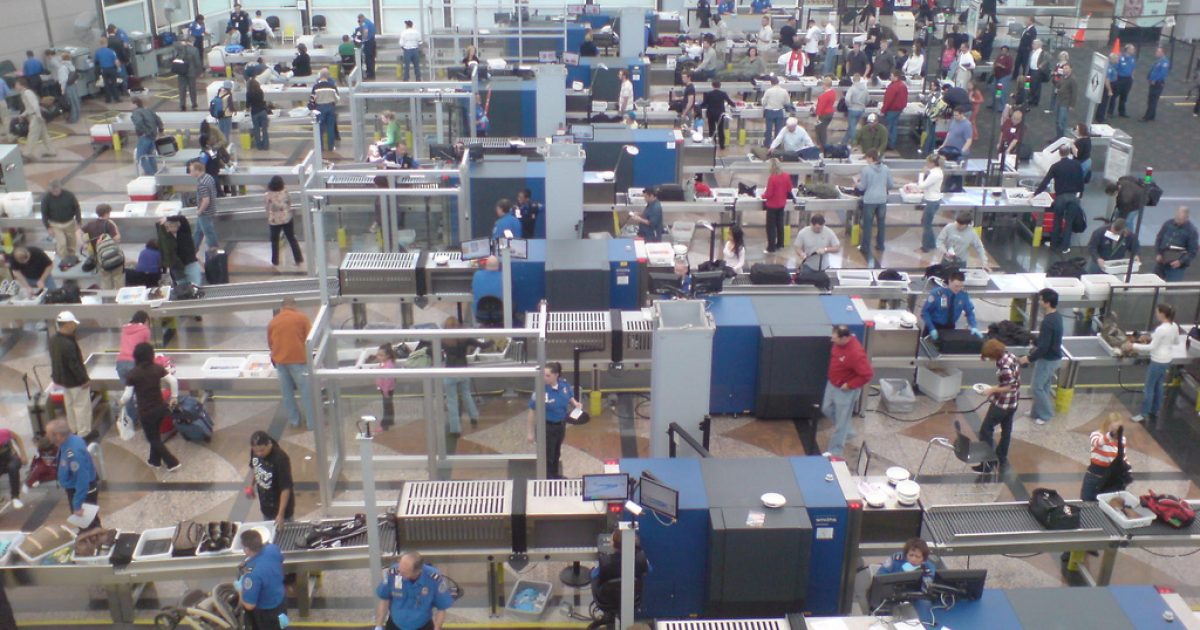


Airports across the United States have been plagued by long lines and lengthy delays caused by a budget dispute that has left DHS partially unfunded for over a month, marking the third-longest government shutdown in U.S. history.
Senate Democrats proposed funding TSA, FEMA, CISA, the Coast Guard, and other DHS agencies while explicitly excluding ICE and CBP, defunding those law enforcement agencies.
Republicans blocked that bill, arguing it would support Democrats’ open-border initiatives that protect illegal immigrants, and have insisted on funding the entire department together. Democrats have refused unless it is accompanied by reforms that would hamstring immigration enforcement.
Senator Ted Cruz noted that millions of Americans were facing two-, three-, and four-hour waits at airports and missing flights for spring break.
President Trump responded by deploying ICE officers to supplement TSA at airport checkpoints, alleviating the operational strain on understaffed airports while placing immigration enforcement personnel in position to conduct enforcement actions.
Trump stated that ICE at airports will help catch illegal aliens, a claim liberals such as Hollywood actor Jon Favreau have disputed by arguing that no illegal aliens enter the country by plane.
“Ah yes, people usually enter the country illegally by just booking a plane ticket,” he mockingly tweeted.
That argument is flatly contradicted by official government data. In FY 2023, over 510,000 people overstayed their visas. These are people who entered legally by air or sea and then remained unlawfully.
DHS publishes annual Entry/Exit Overstay Reports to Congress tracking this population, and overstays are estimated to constitute approximately 40 percent of the total illegal alien population residing in the United States.
TSA sends ICE lists of people flying through U.S. airports several times per week, including names and photos, which ICE checks against its own records and, if a target is identified, dispatches officers to make an arrest.
This is something neither airlines nor TSA are equipped or authorized to do. Airlines are private carriers with no immigration enforcement authority and no access to ICE databases.
TSA’s statutory mandate is aviation security, screening for weapons and threats to flight safety, not immigration enforcement. TSA can share passenger data with ICE but cannot itself act on immigration violations.
Without ICE present, a person flagged in ICE databases boards the plane unimpeded. The presence of ICE officers at airports closes that gap by placing the agency with both the database access and the enforcement authority in the same location as the traveler.
The argument that requiring a visa to book or board a flight prevents illegal entry is also false. Airline document checks are limited to a visual examination to confirm a visa is present in the passport and that dates appear valid.
IATA acknowledges that airline systems may confirm the presence of a visa but rarely provide information about its specific permissions or restrictions.
CBP operates a voluntary Document Validation Program through the APIS system, which vets passenger information against CBP databases and sends response messages to carriers indicating whether a passenger is cleared, requires additional screening, or should be denied boarding.
However, this is a system-dependent pre-departure process and does not give airline staff real-time access to revocation databases on their own.
The Department of State can revoke a visa electronically, and while CBP will see the revocation and communicate it to the airline, if the revocation is recent or the holder has moved, they may not have received notification.
The information asymmetry is real and is resolved through CBP, not the airline.
A prior overstay or visa violation can also render a visa invalid for future travel even though the physical document still appears valid in the passport.
If a traveler is confirmed to have overstayed, CBP can bar reentry for three or ten years, a determination that lives in CBP’s databases.
This is precisely why ICE and CBP enforcement at ports of entry is necessary, as the airline has no independent means of knowing a visa has been invalidated by prior travel history.
ICE at airports will also catch people attempting to leave after being in the country illegally. In numerous documented cases, illegal aliens were arrested while waiting to board a flight because they had outstanding deportation orders, demonstrating that departure does not automatically exempt someone from accountability.
The government’s self-deportation mechanism requires registration through the CBP Home app under Project Homecoming, which is distinct from simply buying a ticket and voluntarily leaving the country.
Leaving without registering through the app can still trigger reentry bars, affect pending immigration cases, or lead to arrest and possible detention. The consequences can include not being allowed to return to the U.S., even for a short visit.
After reviewing the many ways in which illegal aliens could be entering or fleeing the country through commercial flights at U.S. airports, it raises the question of why ICE was not stationed there before.
Because Democrats refused to fund TSA, ICE is now being deployed at U.S. airports, and the system may become permanent.
The post ‘ICE at Airports: This is What Democrats Voted For appeared first on The Gateway Pundit.