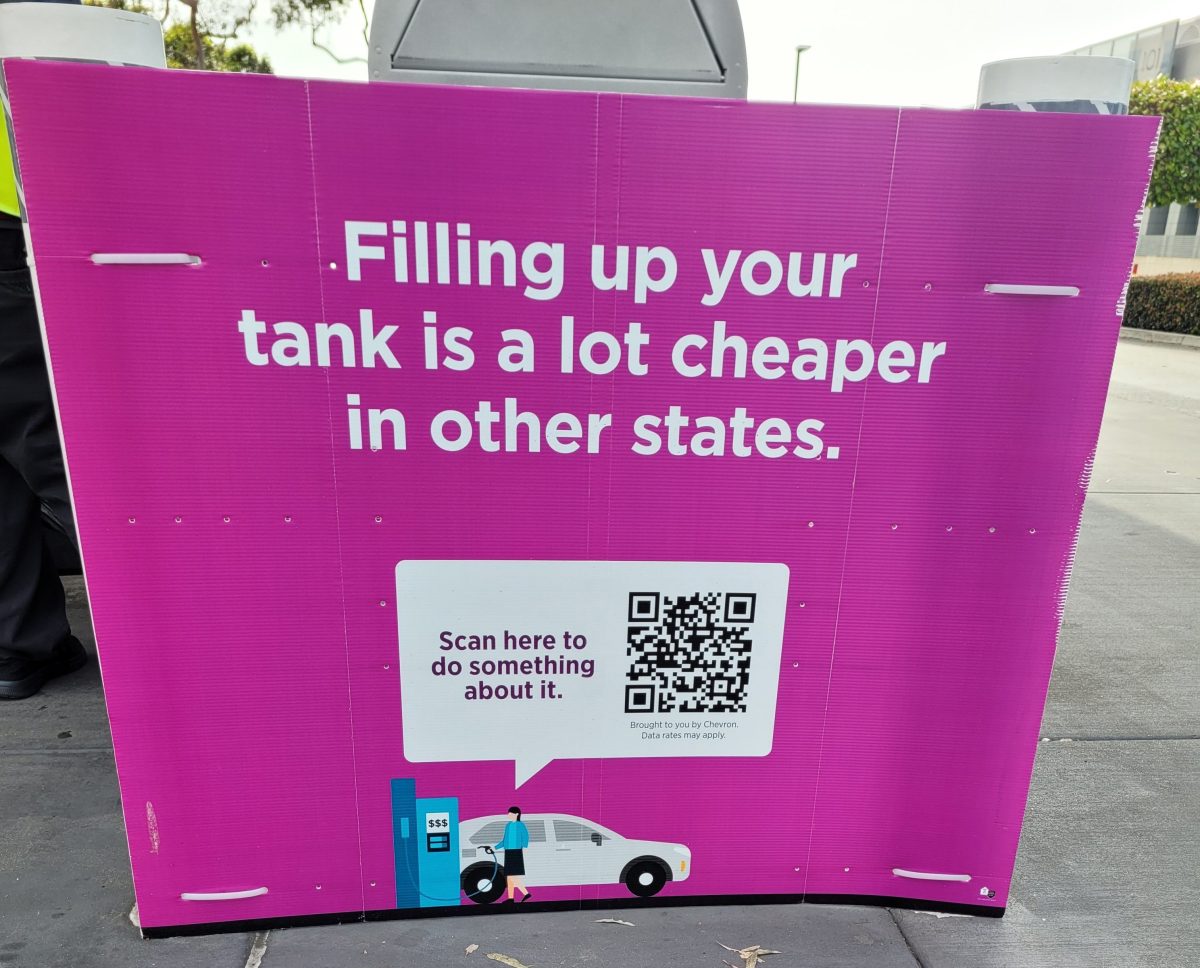

Gasoline prices are spiking everywhere, particularly in California, with premium coming dangerously close $9 a gallon last week in one Los Angeles neighborhood. So what’s an appointed bureaucrat to do? Find a crime, of course.
“Our team is vigilantly monitoring the retail, wholesale, and spot markets,” Tai Milder, first director of the Division of Petroleum Market Oversight (DPMO) for the California Energy Commission, announced last week, as gas prices were rising. “Any reports of unfair practices or market manipulation will be taken seriously, and we will not hesitate to refer any illegal conduct for further investigation and prosecution.”
A bulletin issued March 19 by the DPMO further warns, “Reports of price gouging will be taken seriously, and DPMO is already engaging with gasoline retailers whose high prices may not be justified by increases in their input costs.”
In roughly two years in office, Milder has not been able to find the real culprits behind the state’s punitively high gas prices. But he has been busy hunting down the “dark forces” behind them: refiners who don’t conduct their businesses the way he wants them to.
Price-gouging witch hunts play well with the media and among much of the public. Thirty-nine states and the District of Columbia “have statutes or regulations that define price gouging during a time of disaster or emergency,” according to the National Conference of State Legislators.
Google’s AI romp through the web gathered enough information to declare that “Price gouging laws are highly popular with the public and policymakers,” which confirms what most of us already knew.
What not enough of us know, though, is that higher prices are not inherently a crime against consumers but instead an important signal that markets need to operate efficiently.
“We should praise price gouging, not ban it,” wrote economist and Hoover Institution fellow John Cochrane in a 2024 article in Chicago Booth Review.
“Yes, we should pass a new federal price gouging law,” he said in reference to then-candidate Kamala Harris promising that, if elected, she would propose “the first-ever federal ban on corporate price gouging on food and groceries.”
Cochrane has no animosity toward consumers, nor is he a shill for businesses. He simply knows that placing government price controls on goods leads to shortages and shelf runs, like the ones that emptied toilet paper shelves during the pandemic.
“Higher prices ration goods efficiently by discouraging hoarding, encouraging more supply, or incentivizing preplanning,” explains Glenn A. Moots, a Northwood University political science and philosophy professor.
Unfortunately, higher prices also bring out the persecutors — not the same as prosecutors, though in many cases they hold the same office — and there’s no more egregious example of this than the case of John Shepperson.
After the 2006 Hurricane Katrina destruction throughout the Gulf Coast, Shepperson “bought 19 generators, rented a U-Haul truck, and drove 600 miles from Kentucky to Mississippi,” Rafi Mohammed, a business consultant who “helps companies develop and improve their pricing strategies,” writes in Harvard Business Review.
As a “return for his efforts and risk,” Shepperson “hoped to sell the generators at double his purchase price.” But he was persecuted by the government. Arrested for price gouging, he spent four days in jail, and the generators needed by hurricane victims were confiscated.
“It’s a tricky issue,” says Mohammed. “While Mr. Shepperson’s morality can be debated, his initiative would have unequivocally added supply and made some people better off. We all are charitable, of course, but how many of you would have rented a truck and driven twelve hundred miles round trip to sell generators for the price you purchased them?”
Whatever Shepperson’s motivation, it’s clear that the desperate people willing to buy his generators would have been better off if they had not been seized, ostensibly to protect them.
No matter what Milder and Gov. Gavin Newsom might claim, California gasoline retailers aren’t pricing their supplies to exploit geopolitical conditions, but are instead responding to the market. Higher prices are a signal, warning consumers about scarcity, telling them that they need to adapt to the present circumstances. They are also a mechanism informing producers that they need to increase their output.
Producers in California, who make the only gasoline blend that can be sold in the state, aren’t positioned to do that, though, because they are being driven out by policymakers, who are the direct cause of the stiffest motor fuel prices in the country.
— Written by the I&I Editorial Board

I & I Editorial Board
The Issues and Insights Editorial Board has decades of experience in journalism, commentary and public policy.