Order Michael Finch’s new book, A Time to Stand: HERE. Prof. Jason Hill calls it “an aesthetic and political tour de force.”
Last week I wrote about the presentation, at Oslo City Hall, of this year’s Nobel Peace Prize to María Corina Machado of Venezuela, who has led a courageous struggle for freedom against her country’s monstrous dictator, Nicolás Maduro. That prize ceremony took place on the afternoon of Wednesday, December 10, in the presence of the king and queen of Norway, and involved a good deal of pomp and music and, of course, security measures.
On the previous evening, as it happens, another freedom fighter was also welcomed in Oslo. I am referring to Tommy Robinson, the 43-year-old Englishman who has long been his country’s most vocal critic of Islamic rape gangs and of the government officials who have covered them up.
The news website document.no, which is widely referred to as “alternative” because it delivers the real news rather than the left-wing narrative, had arranged for the translation of Tommy’s new book, Manifesto, into Norwegian – in which the title, losing a letter, becomes Manifest – and had welcomed him for a book launch attended by a large audience of his admirers. Unlike the awards ceremony for Machado, Tommy’s book launch took place at a location that had to be kept secret until as late as possible, and it was not the same venue at which he appeared last year, under the same auspices. Last year’s venue, it turned out, had ruled out any repeat performances by Tommy owing to “threats, pressure, and political targeting.”
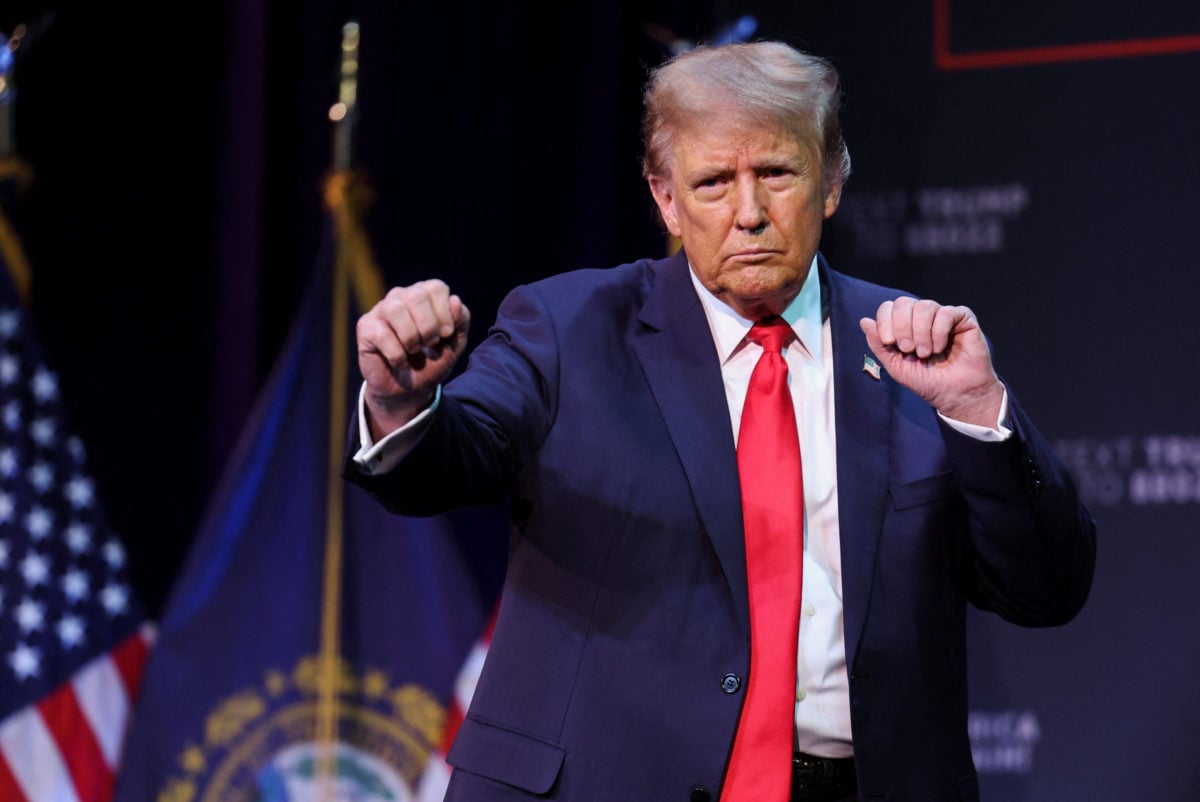
There was one important thing that the Nobel Prize ceremony and the Tommy Robinson event had in common. In a word: Trump.
Machado? She dedicated her award to the American president, who has lent unwavering support to her movement and taken increasingly serious military action against the Maduro regime. It has been observed that the Norwegian Nobel Committee should have recognized the Venezuelan resistance years ago, but didn’t do so because Norway’s political establishment was, until recently, still on the side of Maduro.
What changed? Trump. In my Friday piece I quoted a Facebook “friend” who suggested that Trump had leaned on the committee to choose Machado. I don’t think the committee operates that way. But I do think that its members recognized that the winds had shifted – big time. And that the strong new wind was blowing from the direction of the Oval Office.
As for Tommy, he noted in Oslo last week that major changes had taken place since his previous appearance there. At the time of last year’s event, he was on the verge of being imprisoned for his documentary Silenced, which has since been viewed by millions. Since then, as he put it, he’s been “brought in from the dark” – mainstreamed, normalized.
How did this happen? There were several factors. Jordan Peterson had the courage to interview him online – and to treat him respectfully. Elon Musk, after buying Twitter (now X), gave Tommy back his account, began paying his legal bills, and posted ardent messages of support. YouTube, too, restored his account. The hosts of the influential Triggernometry podcast, who for a long time considered Tommy too extreme to platform, not only interviewed him but invited him to their 2025 Christmas party. This entire sea change, said Tommy, could only be attributed to one thing: the return of Trump to the White House.
“Something’s happening,” maintained Tommy. “Something huge.” He felt it coming, he said, during his visit to Oslo last year, and this time around he feels its presence. It’s an awakening. In 2006 I published a book about the Islamization of Europe entitled While Europe Slept. In Oslo the other day, Tommy asserted that Europe is no longer sleeping. He cited the large numbers of people who’ve attended his rallies. And he rejected the argument that rallies accomplish nothing: on the contrary, he insisted, they show that there’s a wave of change in public thinking, and “politicians will ride the wave.” Case in point: Nigel Farage, who used to shrink pusillanimously from criticizing Islam or talking about the return of criminal and illegal aliens to their countries of origin, but who now, said Tommy, sounds as if he’s “reading my scripts.”
And it’s true. Until very recently, few people dared mention the idea of shipping immigrants back home. Years ago, when Trump called Haiti a “shithole country,” even many of his strongest supporters were rattled. But the other day, when Trump announced a pause in immigration from “hellholes,” an audience member loudly corrected him – “shitholes!” – leading the crowd to cheer merrily. Now, in Europe, at least a few political leaders who wouldn’t have gone near such language a year or two ago are starting to parrot it. In an interview that he gave in Oslo the day after his presentation, Tommy pointed out that “the talk of mass deportations” was “unthinkable” as recently as eighteen months ago, but is now on the table.
Why? Again, one word: Trump.
In the Netherlands, Geert Wilders is unashamedly pro-MAGA. So is Italy’s prime minister, Georgia Meloni. And his impact hasn’t been felt only in Europe, of course. A month ago, When Trump spoke to service members aboard the USS George Washington in Yokosuka, Japan, he invited the country’s new prime minister, Sanae Takaichi, to join him onstage, one of many gestures of solidarity between the two leaders. Since becoming president of Argentina two years ago, Javier Milei has made clear his devotion to Trump’s politics, taking a hatchet to his own Deep State and meeting with Trump in New York, Washington, and Mar-a-Lago. On December 14, José Antonio Kast, an ardent admirer of Trump, was elected president of Chile; Brazil, too, would still have a pro-Trump president in Jair Bolsonaro had Lula’s Workers’ Party not stolen the election from him in 2022.
Fans of old movies will remember the classic sequence in Spartacus (1960) in which the victorious Roman consul Crassus (Laurence Olivier) tells the captured members of the rebellious slave army that if they finger their general, Spartacus (Kirk Douglas), they’ll be spared crucifixion. When Spartacus starts to rise from the crowd to identify himself, one of his men stands up and declares: “I am Spartacus.” Others follow. Soon all of the men are shouting: “I am Spartacus!”
Among the lessons of Spartacus is that it can take just one man to change the world. The real Spartacus, of course, ultimately lost. But Trump is winning – both at home and abroad. To the extent that Farage now has a spine, it’s Trump who put it there. The other day, Jordan Bardella, who’s expected to succeed Emmanuel Macron as president of France, met with Farage, who’s expected to be Britain’s next prime minister, and announced that the two of them would work together “to restore Europe’s borders.” Remarkable.
Then there’s Liz Truss, who made nothing much of an impression on me during her six weeks as Britain’s prime minister in 2022, but who has just re-emerged as a populist firebrand (and podcaster), telling an interviewer exactly what Britain, in its current “broken” state, is in desperate need of – namely, a “Trump-like revolution.” Similarly, Kathy Gyngell, editor of the Conservative Woman website, wrote on December 7 that Trump, by “banning migration into the U.S. from 19 countries,” is showing the West the way out of our “Marxist/fascist nightmare,” and that Britain needs “unashamedly to follow suit. Trump, Gyngell proclaimed, is the West’s lifeline and we should thank God for him daily.”
Such rhetoric is surprising – but not really. For Donald Trump has shown just how much can be done if you’re a political leader who sincerely wants to do everything possible to save your country and doesn’t care about the possible consequences. He’s shown that you can do more than just rearrange the deck chairs on the Titanic. He’s shown that you can outrage the political and media establishment every single day for years and still retain – and even magnify – your power because the people are on your side, and can sense that you’re the real thing.
As Roger Kimball predicted recently at American Greatness, Trump will someday “come to be seen as what he in fact is: one of the greatest presidents in America’s quarter millennium, a great man of history, in fact.” Since the day that Trump took the Oath of Office for the second time, more and more serious people have been coming to such conclusions with an increasing lack of hesitation. Because the world around us is, indeed, undergoing a remarkable transformation. And it’s Trump who’s making it happen.
In order to eliminate spam comments that have historically flooded our comments section, comments containing certain keywords will be held in a moderation queue. All comments by legitimate commenters will be manually approved by a member of our team. If your comment is “Awaiting Moderation,” please give us up to 24 hours to manually approve your comment. Please do not re-post the same comment.