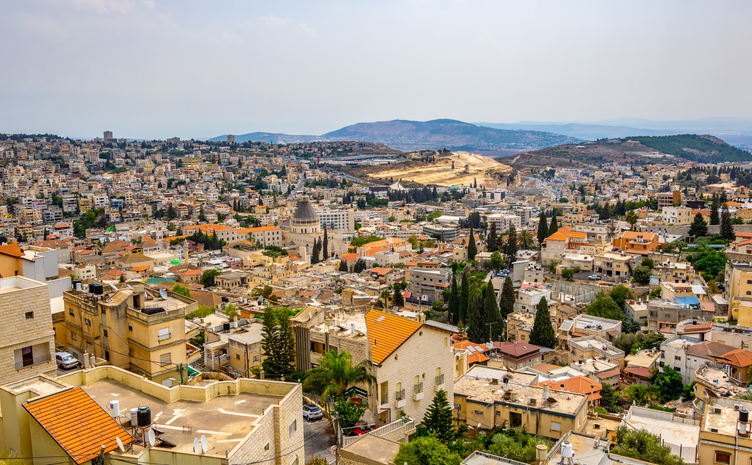
For many Christians, the Holy Land is not merely a place on a map but a central chapter of a shared spiritual story.
We imagine Jesus walking the hills of Galilee, sharing meals in humble homes, healing in crowded streets, and forming a community whose ripple effects would transform the world. Yet in recent weeks, we have seen a very different vision of the Holy Land, one marked by conflict, tension, and uncertainty.
What does Christian witness look like in Israel today? How does hope persist where the Gospel itself took root? Part of the answer comes directly from Jesus’ hometown of Nazareth, where medical care is mending divisions far deeper than the physical.
Arab Christian medic Yasmeen Mazzawi, who served during two years of intense conflict, notes the unity she witnessed at the hospital, saying “Arabs and Jews, Christians, Muslims, Bedouins… all together for one goal of saving lives.”
In a region often defined by division, this shared purpose is striking. Even if only momentary, compassion and service become more urgent than any personal or political lines drawn. The ministry of Jesus is reflected through these continued acts of healing and care in the same place it began.
What she describes is a daily reality. For over a century, the Nazareth Hospital has been a constant presence of healing, hope and reconciliation in the Middle East, providing excellent clinical care rooted in compassion for all.
Recently, the hospital has taken on added importance. It has been fortified to withstand missile attacks and functions as a key emergency medicine asset in the Galilee. Doctors and staff alike go about their business, then dash for cover in shelters when sirens warn of incoming missiles, only to return again to treat patients from all backgrounds and beliefs who come through its doors.
Volunteers from around the globe also serve in the village of Nazareth, learning what cross‑cultural discipleship looks like in the very place where Jesus himself lived and worked. Here, Western evangelicals meet Nazarene Christians, Jews, and Muslims whose faith has endured amid economic hardship, social pressures, and the strains of war. In these moments, the global Church is made visible, embodied in shared work and a common purpose.
What’s happening in Nazareth is a reminder of what the Church is called to be everywhere. For the UK church, this is not just an observation about a faraway place. It is an invitation to consider what it might look like to live out the same work of reconciliation in our own communities. If unity can spring forth in Nazareth, a place marked by division and history, then surely it can take root in the towns, churches, and neighbourhoods of Britain as well.
The call is the same: to become communities where difference is not erased but redeemed, where hospitality supersedes tension, and where the reconciling love of Christ is made visible in everyday acts of faithfulness and service.
It is precisely because of the broken politics of the Middle East that the proclamation of the Gospel matters more than ever. In Luke 4, Jesus invokes the year of jubilee, speaking of freedom from sickness, bondage, oppression and darkness. He declares this hope in Nazareth, the very place where healing work now takes place. It is an enduring promise, first declared in his hometown but continuing on for us today.
This passage follows Jesus’ own wilderness experience, and that pattern still resonates. A day is coming when the wilderness of broken relationships, violence and uncertainty will end. It is easy to fall into despair as we watch conflict unfold in the Middle East again. However, places like Nazareth Hospital remind us that acts of healing can become acts of unity. They shine as a light in the present darkness, and that light will not be overcome.
Steve Sanderson is the International Director of The Nazareth Trust, having joined the organisation in 2024 after many years with Baptist Mission Society (BMS).