By Jon Brown, Christian Post Reporter
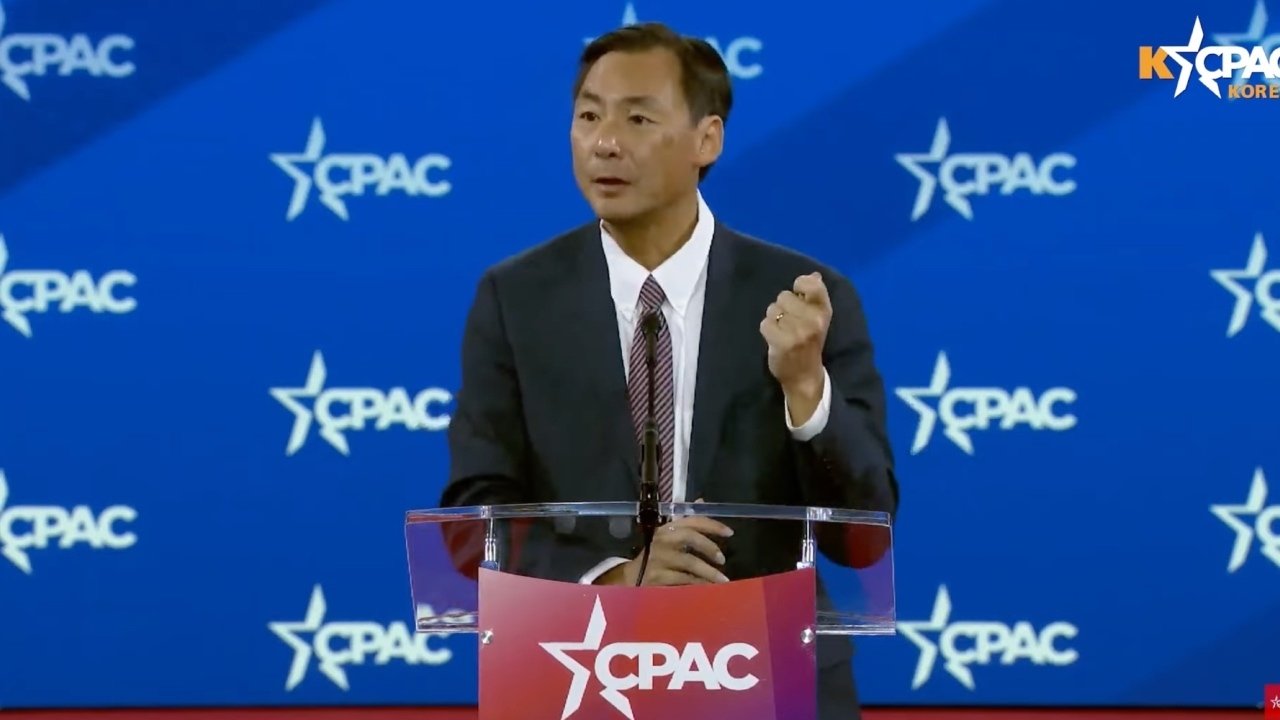
Morse H. Tan, a former Trump administration official who has been barred from leaving South Korea after allegedly defaming its president on United States soil, is warning that his treatment signals increasingly communist tactics by a key American ally.
“This [is] really an insult to the United States government, to the United States people, and this is not what treaty partners do,” Tan told The Christian Post in a phone interview.
Tan, who served as U.S. ambassador-at-large for global criminal justice from 2019 to 2021, spoke to CP shortly after the Seoul Administrative Court upheld an exit ban against him last Friday, which remains in effect at least until Aug. 15.
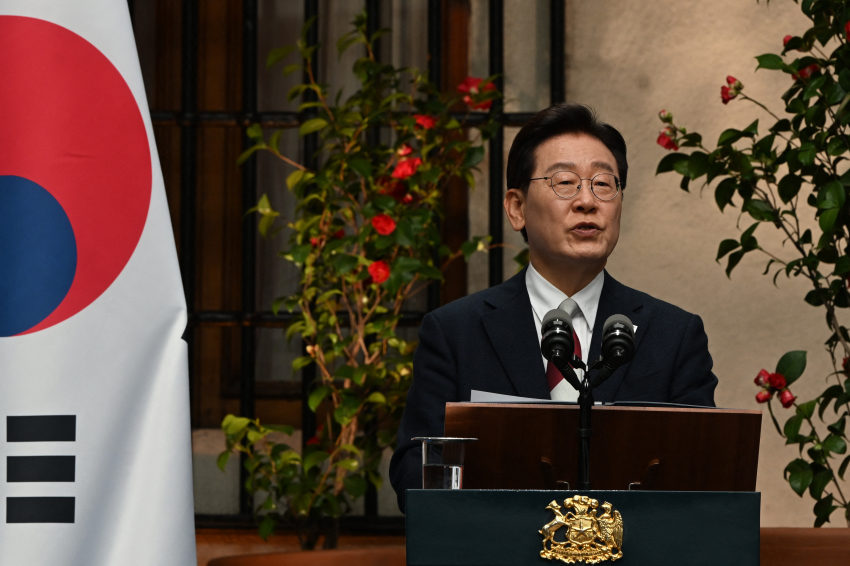
The travel ban is the third that Tan has faced since arriving in South Korea on May 28, when he came to observe local elections amid allegations of fraud and Chinese interference. While there, he was swept up in a reopened criminal investigation against him for allegedly defaming South Korean President Lee Jae Myung during an event about South Korean election integrity last year in Washington, D.C.
A clip went viral on social media of Tan noting at the event that there have been reports that Lee “as a youth, was involved in gang-raping and murdering a young lady, and as a result was put in juvenile detention and therefore was not able to attend junior high and high school.”
After receiving a criminal complaint from a civic group, police in South Korea initially closed their investigation into Tan without referring it to prosecutors, given his status as a foreign national who made his comments in the U.S., according to The Korea Times.
Prosecutors reportedly ordered police to reopen the investigation on May 13, arguing that defamation can be applied based on the country in which its results were felt. He was indicted on July 16 under the Criminal Act and the Information and Communications Network Act, which Lee and his ruling party revised earlier this year to crack down on so-called “fake news” that could harm political candidates.
Tan is slated to face his first trial hearing on Sept. 11.
‘Slap in the face to President Trump’
Tan remains skeptical of courts and fact-checks that have dismissed the allegations he repeated against Lee, though he framed his situation to CP in the wider context of his rights as a U.S. citizen and what he described as the erosion of rights in South Korea.
“I was one of President [Donald] Trump’s ambassadors in his first term, and so this is a slap in the face to President Trump that this is happening to one of his ambassadors,” he said. “But this would also be stunning and shocking if this were to happen to any American citizen; for an American citizen to be speaking on American soil, and then to be prosecuted in Korea for constitutionally protected speech.”
“Because the core of the First Amendment … is political speech, and even more so concerning public political figures,” continued Tan, who formerly served as the dean of Liberty University School of Law.
To illustrate what he sees as the absurdity of his situation, he offered the hypothetical example of a South Korean citizen being arrested in the U.S. for having publicly criticized President Trump in their home country. He argued that his case doesn’t fall under South Korean jurisdiction, and that the country is violating its own constitutional free speech guarantee by prosecuting him.
“But this is also illegal under Korean law. I have not been given due process, because a central, important component of due process is notice,” Tan said. “And I’ve not been given notice of all sorts of things that I’m hearing through the news. [I’m] not getting communication directly in regards to major things that are going on.”
Article 21 of the South Korean Constitution guarantees freedom of speech and the press, though it explicitly permits restrictions to protect “the honor or rights of other persons.” Tan argued that his comments at issue did not violate any Korean law.
“If one speaks what is true or what one believes to be true, and it is in the public interest, it is protected speech under the Korean law at the time when I made the statement in question,” he said. “In addition to that, South Korea has ratified the International Covenant for Civil and Political Rights, Article 19 of which protects free speech, as well.”
“And so, whether it’s looked at from a U.S. constitutional lens, a South Korean constitutional lens, or a key treaty that South Korea has ratified, this has no business moving forward. Not to mention the lack of jurisdiction that exists,” he added.
‘A rising dictatorship’
Tan said he believes he is potentially being targeted because of his Christian faith and his outspoken criticism of communism’s growing influence in South Korea, which he said is subject to “massive infiltration by Chinese Communist Party and North Korean spies, operatives and agents flooding the country.”
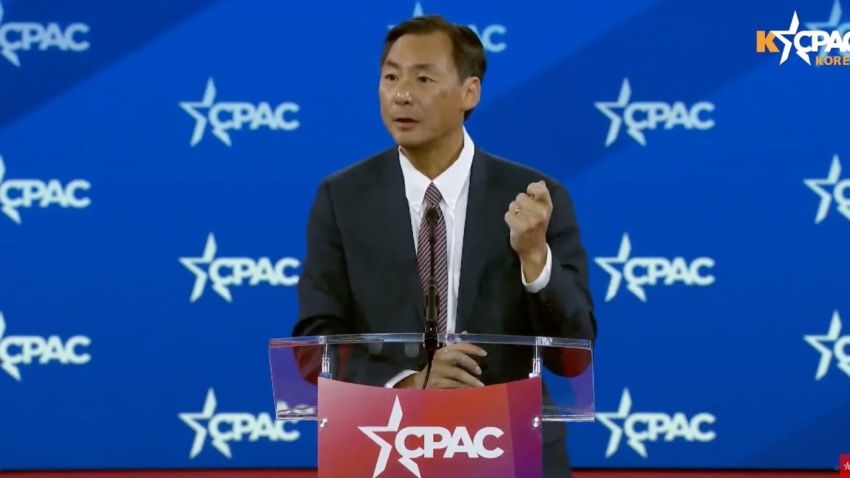
During a brief address to the 2025 Conservative Political Action Conference (CPAC) in National Harbor, Maryland, Tan warned South Korea “stands on the edge of a cliff” and that its democracy “is in a danger it has not been in decades.” He claimed former South Korean President Yoon Suk Yeol’s declaration of martial law in December 2024 was part of his effort to seize evidence regarding alleged rampant election fraud.
Yoon at the time claimed his declaration was an attempt to counter the threat from North Korean communist forces and to root out pro-North, anti-state elements. After Lee and his left-wing political party took power in June 2025 following a snap election triggered by Yoon’s impeachment, the former president was sentenced to life imprisonment in February over the martial law declaration.
Speaking to CP, Tan offered an analogy for Americans regarding the political situation in South Korea: “It would be as if President Trump was in jail, his cabinet was in jail, his top military leadership was in jail, and you now had a communist dictator in the White House, with a possible supermajority in Congress, and most of the judges also going in that direction.”
Tan said that “the communization of South Korea is going on very rapidly, where you had the long march through the institutions in accordance with communist doctrine for decades, and now that they see the finish line in sight, they are sprinting madly for that finish line.”
“That has meant the destruction of rights and freedoms, unprecedented oppression and suppression, all sorts of incursions on personal property. You have a rising dictatorship with the collapse of the three branches into a uni-party dictatorship, and you have somebody at the helm of South Korea who is pro-Chinese Communist Party, pro-North Korea, anti-American. And this is the stark reality that is going on in South Korea.”
Tan, who delivered a lecture at Wheaton College in 2018 that touched on the profound influence and suffering of Korean Christians since missionaries arrived there in the late 19th century, said communism on the peninsula has always been inextricable with a crackdown on Christianity. He worries South Korea, which ranks as one of the top missionary-sending nations, is steadily becoming more like its northern neighbor.
Despite South Korea’s “unprecedented raids on churches, the imprisoning of various Christian pastors, and also the shutting down of Christian schools,” Tan nevertheless expressed optimism that the church there is growing and that citizens are awakening to encroaching communism.
“Prayer has, for a long time, been a real strength of the Korean church, but the fervor and depth and extent of prayer seems to be really rising. I hear a bunch of people are coming to Christ. There’s worship going on in public spaces like the Olympic Park [in Seoul] regularly,” he said.
“And so, people are really crying out to God as they are increasingly waking up and seeing what the situation is. And the people don’t want their country to be communized. They don’t want their elections to be stolen, they don’t want their rights and freedoms to be trampled upon, and yet they see all of this is happening.”
‘Eye of the hurricane’
Tan said he is trusting in God amid his ordeal, and is hopeful that He will use it for good.
“This is all based on my understanding of God’s calling on my life, and obedience and trust in Him. He has been the one sustaining me. He has given me so much of His peace that passes understanding, because there has not been much peaceful about the situation that I find myself in,” he said.
“I liken it to being in the eye of the hurricane, where the center of the hurricane is the stillest, most peaceful part of it. And He also has been giving me His joy, which is my strength. And so that has been mostly what I’ve experienced,” he continued, adding that his inability to come home has been particularly difficult for his family.
“He has been the one empowering me in this, and I think He’s been using me in all of this to help lead the counter-revolutionary movement against the quiet, communizing coup d’état and purge that President Trump had identified in his Truth Social Post on August 25 of last year.”
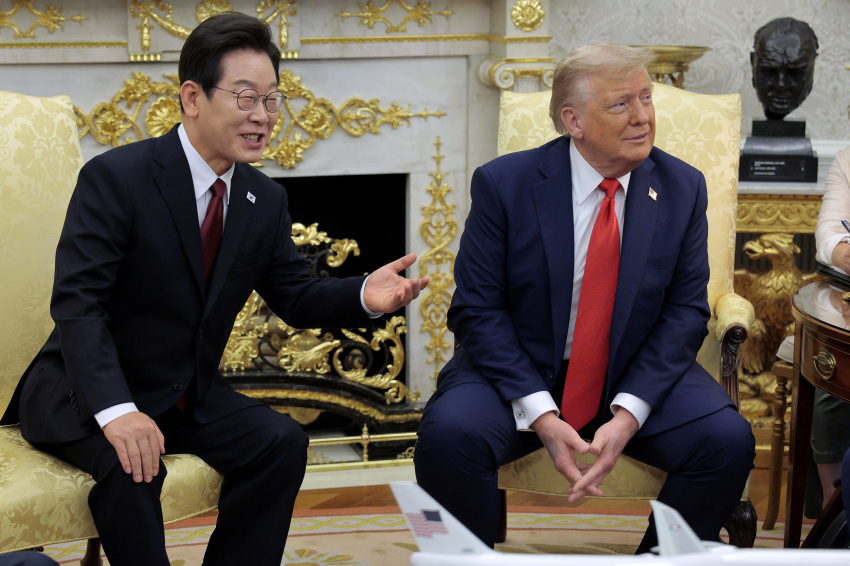
Lee narrowly avoided a diplomatic clash when he visited the Oval Office in August 2025, shortly after Trump posted: “WHAT IS GOING ON IN SOUTH KOREA? Seems like a Purge or Revolution. We can’t have that and do business there.”
When Trump pressed him regarding reports of raids involving churches and a U.S. military base, Lee claimed that the actions were legal investigations led by independent special prosecutors appointed by parliament to probe the administration of the ousted president. The BBC noted at the time that Lee’s “strategy of flattery” toward Trump was evidently effective in defusing a potentially tense meeting.
When reached for comment regarding Tan’s situation, the U.S. State Department told CP in a statement that the Trump administration “has no higher priority than the safety and security of Americans,” and that it “takes seriously any concerns that U.S. citizens are subject to exit bans without a fair and transparent process to resolve them.”
“Due to privacy and other considerations, we have nothing further to share at this time,” it added.
Tan said he has received indications that his case is known at the highest levels of the U.S. government, and that he is hoping “for some sort of decisive breakthrough here.”
“I should not be prosecuted. The cases should be eliminated, and I should be allowed to go home,” he said.
Jon Brown is a reporter for The Christian Post. Send news tips to jon.brown@christianpost.com