Tuesday, March 10, 2026

Fatal Frame II: Crimson Butterfly confidently retells one hell of a ghost story – AV Club

by admin
0 comments

If there’s an upside to the game industry’s continued obsession with risk-averse remakes, it’s that this trend has brought several iconic horror series back from the dead. The latest to get the remake treatment (in this case, for the second time) is Fatal Frame II: Crimson Butterfly, a 2003 PlayStation 2 game often considered an undisputed great. Simply put, it’s about ghost photography. Less simply put, it’s about the suffocating specter of traditionalism and a town so steeped in past sins that it’s frozen in an endless loop of repentant torment. Make no mistake, Minakami Village is not an ideal tourist destination.

As for this remake, like virtually all of these recent horror retreads, there’s a devil’s bargain at play. It trades the original’s fixed camera angles and the atmosphere that came with it for shiny new graphics, a much friendlier control scheme (the original had character movement on the right stick and camera movement on the left, which is just twisted), and the ability to play it, like, at all—it has never been re-released, and a PS2 disc goes for a lot on eBay. Thankfully, what matters most returns intact: This remake is damn scary, both in an immediate sense, as creepy ghosts pop out of nowhere, and in its chilling reminder of how structural violence can seep into the very bones of a place.

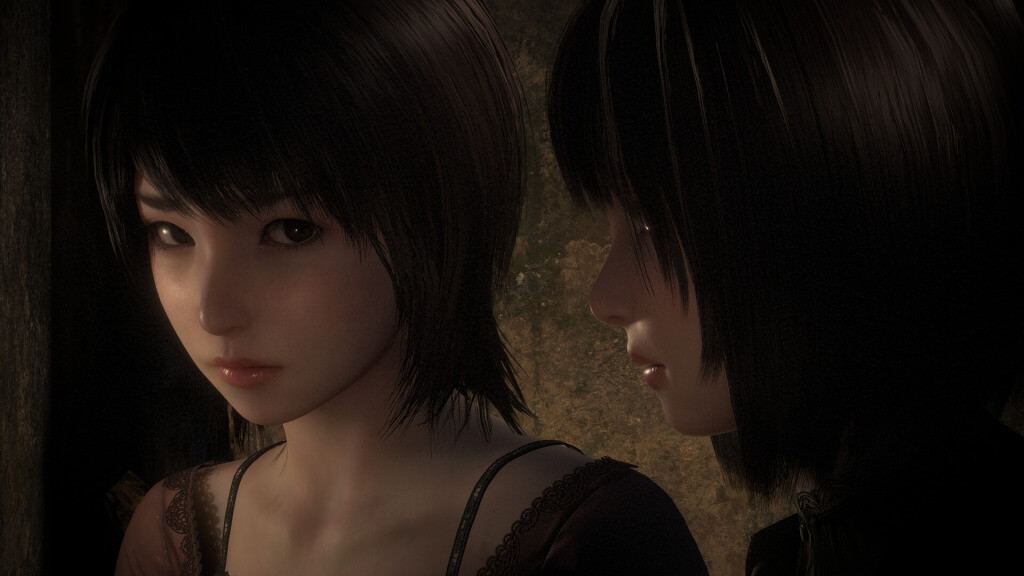
The bad times begin as a pair of twins, Mio and Mayu, reminisce in a forest glade. They had played here when they were little kids, something that brings back a not-so-pleasant memory for Mio. Her overeagerness once led to her sister Mayu taking a steep fall, one that left her with a permanent leg injury. When Mio snaps out of reliving this, she sees that Mayu is wandering off, following a crimson butterfly into the forest while mumbling something incoherent. Mio chases after her, but is swallowed by the woods. When she finally breaks into a clearing, the sky has turned dark. In front of her is a decrepit town that looks straight out of the previous century. She’ll soon learn its name—Minakami Village—and become very familiar with a heinous ritual conducted there. Mio has to track down her sister and discover a way out of this very bad place before it swallows them.
Fatal Frame 2 remake

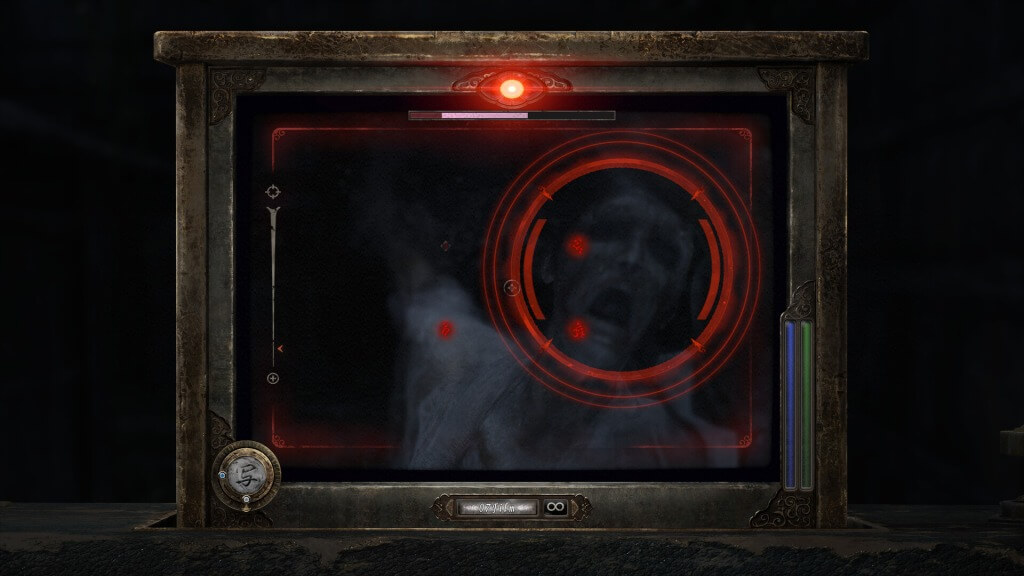
Doing this isn’t so easy, mostly because of the ghosts. To survive, Mio needs to use a powerful relic, the Camera Obscura, a tool that can perform exorcisms by taking pictures of the dead. Just like when the game first came out, this focus on photography is ingenious because it goes against what most people want to do when something really unnerving is on the screen: close their eyes. You’ll need to stare straight at ghoulish apparitions as you wait for the camera to focus. Not only that, but you’ll have to wait until the spirit is about to lunge before snapping a picture to get the most out of your film and stun the ghost out of its attack. If you don’t time it right, well, at least there are healing items conveniently stashed throughout the village (although picking them up may trigger a jump-scare and another haunting).

Beyond this paranormal game of chicken that leaves you waiting for the perfect moment, there are plenty of smaller Camera Obscura features to fiddle with, like filters that come with pros and cons—one lets you take pictures from much further away but is longer to reload, while another is highly damaging but only works at close range. It’s not exactly as complicated as navigating a DSLR, but the basic camera functionality of adjusting your focus, zoom, filters, and various types of film (basically ammo) offers lots of options to lay the dead to rest. These many toggles also create natural moments of panic as you fumble to get the perfect configuration while something nasty approaches.

These ghost battles are spine-tingling in the moment, but Fatal Frame II’s greatest staying power comes from how you have to use this camera to document the past. Specifically, you’ll find passive spirits whose lingering emotions have left a psychic imprint, letting you take their pictures as they reveal the story behind Minakami Village. The player is cast as a paranormal investigator, pulled into this tantalizing mystery as they discover secrets through a viewfinder. You’ll also (less subtly) learn things through text and audio logs; a true classic of video game exposition.

Piecing together the truth is a slow, winding process that mirrors Mio’s path through this village, taking her through a maze of abandoned homes and subterranean passages that stew in potent J-horror discomfort: At one point, a long-haired woman crawls out of a box that may as well be Sadako’s well from Ring. The sound design sparks much of the tension as creaky floorboards disrupt the silence of these long-abandoned homes. Eventually, despite all the ghost attacks, you form a strange bond with this horrible place, its familiar stairwells and sliding doors, and even the alleyway where you were chased by an unkillable nightmare monster.

This intimacy makes it all the more disturbing when you’re confronted with the realities of this deeply cursed village, a place where centuries-old beliefs have warped into something twisted and cruel. You’re forced to reckon with the sins of history, particularly as it comes to a specific type of patriarchal violence against children.

The most critical detail this remake gets across is this inertia of tragedy, weaving together slow-burning anxiety and an uncomfortably believable backdrop into something that will outlast the jump scares triggered when you open doors (which are somewhat overused). While the lack of fixed camera angles undermines some of the ambiance found in the original, it’s still damn scary in a different way. You’ll creep down pitch-dark corridors with nothing but your perpetually flickering flashlight or be chased by an unkillable specter whose tormented cries echo through washi-paper walls. They even slapped a filter over the game’s pristine modern graphics to give it a bit of that old-school grime; there was probably a more elegant way to pull this off, but this touch admittedly works better than you would think.

The remake’s changes mostly land, but there is one big snag: its much slower pacing. Part of the problem comes from the all-new optional side-missions. Each is tied to one of the major characters from the story, and while a few add a bit more heft to their demises, they feel redundant to the main plot. The other major issue that inflates the playtime is that even if you avoid these side-stories, the central ghost battles eventually start to wear a bit thin. Part of this comes down to these spirits having a frustrating tendency to become “enraged,” causing them to recover their health as they become stronger and more aggressive. This will sometimes happen multiple times in the same encounter, and while unlockable camera upgrades help get around weaker foes, some of the late-stage exorcisms go from frightening to frustrating due to large, replenishing health pools. The noticeably low framerate certainly doesn’t help either. While it’s important to get across some amount of helplessness in these kinds of games, the frequency and length of these hauntings eventually lead to outright fatigue, especially given that this remake is noticeably longer than the original. 

Still, extended runtime or no, Fatal Frame II: Crimson Butterfly’s central horrors haven’t lost their resonance. Trapped in an endless night, these broken spirits convey the hell of history with every miserable cry. They’re hard to look at and even harder to capture on camera, but it’s impossible to get anywhere without viewing this kind of ugliness head-on. People will probably argue about which version of this game is the “best” or “definitive” one for some time. The only reason this remake warrants that question is that it gets across the most salient point: Minakami Village is the kind of nightmare that should never be repeated.


Fatal Frame II: Crimson Butterfly was developed by Team Ninja and Koei Tecmo Games and published by Koei Tecmo. Our review is based on the PlayStation 5 version. It is also available for the Nintendo Switch 2, PC, and Xbox Series X/S.

Keep scrolling for more great stories.

You may also like