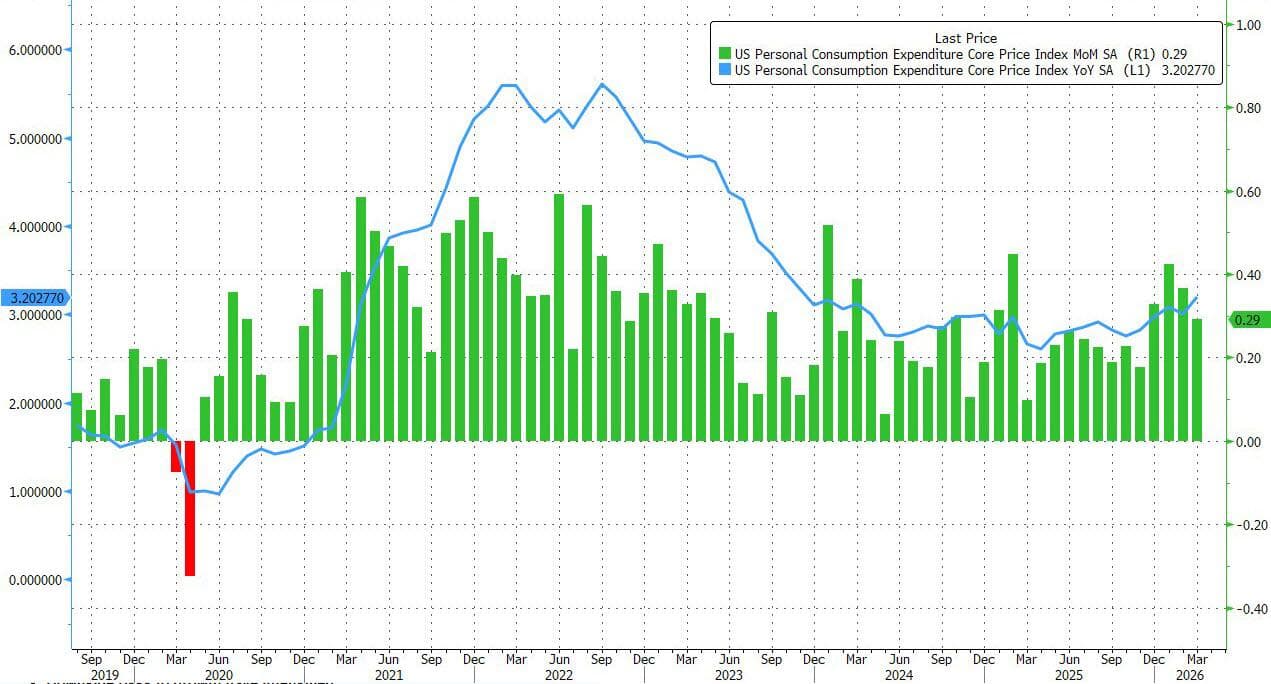
The Fed’s favorite inflation indicator – Core PCE – rose 0.3% MoM in January (as expected), a dip from the 0.4% sequential increase in February, with YoY rising by 3.2% (also as expected), slightly higher than the 3.0% in Feb. That is the highest annual increase in Core PCE since Nov 2023.

The headline PCE jumped notably more, as expected since it includes non-core items like energy and food, rising 0.7% MoM (as expected) driving prices up 3.5% YoY, also as expected, from 2.8% and the highest since May 2023.

Taking a closer look at the headline print shows a surge in non-durable goods, largely the result of soaring gasoline prices.

On the other hand, core PCE was far more muted, with the monthly increase actually the lowest in three months, even as the annual increase keeps mounting.

Finally, supercore PCE was also muted, indicating that the energy price spillover into the broader economy is taking place but not as fast as some feared.

For those worried about the impact of crude oil’s recent surge (since the start of the Iran war), it appears – somehow – that PCE’s Energy component has already front-run a lot of the move…

Higher prices were met with higher incomes and higher spending (rising in line with one another for a change): personal income rose 0.6%, double the expected 0.3% and a surge from the 0.0% printed last month. Spending meanwhile rose 0.9%, as expected, and also higher from last month’s 0.6%.

Ominously, spending growth continues to outpace income growth

And since spending rose more than income once again (as wages are not keeping up with income), the savings rate just tikced down to a fresh 4 years low.

And with rate-cut expectations in free fall – especially after yesterday’s hawkish Fed – this latest data will do nothing to support a dovish take going forward (unless oil crashes the global economy and AI takes over all jobs).