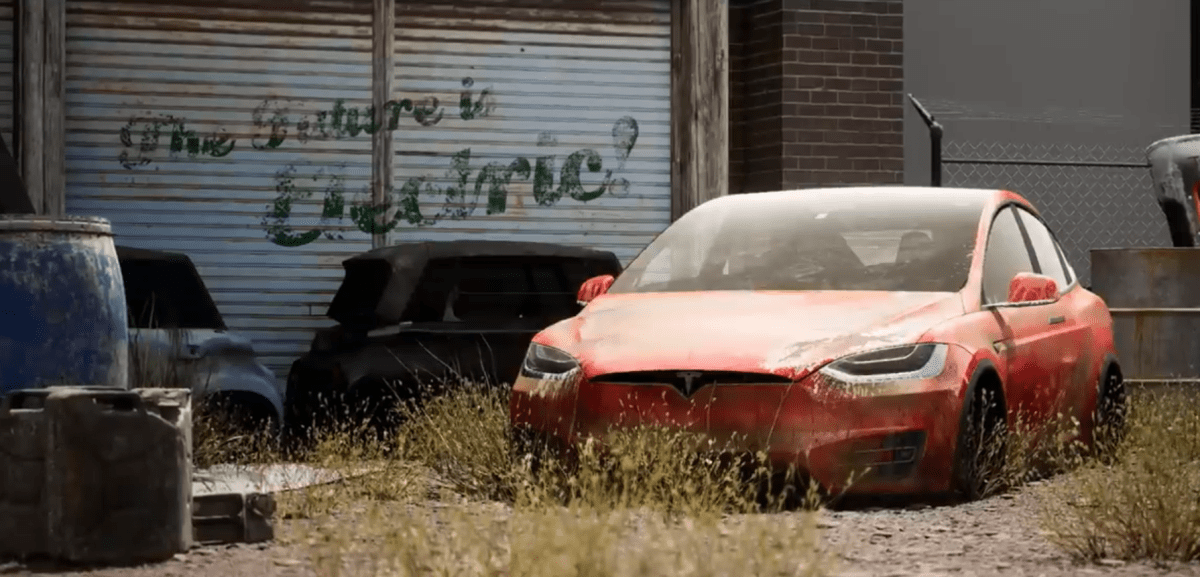
 $7.6 billion writedown last month), Ford ($19.5 billion), and other automakers that’ve written down a total of $140 billion in just the past three years?
Anyone who has followed the auto industry over the past decade knows the answer. All of these losses are the result of automakers chasing the phantom known as “zero emission” cars.
Remember that until just recently, we were treated to a constant barrage of stories about how EV sales were skyrocketing, and car companies were winning plaudits for going green.
Just five years ago, GM promised to go all-electric by 2035, and just two years ago, its chief executive, Mary Barra, said “we believe in an all-electric future.” Honda, Volvo, Ford, and others laid out plans to be 100% “zero emission” within two decades.
It was all supported by Big Environment, which brayed that EVs were the only way to save the planet from “climate change.”
But none of it worked out as planned.
And keep in mind that the $140 billion in combined auto industry losses is just the tip of the iceberg. Those are just the costs incurred by shareholders and employees of these companies.
Taxpayers have forked over hundreds of billions in federal and state tax dollars in subsidies that were designed to “kick start” the EV car market. They paid thousands toward the cost of each EV sold. They paid companies to build battery factories. They paid for charging stations.
Fuel economy standards imposed another hidden subsidy for EVs. The only way automakers could meet increasingly stringent federal fuel economy standards, commonly known as CAFE standards, was to sell more EVs. For each EV sold, they’d get an oversized credit toward the miles-per-gallon average of all cars sold in any given year.
If they still couldn’t hit those CAFE standards, they’d buy “credits” from companies such as Tesla, which banked more than $11 billion selling its fuel-economy credits.
When the Texas Public Policy Foundation ran the numbers in 2021, it found “nearly $22 billion in federal and state subsidies and regulatory credits” that year alone.
Those families trying to buy a decent car were the ones who ultimately paid all these costs.
Joe Biden’s criminally misnamed “Inflation Reduction Act” included more than $1 trillion in additional subsidies. Biden dumped $7.5 billion into the production of charging stations, which resulted in fewer than 400 charging ports being built.
There is some welcome news here. What the experience with the EV debacle shows is that consumers are still in the driver’s seat – no pun intended.
No matter how much environmentalists shrieked, no matter how much regulators bullied, no matter how much money politicians threw at EVs, they couldn’t overcome the will of car buyers, who want the kind of affordable, reliable transportation that gas-powered cars provide.
And, thankfully, the Trump administration has been pulling the wiring out of the various federal EV subsidy schemes.
Even so, there must be a reckoning. There needs to be an effort to tally all the wasteful spending imposed by the EV mania. Because, when all is said and done, it could prove to be the most expensive boondoggle in human history.
And then all the politicians, industry “experts,” regulators, environmentalists, and everyone else who had a hand in selling EV snake oil should be held to account for these costs.
That’s especially true of automakers who, rather than standing up for their consumers, eagerly bent the knee to the Climate Industrial Complex.
— Written by the I&I Editorial Board

I & I Editorial Board
The Issues and Insights Editorial Board has decades of experience in journalism, commentary and public policy.