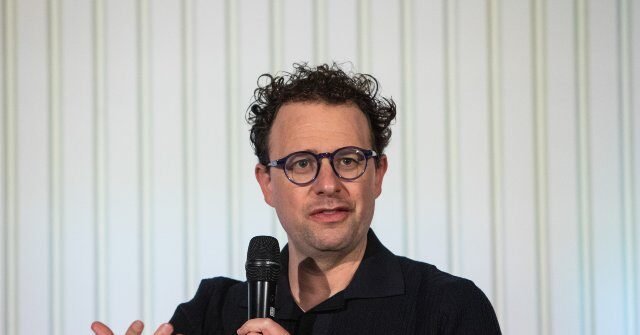
Anthropic CEO Dario Amodei says the AI industry can only overcome public skepticism by delivering real scientific breakthroughs rather than promises. According to Amodei, Americans are beginning to think grand promises about AI are deceptive, and the only way to change that is AI “curing cancer.”
Business Insider reports that Dario Amodei, the CEO of Anthropic, said over the weekend that the best way to win over AI skeptics is for the industry to deliver on its hype. In a rare post on X, he acknowledged the public’s mistrust of artificial intelligence and argued that only tangible scientific achievements can change it.
“At this point, saying that AI will cure cancer is more a cliché than it is inspiring, and most people think it is deceptive,” Amodei wrote. “The most accurate criticism of AI companies, including Anthropic, is that we haven’t yet delivered on our big promises to benefit the world.”
“The thing that will work is actually curing cancer,” he added.
The AI industry faces a growing public backlash as companies build large data centers in communities across the country, scrape often copyrighted online data to train models, and disrupt workforces in many industries. A recent Pew Research Center study found that about half of Americans said the increased presence of AI in their daily lives made them feel “more concerned than excited.”
Amodei has repeatedly warned about the dangers of rapid AI development in podcasts, essays, and Anthropic blog posts. In a June essay, he wrote that the company’s new Mythos models present “very real risks” to cybersecurity, the financial sector, critical infrastructure, and national security. Last year, he warned that AI would cause half of all entry-level jobs to vanish.
Amodei left OpenAI in 2020 over concerns about the company’s attention to safety, and some other AI leaders have criticized the rhetoric for which he has become known. Google DeepMind’s Demis Hassabis said earlier this year that his peers had been “way too certain” about their dire predictions and encouraged them to dial it back. As OpenAI and Anthropic prepare for expected IPOs, they have followed that advice, shifting from doomerism to boomerism.
Amodei said in his Saturday post that he does not believe his warnings caused the public’s distrust of AI. “I do not agree that my messaging has been disproportionately negative,” he wrote. “I wrote Machines of Loving Grace because I didn’t feel the AI industry was painting an inspiring enough picture of how the technology could radically transform the world for the better,” he added, referring to a lengthy 2024 blog post in which he described how he thought AI could improve the world.
Instead, Amodei said public distrust of AI companies reflects broader skepticism among Americans toward corporations in general. “The causes of this go back decades and AI is just the latest iteration of it,” he wrote.
Anthropic’s decision not to open-source any of its frontier models, which the company says is a matter of caution, has contributed in part to public wariness. The company drew criticism last month for being the only major AI developer not to sign a letter advocating for open-weight AI as Washington considered restrictions on some Chinese models.
Yann LeCun, the former chief AI scientist at Meta, has long argued that keeping frontier AI technology closed-source contributes to public distrust more than anything else. Responding to Amodei on X, LeCun wrote that the “only way forward” is for AI to be “widely available, shared, and open.”
“We need diverse AIs for the same reason we need a diverse press,” he wrote.
Not everyone agreed with Amodei’s argument that a major scientific breakthrough could turn public opinion. Angel Brodin, an applied AI architect at OpenAI, wrote in response that the pharmaceutical industry routinely delivers advancements in public health yet remains “still one of the least trusted industries.”
“People also won’t judge AI companies solely by their breakthroughs,” she wrote. “They’ll judge them by pricing, access, lobbying, opacity, how the economic gains are distributed, who gets to participate in its benefits, and who ultimately holds the power.”
Amodei said Anthropic is increasing its work in the biological and medical fields to test his theory, writing: “We hope to have incredible results in the coming years and some early glimmers in the coming months… When we’ve actually accomplished something real, the whole world will hear about it, as loudly as possible, you have my word on that.”
AI giants like Anthropic and OpenAI are struggling to come out on top in the war to control Artificial intelligence. Breitbart News social media director Wynton Hall has written his instant bestseller Code Red: The Left, the Right, China, and the Race to Control AI to serve as the definitive guide on how the MAGA movement can create positions on AI that benefit humanity without handing control of our nation to the leftists of Silicon Valley or allowing the Chinese to take over the world.
Read more at Business Insider here.
Lucas Nolan is a reporter for Breitbart News covering issues of AI, free speech, and online censorship.