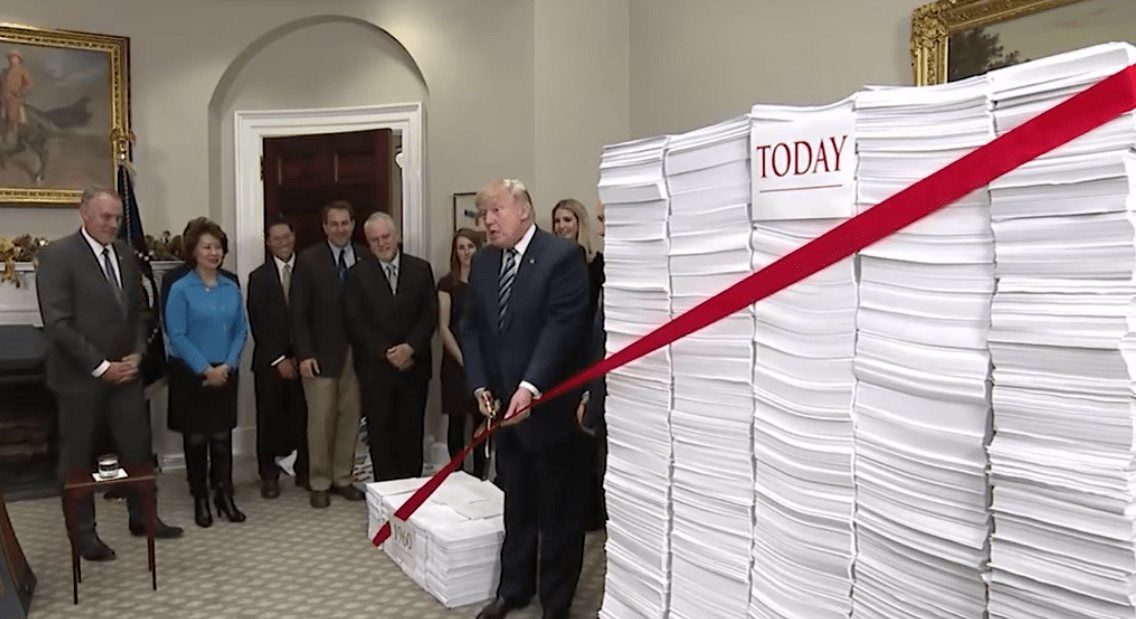

He rescinded the Obama administration’s unprecedented “endangerment finding” for CO2, which treated carbon dioxide as a dangerous pollutant and opened the door to almost unlimited federal meddling in the economy.
He rolled back the Biden administration’s attempt to mandate the sale of electric cars, ordered agencies to kill 10 rules for every new one they propose.
The report figures that these and other deregulatory moves have reduced annual regulatory compliance costs by almost $15 billion a year.
This is a dramatic change from the Biden administration and a reminder of why Trump’s victory over Kamala Harris was so important.
But don’t get too excited.
As the CEI report shows, the total cost of federal regulations is still more than $2.153 trillion each year.
“The regulatory tax of $2.153 trillion rivals individual income taxes of $2.426 trillion for 2024 and stands at over four times corporate income tax collections of $530 billion,” notes author Clyde Wayne Crews.
Put another way, the cost of U.S. regulations is higher than the entire GDP of each of the 10 biggest countries in the world.
A cut of $15 billion a year amounts to a tiny 0.7% reduction in the federal government’s regulatory burden.
And, as Crews notes, Trump has offset at least some of those savings with tariffs and other actions that raise the cost of doing business. Plus, as it stands, the next president can quickly undo everything Trump has achieved, just as Joe Biden did after Trump’s first term.
If Trump really wants to liberate the U.S. economy, he’s going to have to do a lot more than a few flesh wounds in the regulatory Leviathan.
Not only does he need to increase the pace of deregulatory actions, he must get Congress to act so that Washington can never again exert so much control over the everyday lives of Americans.
Crews lists several ways lawmakers can permanently rein in the administrative state. Such as:
- Require a sunset date on regulations.
- Impose a regulatory budget.
- Create a regulatory reduction commission.
- Require annual regulatory report cards.
Lawmakers, like the Mullahs of Iran, are unlikely to act on these reforms unless backed into a corner. Once Trump has mopped up Iran, he needs to make the administrative state his next target and keep pounding away until Congress does its job.
— Written by the I&I Editorial Board

I & I Editorial Board
The Issues and Insights Editorial Board has decades of experience in journalism, commentary and public policy.