By Richard D. Land, Christian Post Executive Editor
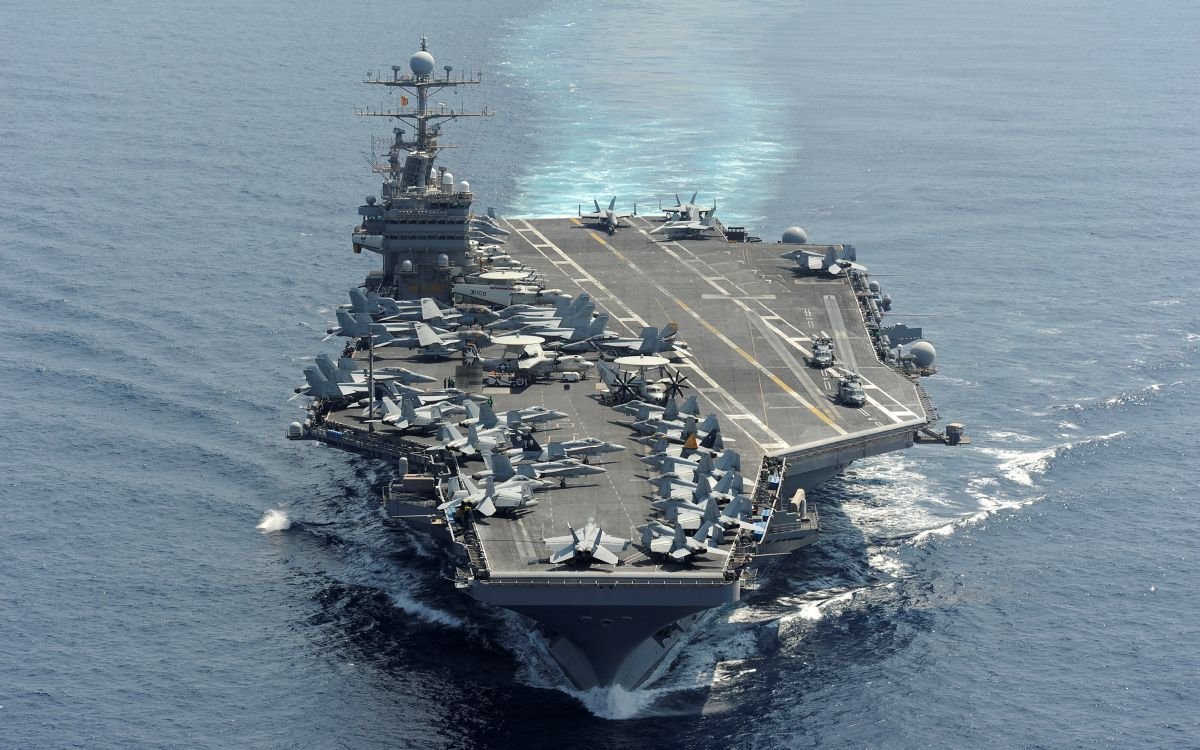
Given the recent reports of shortages, suffering and deprivation among sailors aboard the USS Abraham Lincoln, an American aircraft carrier on extended patrol in the Middle East, let me begin by stating my tremendous admiration for our military veterans in all our service branches — be it Army, Navy, Air Force, Marines, Coast Guard, Space Force, National Guard, etc. Literally, millions of our fellow Americans have volunteered to serve in the military, often far from home, separated from loved ones, facing deprivation and danger.
We, as Americans, should be — and I believe we are — extremely grateful so many of our fellow citizens have been, and are, willing to undergo the sacrifices, separations and dangers involved in standing on the front lines defending our freedom around the world.
Like so many of my fellow citizens, I have personal memories of the sacrifices and separations experienced by our veterans. My father served in the U.S. Navy (active duty, 1940–1946, 1961–1962; active reserve, 1946–1961). My father was at Midway, the first and second battles of the Coral Sea, the Battle of Leyte Gulf, and had his ship sunk at the Battle of Savo Island. My parents spent most of the early years of their marriage separated by an ocean, like so many other American couples.
Aside from the over 400,000 Americans killed in action in World War II, think of the millions of husbands, wives, fathers, mothers, brothers, sisters, uncles, aunts, etc. who suffered the grief and the loss of loved ones, or their loved ones being wounded and maimed in service to their nation.
Our fellow citizens have come forward and stood in the breach defending freedom, often at great risk to their own lives. I have personally known family members (World War II), childhood friends and classmates (Vietnam), and adult friends (Gulf War I and II and Afghanistan) who have suffered death, limb loss and worse defending our freedoms.
My father did not speak often about his service while I was growing up. However, as I got older, my dad told me about friends he lost in combat and his terrible experiences with sharks while in the ocean after his ship was sunk.
As I was contemplating military service while a college student (1965–1969) during the Vietnam War, my father told me in detail of the terrible conditions of the Marines after they evacuated them from Guadalcanal after months of combat in the jungle. (He was advising me to join the Navy rather than the Army if my number was called.) In the end, I was able to keep my student deferment. Additionally, every birthday since my 21st, I think of two childhood playmates and Little League teammates who were drafted and died in Vietnam before they were 21. I think of all those young men who never got to be husbands, fathers and grandfathers because their country called them to serve, and they answered the call, only to die far away from home in Vietnam.
The accusations by the crew of the USS Abraham Lincoln about deprivations they may have suffered need to be investigated and, if needed, corrected. We have civilian oversight (Congress) over the military to protect our citizens from any needless abuse while they serve. We are being told that the U.S. Senate Armed Services Committee will be holding such hearings. It has been explained that many of the reported problems of supply might result from an Iranian attack on a Navy base in Bahrain, a major logistics hub for the U.S. Navy. Evidently, much of the base was destroyed.
Of course, in combat conditions it is often the case that shortages exist, sacrifices are required and life becomes necessarily difficult. We shall await the congressional investigation to find out the truth and who, if anybody, is responsible.
In conclusion, allow me to share a somewhat amusing story that involved my dad’s naval service in World War II.
In the mid-1950s, I had just returned from a youth church encampment weekend. My mother asked, “What did you have to eat?” I replied, “Hot dogs, hamburgers and eggs.” Then I said, “We had this new stuff called SPAM.”
My mother asked, “Did you like it?” I crinkled my nose and said, “No!”
My mother then explained, “Good. Honey, Spam isn’t new. During the war, your father had to eat the same meal for breakfast for 109 straight days: powdered eggs, powdered milk and Spam. He told me he never wanted to see a can of Spam in the house.” My mother and father both lived to be 92 years old, and I never saw a can of Spam in their house. I guess enough was enough!
Dr. Richard Land, BA (Princeton, magna cum laude); D.Phil. (Oxford); Th.M (New Orleans Seminary). Dr. Land served as President of Southern Evangelical Seminary from July 2013 until July 2021. Upon his retirement, he was honored as President Emeritus and he continues to serve as an Adjunct Professor of Theology & Ethics. Dr. Land previously served as President of the Southern Baptist Convention’s Ethics & Religious Liberty Commission (1988-2013) where he was also honored as President Emeritus upon his retirement. Dr. Land has also served as an Executive Editor and columnist for The Christian Post since 2011.
Dr. Land explores many timely and critical topics in his daily radio feature, “Bringing Every Thought Captive,” and in his weekly column for CP.