By Brad Brandon, Op-ed contributor
For years, those of us working alongside persecuted Christians in Northern Nigeria have been pleading with the world to take notice.
We asked for governments to pay attention. We asked for international organizations to speak up. We asked for journalists to report on attacks that too often passed with little notice outside the villages where they occurred. We asked for religious freedom advocates to raise their voices and for policymakers to recognize that entire Christian communities were living under constant threat.
Next month, leaders from around the world will gather in New York for the United Nations General Assembly, including Israeli Prime Minister Benjamin Netanyahu, who has said he intends to address the assembly. His planned appearance comes amid an already charged debate over Israel, the war in Gaza, and the role of the International Criminal Court. New York Mayor Zohran Mamdani has publicly said Netanyahu is not welcome in the city and has discussed whether local authorities could act on the ICC warrant against him. All of this will unfold as New York prepares to mark the 25th anniversary of the September 11 attacks.
It is difficult to imagine a more politically charged moment in which to discuss religious freedom and the responsibilities of governments to protect their citizens.
And that is precisely why the world’s response to Nigeria matters.
In many ways, the world has finally begun paying attention. The persecution of Christians in Northern Nigeria receives more attention today than it did even a few years ago. Media outlets have finally started to take notice. International reports document the atrocities in increasing detail. Human rights organizations continue sounding the alarm. The United States government has stepped in. Since the re-election of President Donald Trump, his administration, together with members of Congress, has raised concerns and devoted greater diplomatic and security attention to the region. Even celebrities like Nicki Minaj and Bill Maher have vocalized their concerns. All the while, advocates like Across Nigeria and others are working tirelessly to keep Nigeria from slipping back into obscurity.
By every reasonable measure, awareness has significantly increased. So why has meaningful action failed to follow? The violence has not subsided. In fact, it is getting worse.
That is the question I cannot escape.
I have spent roughly half of every year in Northern Nigeria for more than a decade, walking alongside pastors, visiting displaced families, and helping churches rebuild after attacks. During those years, I have witnessed extraordinary resilience from believers who refuse to abandon their faith despite unimaginable hardship. Yet I have never seen conditions as dangerous as they are today.
The violence is no longer confined to the places where we have sadly come to expect it. It is expanding farther south, into new communities, reaching areas once considered relatively stable. Places that once served as havens for weary families are becoming battlefields themselves.
The recently released 2026 Global Persecution Index from International Christian Concern paints a sobering picture. Nigeria remains the deadliest country in the world for Christians, while extremist organizations continue expanding their reach into vulnerable communities. The report describes many Christian villages as “abandoned by their government.” This is a heartbreaking assessment that mirrors what many of us witness firsthand. Jos is one example.
For years, Jos represented something increasingly rare in Northern Nigeria: a place where Christians could breathe a little easier. It was never immune from violence, but compared with many surrounding communities, it offered a measure of stability. Over the past year, that assumption has begun to collapse.
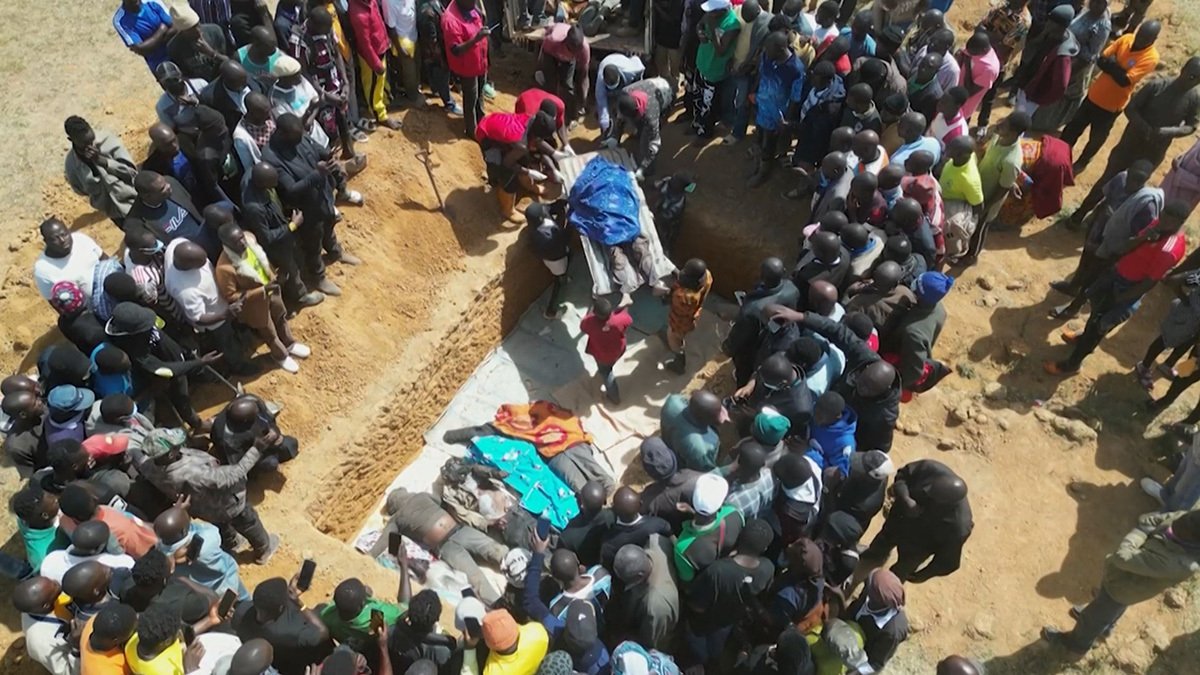
During Holy Week alone, attacks around Jos claimed the lives of 147 Christians, turning the holiest week on the Christian calendar into one of its deadliest in recent memory. Attacks around Jos have become almost a daily occurrence. Sadly, Jos is no longer the exception. Rather, it is becoming the pattern.
Words matter. But words alone cannot protect vulnerable communities. That is what makes the current moment so troubling.
Normally, increased international attention produces at least some measurable progress. Public pressure often encourages governments to strengthen protections, improve accountability, or devote additional resources toward protecting vulnerable populations. That simply has not happened in Northern Nigeria.
Awareness has increased. Accountability has not.
As world leaders gather in New York, I hope their discussions lead to something more than another well-intentioned declaration. Because declarations are not deliverance. What is needed now is action: the Nigerian government must protect its citizens, the United States must use its diplomatic and security influence to press for measurable results, and the international community must be willing to impose consequences when governments fail to protect religious minorities.
For the Christian farmer in Plateau State or the village pastor in Benue, another carefully worded statement means very little if armed extremists still know they can attack with near impunity.
Awareness was never supposed to be the finish line. It was supposed to be the beginning.
For years, we prayed the world would notice. God has answered that prayer, and the world is finally looking. Now it must not look away. It must demand measurable accountability from the Nigerian government to protect its citizens, from the international community to move beyond symbolic resolutions, and from democratic nations to ensure that religious freedom remains more than an aspiration on paper.
For those of us who know these communities personally, this is not a geopolitical debate. These are friends and ministry partners. These are pastors whose churches we have worshiped in. These are children whose names we know. These are families who simply want to live, work, worship, and raise their children without wondering whether this Sunday will be their last.
Christians around the world have a responsibility to respond. Pray faithfully for the persecuted Church. Support ministries that remain present long after the headlines fade. Encourage elected leaders to make religious freedom a foreign policy priority and to pursue meaningful accountability alongside humanitarian aid.
After more than a decade of service, I remain inspired by the courage of Nigerian believers. They have not asked the world for pity. They have asked us not to look away. The world is finally looking. Now it is time for governments, institutions, and ordinary citizens to turn that attention into action.
Brad Brandon is the founder and CEO of Across Nigeria. Since 2018, he has been actively serving in the foreign mission field. He serves predominantly in high-risk, highly persecuted areas like Northern Nigeria and other parts of West Africa. Through Pastor Brad and the Across Nigeria team, ground-breaking work is being done to bring the Gospel into areas with the most intense opposition. His passion is to reach people in these areas with the gospel of Jesus Christ and to help persecuted Christians who live under the constant threat of violence because of their faith in Christ.