By David Zuccolotto, Op-ed Contributor
A cheeseburger, a chocolate shake, a good bowl of pasta — they do something broccoli and rice can’t. They make the comfort-food list. But it’s never really about the food. It’s about what the food means: the meal you shared with friends in high school, grandma’s cooking, or just the thrill of the taste buds.
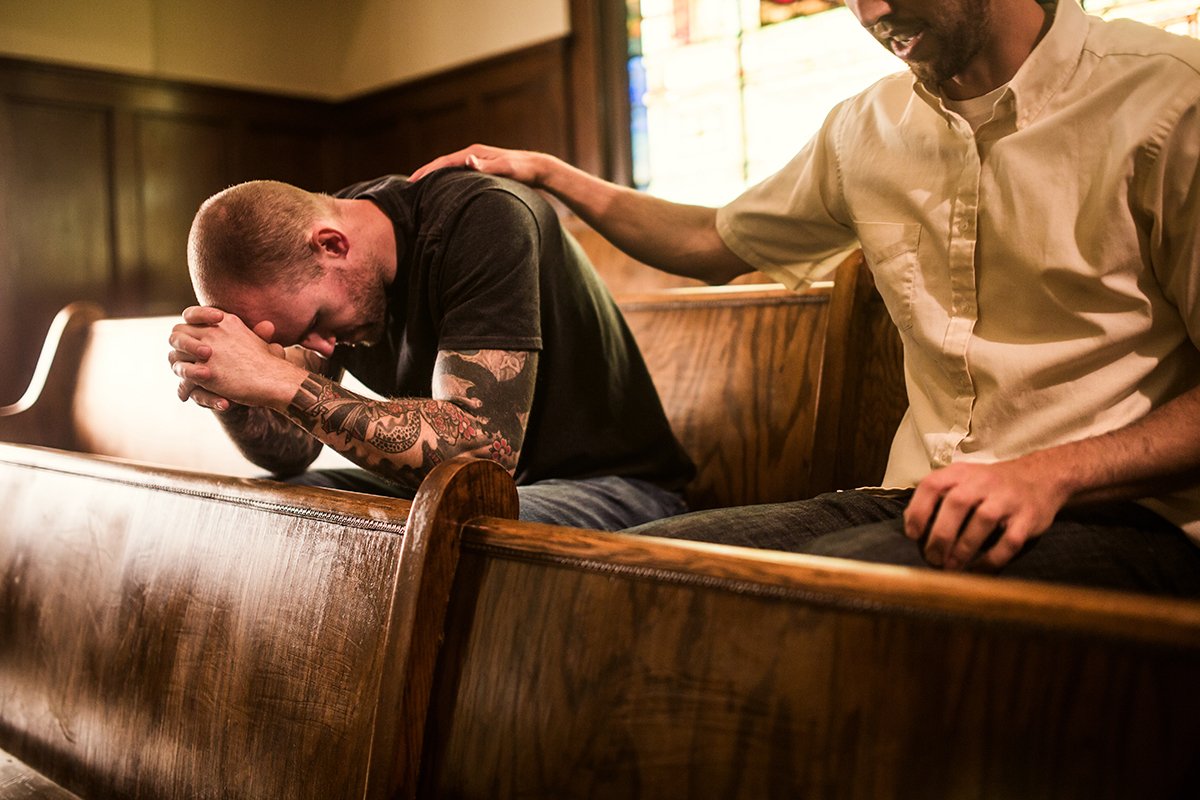
Comfort is a beautiful thing, whether or not you believe in God. You don’t have to believe to enjoy it or to offer it to others. Atheists comfort one another, often beautifully. Criminals comfort one another. People with no religious framework at all run into burning buildings, adopt strangers’ children, and sit with the dying for free. Comfort, it turns out, isn’t a specialty item. Every human being is wired to give and receive it.
As a psychologist, I am intrigued by the mystery of comfort and by how we love to seek and give it. In my times of grief and stress, Paul’s words to the church at Corinth always come to mind:
“Praise be to the God and Father of our Lord Jesus Christ, the Father of compassion and the God of all comfort, who comforts us in all our troubles, so that we can comfort those in any trouble with the comfort we ourselves receive from God. For just as we share abundantly in the sufferings of Christ, so also our comfort abounds through Christ. If we are distressed, it is for your comfort and salvation; if we are comforted, it is for your comfort, which produces in you patient endurance of the same sufferings we suffer. And our hope for you is firm, because we know that just as you share in our sufferings, so also you share in our comfort” (2 Corinthians 1:3-7).
Sometimes I wonder: is what I feel simply the comfort God gives everyone, or something different because I believe in His Son?
Feeling comforted cannot tell you whether that feeling is caused by God, by serotonin, social bonding, or successful self-deception. A thief can feel comfort because a friend keeps him from getting caught, or a man with a mistress can feel more comfort than he gets from his wife.
A felt sense of peace is, by itself, not evidence of anything beyond that sense. No amount of introspection tells you whether your comfort came from God or from something fully explainable without Him.
Christian theology answers some of those questions in the concept of “common grace.” Jesus says God “sends rain on the righteous and the unrighteous” alike (Matthew 5:45), and Paul makes the same point more directly, telling pagan crowds at Lystra that God “did good, gave you rains from heaven and fruitful seasons, satisfying your hearts with food and gladness” (Acts 14:17). The blessings and comfort of God are given to everyone.
But Paul’s words point to a deeper, more puzzling answer: one in which suffering itself carries the comfort forward.
Paul shares in Christ’s sufferings, and through that shared suffering, he receives Christ’s comfort. Because Paul then shares in the Corinthians’ suffering, that same comfort passes to them. Suffering is the link at every step, not an obstacle comfort has to get around. It’s as if one body shared a single nervous system: pain in one member signals through to the rest, and so does relief.
Then Paul gets specific about what he went through: “We were under great pressure, far beyond our ability to endure, so that we despaired of life itself. Indeed, we felt we had received the sentence of death. But this happened that we might not rely on ourselves but on God, who raises the dead” (2 Corinthians 1:8-9).
Ordinary comfort, religious or secular, is a resolution: the danger passes, the need is met, the body and mind stand down.
Paul explicitly denies that his situation has been resolved. He names a threat that, by his own account, exceeded what he could survive on his own resources. The comfort he describes isn’t staked on the outcome improving. It’s staked on a claim that operates on the far side of the worst outcome: that God raises the dead. If true, that claim means the basis for hope doesn’t require the crisis to end well, because it was never betting on the crisis ending well in the first place.
A careful reader might object that this just sounds like the popular psychological idea of mindfulness, but with Christian branding. Modern non-attachment teaching also promises peace by relocating your hope onto what circumstances can’t touch. But the comparison misses a real distinction.
Non-attachment achieves peace by deciding that the bad outcome doesn’t actually matter and training yourself to detach from the result so it can’t disturb you.
Paul does the opposite. He doesn’t perform detachment. He calls the crisis what it was: beyond endurance, a sentence of death, something he despaired over. He isn’t comforted by convincing himself the threat was smaller than it felt or that outcomes don’t matter. He names it honestly, then grounds his hope in a claim that the worst outcome will be reversed, not that it doesn’t matter.
That’s a structural difference, not a difference of mood. Non-attachment requires talking yourself out of caring about the result. This comfort requires facing the full weight of what’s happening and trusting a specific historical claim about resurrection anyway.
The comfort in 2 Corinthians requires full acknowledgment of suffering and the fear of death, no rationalizing it away, no whitewashing.
Dietrich Bonhoeffer, writing under Hitler’s regime that made whitewashing a national habit, called this counterfeit version “cheap grace” — comfort or forgiveness claimed without the reckoning that would make it real.
Paul’s own language elsewhere draws the same line: “Godly sorrow brings repentance that leads to salvation and leaves no regret, but worldly sorrow brings death” (2 Corinthians 7:10). The test isn’t who feels comforted. It’s what the comfort requires: denial or honesty.
Most people reading this aren’t facing a death sentence like Paul. They’re facing something smaller yet more relentless: a mortgage payment, a sick kid, a marriage running on fumes, a job that takes more than it gives back.
Paul actually names this in the same passage. The Greek word he uses for “trouble” appears in 2 Corinthians 1:4 and again in 1:8, describing the crisis he’d just survived in Asia. It means pressure. The sensation of being squeezed from multiple directions at once. That’s a more accurate description of an ordinary Tuesday for a working parent than “suffering” is.
It’s the same word Paul uses for his own near-death crisis, which means the pressure of that Tuesday isn’t a lesser problem waiting to qualify as real suffering. It’s already inside the category Paul is talking about.
Here’s the claim, plainly: Christ died and was raised, so death — the worst thing that can happen to anyone — doesn’t get the final word. That’s what Paul is banking on in 2 Corinthians, and it’s what a parent’s small, unglamorous comfort is quietly borrowing from too.
Set aside, for a moment, whether that’s historically true, that’s a different conversation, one for historians and theologians to argue. What’s worth noticing here is something you can see without settling that question first: this comfort isn’t a trick for feeling better. You can tell, because of what it doesn’t ask of you.
Wishful thinking usually requires a shortcut: either you lie to yourself about how bad things are, or you talk yourself into not caring how they turn out. This comfort takes neither shortcut.
Does it require lying about how bad the day was? No. The parent named it as brutal, not “fine” or “not that bad.”
Does it require deciding not to care how things turn out? No. Paul openly despaired over his situation; he wanted to live. Instead, it asks for the opposite of both: full honesty about how bad things actually are, plus a bet — resting on the resurrection — that the worst of it doesn’t stay that way.
That’s the real offer here, to Paul facing a death sentence and to a parent facing an ordinary Tuesday alike: not a better mood, and not a trick for feeling OK, but comfort resting on something sturdier than the day going well.
Dr. David Zuccolotto is a former pastor and clinical psychologist. For 35 years he has worked for hospitals, addiction treatment centers, outpatient clinics and private practice. He is the author of The Love of God: A 70 Day Journey of Forgiveness.