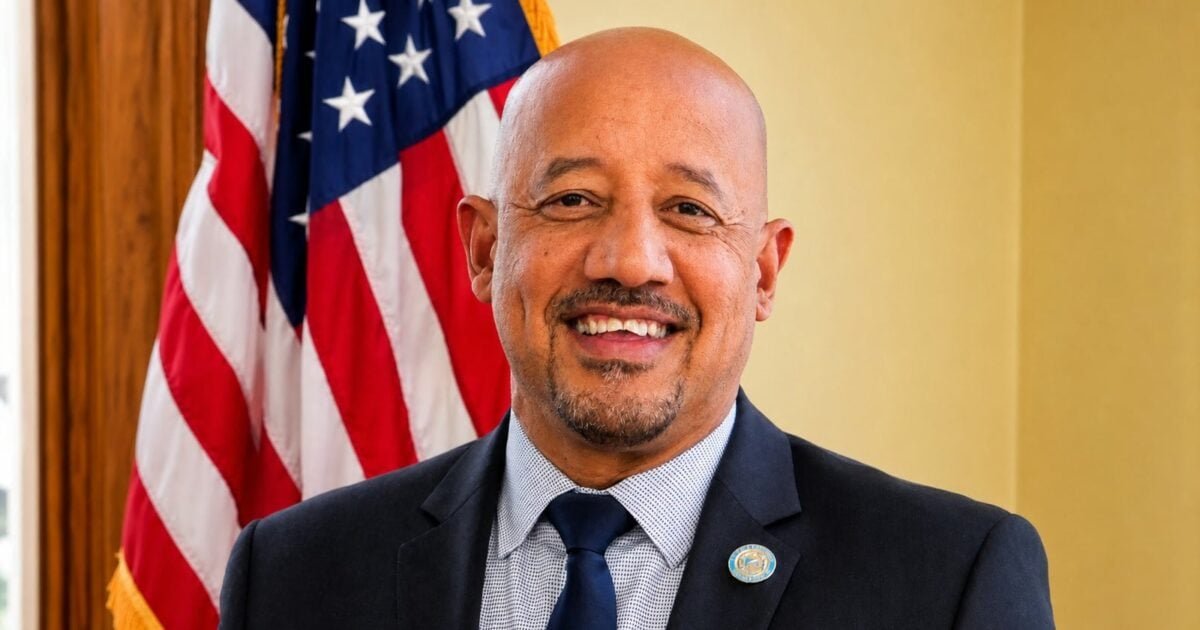
The FBI has arrested the sitting mayor of Lawrence, Massachusetts.
And the federal case is not about a bookkeeping error or a technical campaign-finance violation.
Prosecutors say Mayor Brian DePena turned a taxpayer-backed COVID relief loan into a personal financial escape hatch.
DePena, 61, was arrested Friday and charged with one count of wire fraud and one count of money laundering.
The charges concern more than $1.5 million in Economic Injury Disaster Loan funds issued to Tenares Tire Services Inc., the Lawrence tire and automotive business DePena owned.
JUST IN: 🇺🇸 Massachusetts Mayor Brian DePeña arrested by FBI for $1,500,000 COVID loan fraud. pic.twitter.com/yTR6rl6rfW
— Remarks (@remarks) August 14, 2026
The Associated Press reports that DePena initially received a $150,000 Economic Injury Disaster Loan for his tire business in 2020, when the federal government was rushing emergency aid to small companies battered by pandemic shutdowns.
By the following year, prosecutors say his mayoral campaign was short on cash, he owed personal taxes and he faced pressure from high-interest mortgages on several Lawrence properties, creating financial demands that had nothing to do with keeping the tire shop operating.
DePena then sought multiple increases to the federal loan, even though EIDL proceeds were restricted to legitimate working-capital needs and could not lawfully be redirected to a political campaign, personal tax obligations or unrelated property debts.
The government ultimately raised the loan to approximately $1.65 million, and the federal case now turns on prosecutors’ detailed account of where that money allegedly moved after it reached the business account.
That is where the case becomes explosive.
Federal prosecutors allege that the tire company’s bank account had fallen to just $20.23 before a $350,000 EIDL deposit arrived in August 2021.
They say DePena soon used $85,000 to pay personal tax debts.
Another $120,000 allegedly went into a personal account, with $90,000 then written to his mayoral campaign committee ahead of the 2021 election.
After the government approved another $1.15 million increase, prosecutors say DePena used roughly $883,000 to pay down mortgage debts on properties he owned.
He is also accused of directing another $42,112.96 toward his campaign.
Those are allegations, not findings of guilt. DePena is presumed innocent unless and until the government proves its case beyond a reasonable doubt.
But the numbers in the charging account are remarkably specific.
The money was supposed to function as working capital for a business hurt by the pandemic—not as a campaign account, a personal tax fund or a way to extinguish private real-estate debt.
FBI Boston Special Agent in Charge Ted Docks accused DePena of treating emergency relief as a personal ATM while businesses across the country were fighting to survive.
That distinction matters.
At the height of the pandemic, legitimate small-business owners faced closures, collapsing revenue and uncertainty over whether they could keep workers on payroll.
Every dollar diverted from that mission came from a program built to keep those businesses alive.
The alleged campaign spending makes the case even more serious because it potentially connects taxpayer-backed relief money to the machinery that helped DePena win public office.
The City of Lawrence still identified DePena as mayor at the time of publication. He has held the office since 2021 after previously serving on the City Council.
DePena appeared in federal court in Boston Friday afternoon.
He was released under conditions that include surrendering his passport and refraining from seeking new loans without court approval.
When reporters asked whether he would resign, DePena replied, “God bless.” His attorney repeatedly declined to comment.
If convicted, the wire-fraud count carries a statutory maximum of 20 years in prison. The money-laundering count carries a maximum of 10 years.
Those are maximum penalties, not a prediction of the sentence. Any punishment would be determined by a federal judge after a conviction and consideration of the applicable law and sentencing guidelines.

The government will now have to prove that DePena knowingly obtained the money through fraud and intentionally moved it in the manner prosecutors allege.
DePena will have the right to challenge the government’s evidence and present a defense.
For Lawrence voters, however, the political question arrives long before a jury reaches the legal one.
Their mayor has been arrested, accused of using a pandemic business-relief program to rescue his private finances and help bankroll the campaign that put him in office.
Now the city must decide whether he can continue leading while the federal case moves forward.
This is a Guest Post from our friends over at WLTReport. View the original article here.