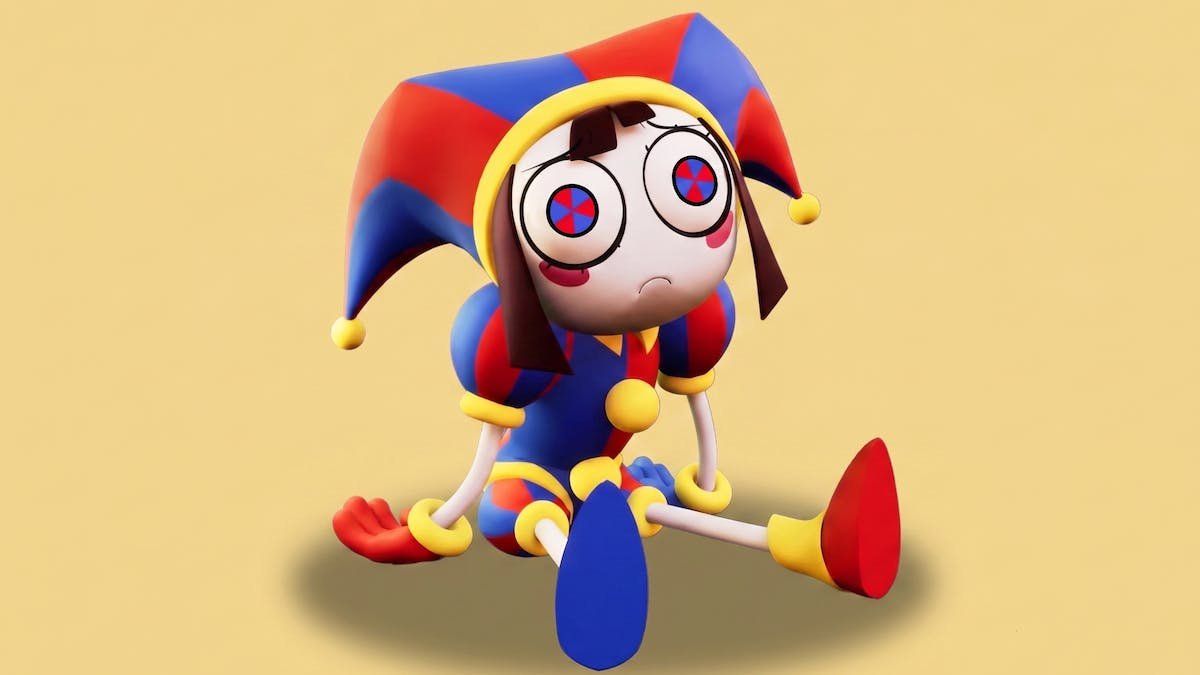
It’s increasingly common to see films slated for big-screen releases get relegated to streaming service premieres. Rarely, if ever, do we see things go in the opposite direction, which makes “The Amazing Digital Circus” all the more notable.
The final two episodes of Glitch Productions’ popular YouTube series got a theatrical release after two years of streaming on the video-streaming platform. The show takes place in the titular Digital Circus, a realm controlled by a godlike artificial intelligence bot named Caine.
That the heroes are teenagers is enough to explain why the show became popular with my generation. But not everything popular among teenagers is destined to blow up like this. What explains the show’s success?
The episodes released in theaters offer a clue. In the finale, we learn that the show’s protagonists are merely the social media avatars of real people. We see those people living happy lives, outside the Digital Circus where the main character, Pomni, and her friends face challenges at the hands of Caine and his world. The characters we’ve come to know are shown to be different from the people controlling them.
This fact — the dissonance between how someone is in real life and how they appear online — speaks to teenagers today. In fact, throughout its run, “The Amazing Digital Circus” deals with issues that young people face as they attempt to strike a balance between the real and digital worlds and struggle with what happens when humans lose humanity.
A kid may be a straight A+ student in school but a wannabe criminal online, or an F student in real life and a nerd online. Maintaining both identities can be hard to manage, something we see in the film. By the end of the movie, the characters have discovered and accepted that they are merely digital, and they choose to move forward with their lives in the Circus. Watching these digital characters accept their artificiality reminds those of us watching the importance of accepting our humanity.
But the protagonists don’t always have an easy time. When a character is overwhelmed with emotion, they experience “abstraction.” Their brain stops functioning and they become a black mass of rainbow eyes, acting like a feral animal in terror.
The fear comes from the idea of being seen as less of a person or being socially dehumanized. In the Circus, this fear is rooted in the fact that the characters are cartoon avatars. But this is, of course, a fear real people have. Do my parents, teachers, or friends see me as less of a person and more of a problem? Something fragile to be avoided? So often we worry about expressing emotions or being vulnerable around our friends out of fear that we too could be reduced to our issues, nothing more than an abstraction.
“Digital Circus” also deals with the lack of control young people often feel. The show begins with Pomni awakening in the Circus, with no idea how she got there and no ability to change her course. This is certainly a common feeling among teens, one I’ve felt myself.
With its theatrical release, “Digital Circus” did more than just give voice to the alienation young Americans feel. It also gave them an opportunity to break free from the digital world and connect with each other in person. I felt quite underdressed in a flannel and sweatpants, surrounded by screaming fans in full cosplay and “Digital Circus” merch.
The staff repeatedly warned the crowd to be quiet. No one listened. There was singing, screaming, crying, and cheering — and that was just my friends.
For any other film, this would have made for a terrible viewing experience. But here it made sense. We weren’t there for the cinematic experience, but the camaraderie. We were there to mingle with other fans, break the anonymity of the internet, and have a social life off-screen.
For two years, “The Amazing Digital Circus” has helped its fans grapple with, and even escape from, the abstraction and oppression of digital life. By premiering its final two episodes in theaters, it provided a real-world opportunity for fans to come together as a community. That’s why it’s breaking the industry and why so many teens, and maybe even some adults, love it.
***
Charles Marcus is a high school student in West Virginia who writes about the unique challenges his generation faces.
This article is part of Upstream, The Daily Wire’s new home for culture and lifestyle. Real human insight and human stories — from our featured writers to you.