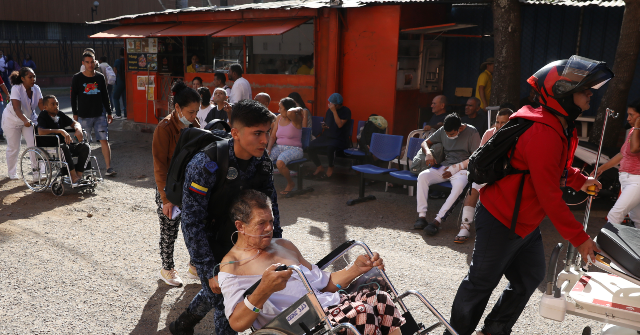
The Geological Service of Colombia confirmed a magnitude 7.4 earthquake rocking the country around 7:34 a.m. local time in the western region of Chocó, potentially causing significant damage.
The earthquake has already prompted at least one aftershock recorded at upwards of magnitude four. Locals in Chocó, Cali, and throughout the west of the country had recorded alarming videos of buildings swaying, their windows crashing down and leaving trails of debris on the streets. At press time, however, authorities have not documented any deaths, though local officials in Chocó warned that they expect a high number of casualties.
Colombian seismic authorities typically document about 2,500 earthquakes in the country each year, but most are of negligible intensity and not noticed by the general population.
Dramatic videos of affected areas indicate that some buildings have suffered structural damage although they have not yet fallen. One video shared by the magazine Semana showed significant damage to a military station in Buenaventura.
In the city of Cali, locals documented buildings with their windows broken and streets covered in glass and other debris.
Other videos show significant damages nationwide:
The earthquake arrived about a month after twin earthquakes of similar magnitude — 7.2 and 7.5 — struck in the heart of neighboring Venezuela. The impoverished socialist country documented as many as 50,000 people missing and the collapse of entire blocks of buildings, a product both of being hit by two high-magnitude earthquakes and two decades of socialist government incompetence and corruption, which led to a lack of appropriate safety regulations in the construction of high-rises for earthquake-prone areas.
As of Monday morning, the Colombian newspaper El Tiempo reported that the Colombian cities of Bogotá, Eje Cafetero, Tolima, Huila, Valle del Cauca, Manizales, and Medellín, in addition to San José del Palmar in Chocó, have announced evacuations of buildings to prevent people from being caught in potentially imminent collapses. The Chocó department (the state-level divisions of Colombia) is expected to document the most damage, however. Governor Nubia Carolina Córdoba issued an online update in which she described the incident as a “grave seismic event,” adding, “we are concerned about aftershocks.”
At least one aftershock, documented at 4.6 magnitude, has occurred so far, centered also in Chocó.
“Although the epicenter was in San José del Palmar, in the capital Quibdó there are injured and grave damages to buildings,” Córdoba shared. “We are evaluating the damages to publish the first official report.”
Colombian President Abelardo de la Espriella, facing his first crisis as president since his inauguration on Friday, issued a statement announcing he would personally oversee national earthquake response.
“I have directly assumed leadership of the emergency response in San José del Palmar. I have ordered the establishment of a Unified Command Post to coordinate the attention to the damages and the affected individuals,” he wrote, adding that he was asking the country’s earthquake experts for a “detailed report” including what areas need the most urgent attention. He also announced travel to Pereira to meet with those affected.
“The State is present and acting,” he assured citizens.
Speaking to Colombia’s Caracol Radio, Javier Pava, the director of the National Union of Risk Response (UNGRD) — the national emergency response agency — explained that early reports indicated the earthquake was “felt very strongly.”
“We are activating in this moment the crisis response center with the National Disaster Committed to consolidate data and activate all immediate response protocols that we have for earthquakes,” he shared.
Pava said his agency has documented damage in nine departments of the country and has received up-to-date reports from all 32 department capitals.
“What we need is for first responders, which is the local authorities… to identify the damages, report it at the department level, and then at the national level, to disperse all resources according to the needs presented,” he added.