Tamer A Soliman/Shutterstock
In 1899, David Misell, a Brit living in New York City at the time, patented the first modern tube flashlight (patent number 717,592), a handheld device he called an electric hand torch that used three dry-cell batteries and an incandescent bulb. While flashlight is a term used in the U.S. for a portable light, the rest of the world refers to them as torches, sort of like how the rest of the world calls a certain game football and Americans call it soccer.
Regardless, the brightness of any light is measured in lumens. The wattage of a bulb, which many people in the U.S. base their purchase on, indicates how much energy it uses and has nothing to do with how much light it casts. LEDs are different from, and far more efficient than, standard incandescent bulbs. One standard 60-watt incandescent bulb emits about 800 lumens. An LED draws only 6-12 watts yet has the same brightness. 10,000 lumens is as bright as six standard 100-watt incandescent bulbs. Thankfully, LEDs can last anywhere between 20,000 and 50,000 hours, years longer than an incandescent bulb.
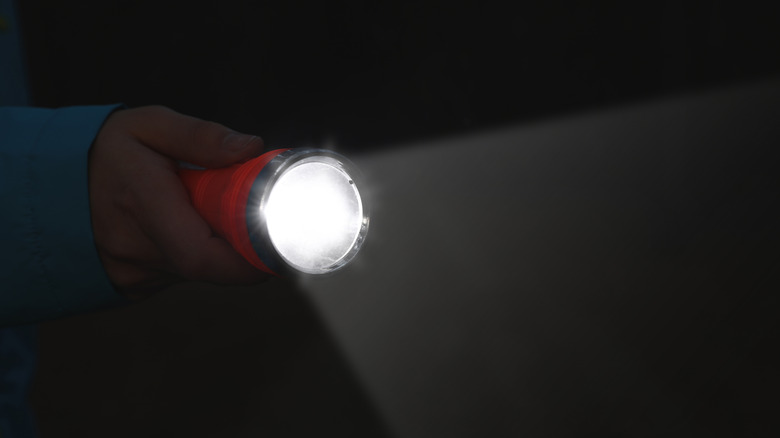
Here’s where we shed some light on reality: maintaining that much brightness for any length of time requires far more power than a small handheld device can provide. It’s a simple matter of physics. A flashlight’s brightness decreases as batteries drain, which, at 10,000 lumens, happens in a matter of minutes. What’s more, batteries generate heat, which not only compounds the power drain but also requires an internal fan to keep them from overheating.
Brightness is determined by battery power
New Africa/Shutterstock
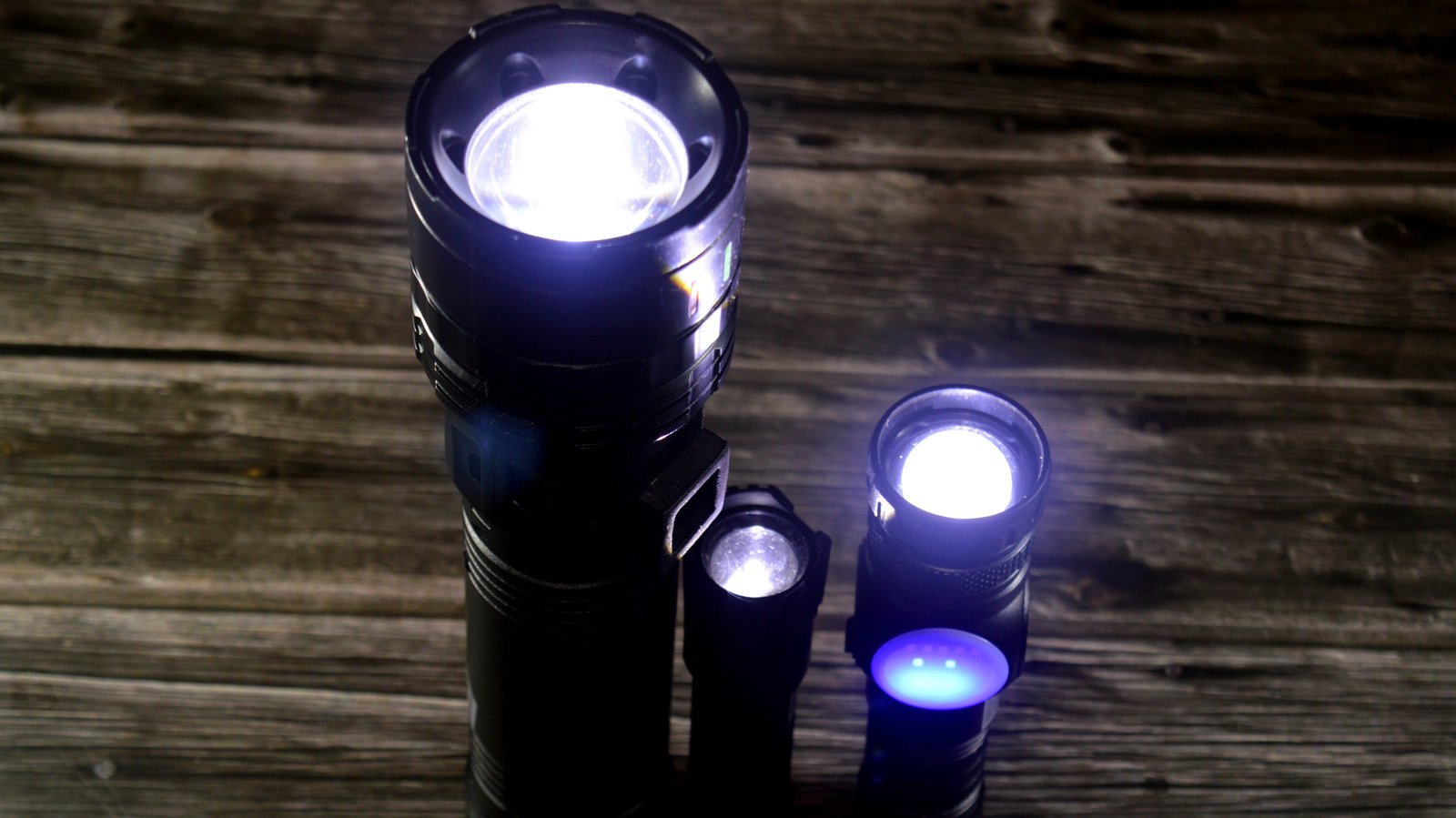
Sites like 1Lumen Flashlight Reviews and Dave’s Tech Reviews test torches frequently and found that the Imalent MS03 – touted as having 13,000 lumens — could only maintain that output for 45 seconds before automatically stepping down to just 2,000 lumens due to the heat generated. Wuben’s X1 — advertised at 12,000 lumens — dropped to 9,566 lumens after only 30 seconds. It’s capable of sustaining that brightness for a good 10 minutes before it, too, steps down to 2,500 for a few hours. Similarly, the Nitecore TM9K Pro peaks at just over 10k lumens when first turned on, but after only 30 seconds drops to a mere 2,301 lumens.
The point is, to achieve anything beyond a few minutes of brightness at 10k, the flashlight itself has to be capable of much higher lumen levels — 50,000 to 100,000. This makes them much bigger (for all the battery space needed), which in turn requires active cooling fans, all of which makes it heavier. The average weight of a standard tactical handheld flashlight (with much lower luminosity) ranges between 3 and 7 ounces. The Imalent MS32, the world’s brightest flashlight, which claims to provide 200,000 lumens (more than 100 car lights) and can throw a beam over one mile, weighs almost 7 pounds.
In case you’re wondering about the built-in flash/light on your cellphone, it typically outputs only 40-50 lumens, or roughly that of a 2.5-watt bulb. It can get you by in a pinch, but only barely. So if you really want to vanquish the blackest night as long as possible, be sure you’re carrying something truly powerful enough to get the job done.