
Village sees 50 days without rain during summer heatwave

ByMatt Taylor
Lead Weather Presenter
As the extremely dry spell continues across much of England and Wales, a small village in Surrey has notched up 50 consecutive days without rain this summer.
Wisley, most famous for being the site of the 240-acre garden owned by the Royal Horticultural Society, saw 36 continuous dry days back in the hot summer of 1976 – but has comfortably exceeded that number so far this year, with no rainfall since mid-June.
It comes after the driest July for England and Wales since Met Office records began 190 years ago, external.
Meanwhile, the UK Health Security Agency (UKHSA) has issued further yellow heat health alerts, external for most of England this weekend as the temperatures start to build again. The alerts cover the Humber, West and East Midlands, east of England, London, and the South East and South West from 09:00 BST on Saturday until 21:00 on Tuesday 11 August.
Why has there been no rain?
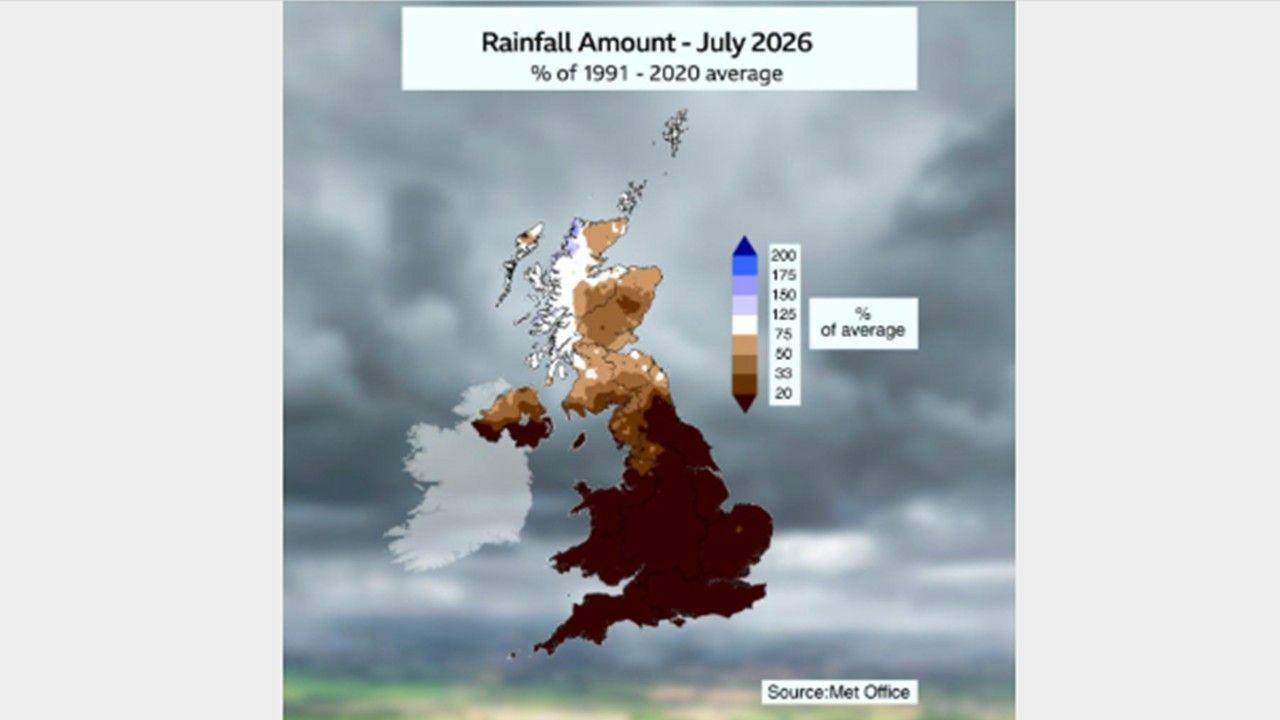
Met Office data shows that most of the UK had below average rainfall in July
High pressure has dominated the weather since late-spring, caused by a large zone of air descending through the atmosphere. This largely acts to prevent rain clouds building up.
Only 6.5mm (0.25in) of rainfall was recorded in England and only 9.3mm in Wales – both less than half of the previous records for the nations.
As this has been centred across mainland Europe, southern areas of England and Wales have been impacted more by the dry weather.
Any rain that has fallen has been in the form of well scattered showers meaning many areas – like Wisley – have completely missed out.
Scotland and Northern Ireland, by contrast, have been on the edge of the high pressure systems where rain clouds are occasionally directed.
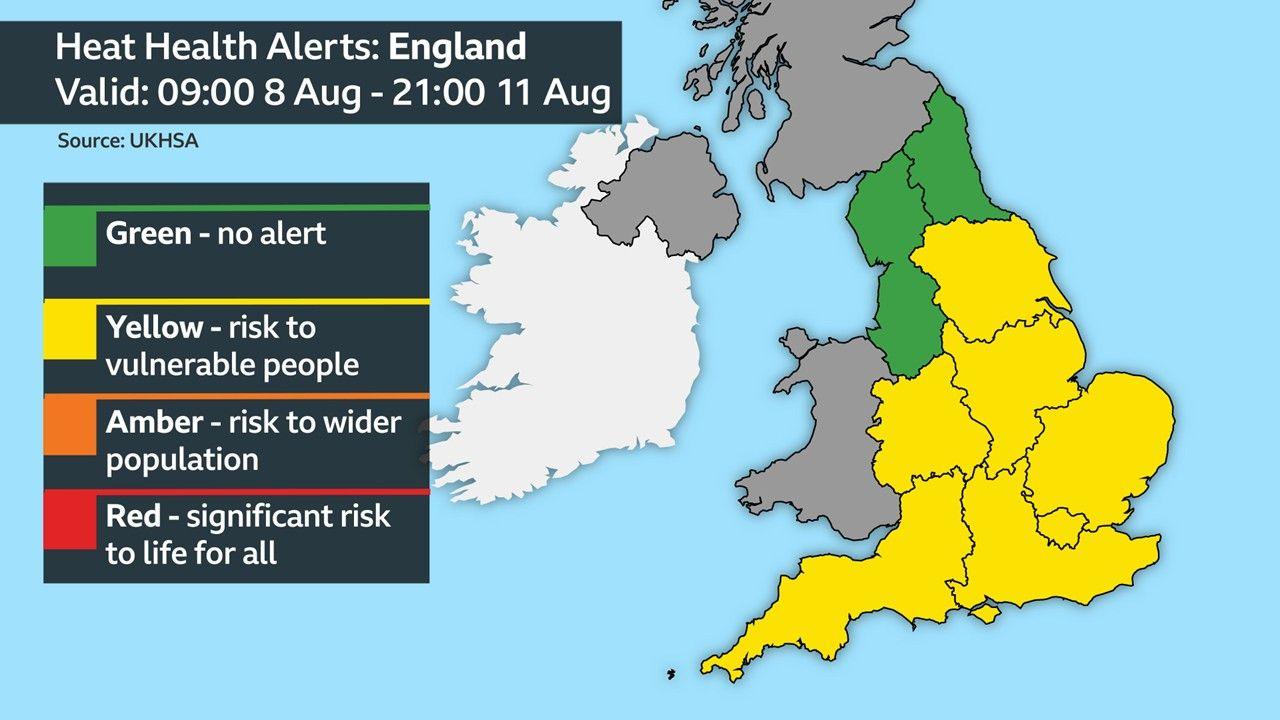
Large areas of England are affected by the latest heat health alerts which start on Sunday
The same high pressure systems that have kept rain away have also brought sunny skies and surges of prolonged heat.
Despite the current return to more normal August conditions, forecasts are suggesting further surges of heat over the coming week prompting the UKHSA yellow heat health alerts.
Daytime temperatures in the affected areas are expected to climb back into the high 20s if not low 30s Celsius. Some forecasts hint at the potential of a further heat spike later next week with highs into the mid-30s possible.
The UKHSA is warning that minor impacts are likely across health and social care services. Use of healthcare services by vulnerable people is expected to increase, with a greater risk to life of vulnerable people.
There will also be an increased potential for indoor environments to become very warm, and water related incidents may increase, including risks from cold water shock and drowning.
When will it rain?
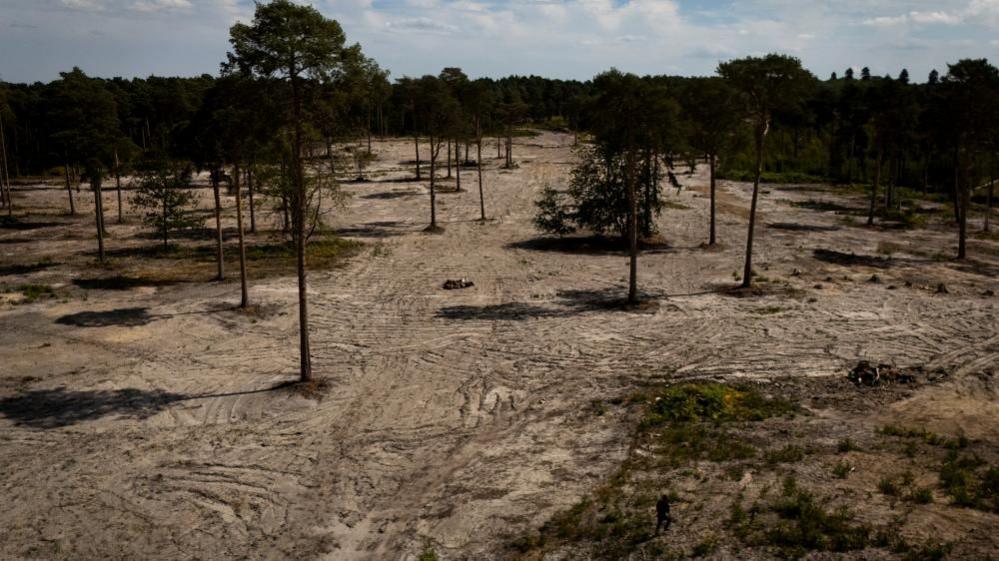
The parched land is visible at Ockham Common near Wisley, Surrey, after the driest July since records began
With parts of eastern Scotland in significant water scarcity, the whole of Wales and more than half of England in drought, there has been relief that some areas have seen some rain this week, particularly parts of Scotland, Northern Ireland and northern England.
However, not enough fell in the drought-hit south to provide any meaningful relief with another water company introducing a ban on hosepipe use for its customers in Essex and Suffolk on Monday.
There is no defined amount of rain that would see a drought end. It depends on a number of factors including how much rain falls, where it falls, and how regular or prolonged the downpours are.
The speed at which rivers, reservoirs and groundwater storage tops up is also important, but this needs to be balanced out against the demand we and industry put on water supply.
The drought in 2025, which lasted around six months for some, only ended in the autumn when the UK experienced “weather whiplash” – a sudden change in weather patterns that brought weeks of above-average rainfall.
Despite forecasts showing our weather becoming slightly more variable over the next few weeks, including further hotter spells again, dry conditions continue to dominate for many and there is still no sign of any drought-busting rainfall.