The garden is said to include “herbs that have been used over thousands of years for fertility, contraception and abortion.”

minute read
A club at a public university in southeastern New York has been running a garden that is home to plants documented to cause miscarriages, with the student-run garden being called the “Reproductive Justice Garden.”
Per College Fix, the garden was launched in 2019 and revamped in 2024 by SUNY Purchase College’s COPE club, which stands for Collective Organizing for Pleasure and Equity. The group describes itself as a safe space for “females and those assigned female at birth,” while the garden is described as one “about menstrual, reproductive, and mental health.”
In a post on the blog “how to perform an abortion,” the garden is said to include “herbs that have been used over thousands of years for fertility, contraception and abortion.” The garden is hosted at the school’s Richard and Dolly Maass Gallery alongside the Reproductive Justice Waiting Room. The garden and waiting room is described as a “learning and art project that demystifies the historical, biological, and ethical stories surrounding abortion.”
In one September 2024 post, the garden’s Instagram account highlighted peacock flower, or Caesalpinia pulcherrima, saying that the plant would be used by enslaved black women as an abortifacient. “By drinking the seeds, leaves, or flowers of the plant in tea-form, enslaved women could induce a miscarriage.”
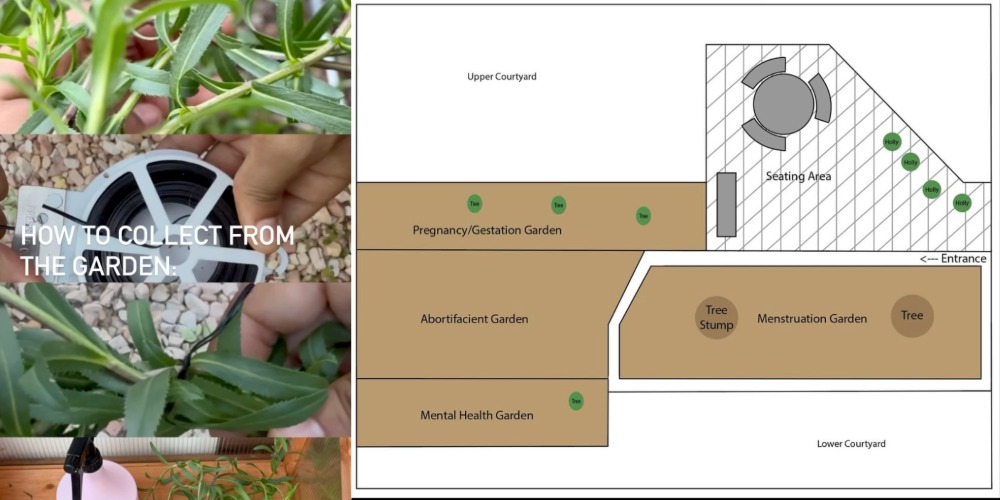
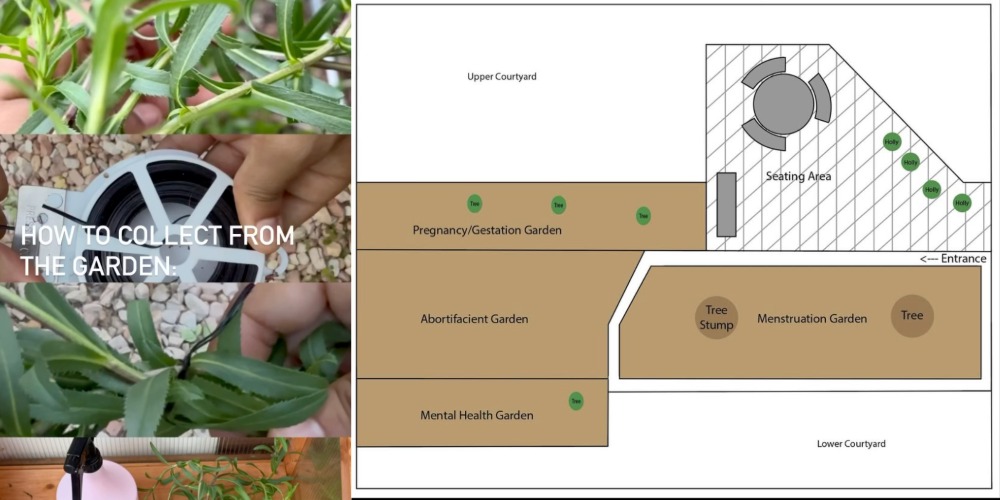
It is unclear whether the garden currently houses peacock flower, however, an October 2024 garden layout posted to Instagram showed a whole section dedicated to abortifacient plants, as well as plants for “pregnancy/gestation” and menstruation.
In a September 2025 post, the club offered instructions to students on how to harvest and collect plants from the garden.
Melanie Israel, a visiting fellow at The Heritage Foundation and pro-life advocate, told the outlet that herbal abortifacients are risky because dosages and effects are difficult to control. She said, “Herbal abortifacients in the hands of unsupportive partners and abusers could be, potentially, even more dangerous than the more predictable (but still risky) FDA-approved drugs.”
“The wrong dosage of an herbal method can be toxic,” she said. “There could be a scenario where it’s not just a matter of a forced/coerced/sneaky abortion. It could be a forced abortion that also poisons a woman, using a plant with a really unpredictable margin for error.”
She later added, “If it crosses into the territory of providing/distributing plant materials for the intent to cause an abortion, that gets into all kinds of questions about unlicensed practice of medicine and other regulatory questions. I’m not asserting that it’s happening, but asking what kind of safeguards are in place raises very serious concerns.”
Join and support independent free thinkers!
We’re independent and can’t be cancelled. The establishment media is increasingly dedicated to divisive cancel culture, corporate wokeism, and political correctness, all while covering up corruption from the corridors of power. The need for fact-based journalism and thoughtful analysis has never been greater. When you support The Post Millennial, you support freedom of the press at a time when it’s under direct attack. Join the ranks of independent, free thinkers by supporting us today for as little as $1.
To find out what personal data we collect and how we use it, please visit our Privacy Policy