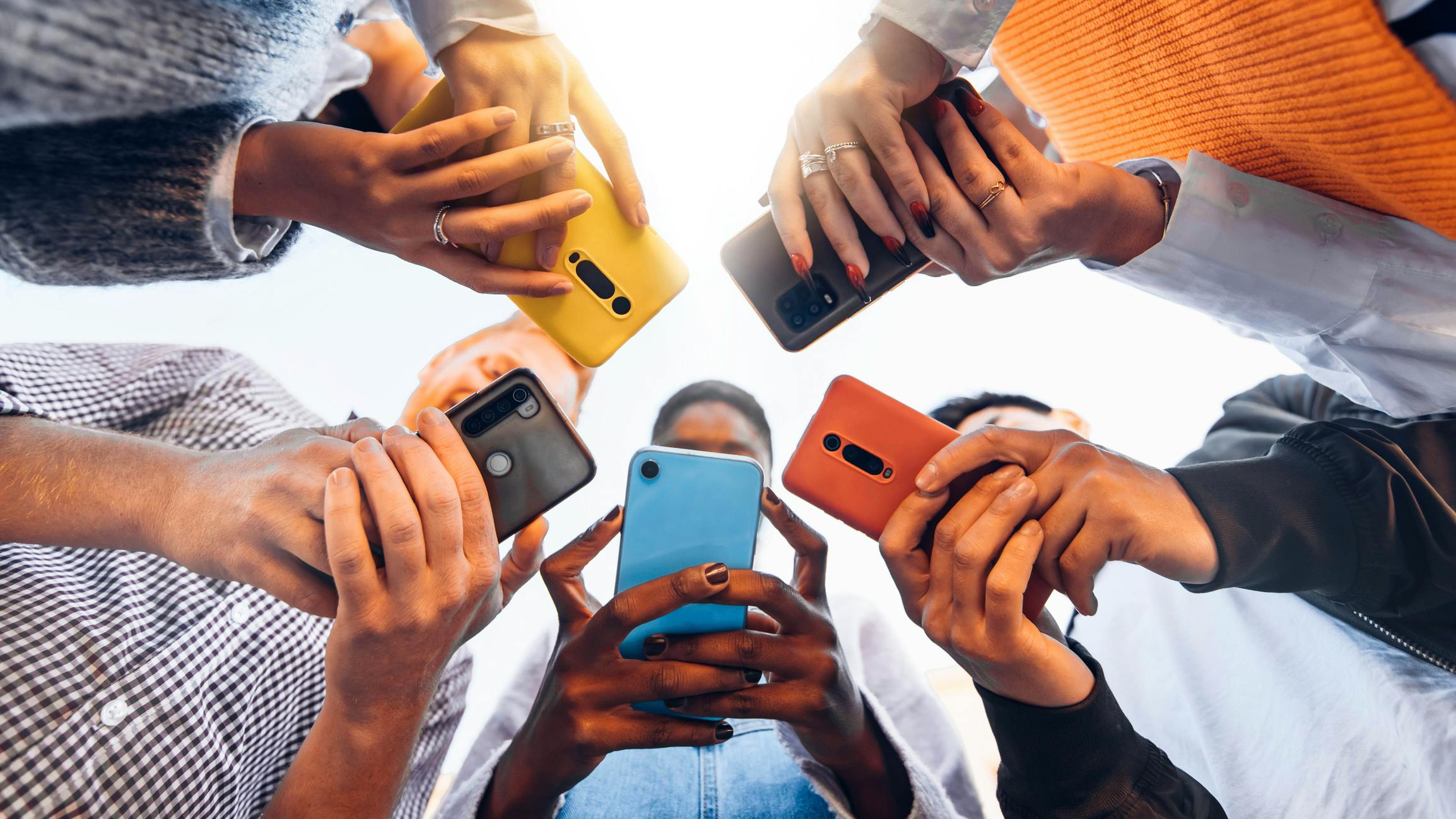
Be honest: Are you reading this on a cellphone right now?
Even if you’re not, will you make it through this whole article without looking at your phone?
That urge to check your phone is the same intrusive, compulsive pull that kids as young as kindergarten are feeling in America’s classrooms, every hour of every day.
That truth is why dozens of states have done something that seemed impossible a few years ago: They’ve banned cell phones in schools from bell to bell.
If your state isn’t one of them, it’s time to ask why not — and how your students are at risk of falling behind.
By the time kids are 10 years old, in fourth or fifth grade, roughly half of them already have their own smartphone. Phones are competing for attention with teachers, friends, books, physical activity, hobbies, and learning.
And in the minds of millions of schoolchildren, the phones are winning.
This must change.
Cellphones in schools is the rare issue with almost universal consensus — blue states and red states, academics and parents, teachers, principals, and even a significant number of students.
The science is clear. Academic performance has been steadily declining in the decade since smartphones have been widely adopted. Today, America’s high schoolers have the lowest levels of reading and math achievement in recent history.
It’s clear the phones are the problem. Smartphone use by adolescents has been definitively linked to less time spent on schoolwork, poor cognitive control, and poor academic performance — and schools that have banned cellphones have seen learning gains and behavior improvements in their students.
The American people agree. By nearly a four-to-one margin (74% to 19%), adults support a ban on cell phones during class time. This reform is popular with Republicans, Democrats, and Independents alike.
Teachers and principals also agree. One survey found 86% of principals in schools with a cellphone restriction endorse the benefits, including impact on “school climate, a reduction in inappropriate cellphone use, and a reduction in cyberbullying.” Teachers point to fewer disruptions in the classroom, with 90% of teachers surveyed supporting a ban during class time, and 83% supporting a bell-to-bell ban. Even six in 10 students support at least some restriction.
Moreover, Republican- and Democrat-controlled states are moving in the same direction at the same time. When governors from such different perspectives as Kathy Hochul (D) of New York and Sarah Huckabee Sanders (R) of Arkansas both agree on a bell-to-bell ban, the issue has transcended politics into the realm of common sense.
Unfortunately, the details are where this consensus starts to fray.
Of the 44 states that have enacted some form of law or policy on cellphones in schools, only 26 have bell-to-bell bans covering the full school day. A common policy among states and school districts is the simple “no show” policy, where a phone has to be out of sight, but can be carried in a pocket or backpack.
Anyone who has ever tried to cut down on their own screen time knows that the temptation can be too hard to resist. Two experiments found that “the mere presence of these devices reduces cognitive capacity” — even when people are actively trying to resist the distraction.
Adults in the U.S. look at their phones an average of 186 times per day, or about once every five minutes we’re awake. The jumble of notifications, colors, dopamine rewards, addictive behavior, and the sheer volume of information means that there is only one solution that policymakers should consider.
When it comes to cellphones in schools, it has to be cold turkey.
It’s time for policymakers in the states that have not yet passed a cellphone ban to catch up. Every school year that goes by with students forming bad habits and deepening their reliance on their phones puts them another year deeper into distraction and isolation.
And the states, schools, and districts that have a partial ban in place (allowing phones in pockets and during breaks and lunch periods) need to understand that these half measures aren’t enough. Students sneaking a peek during class or cramming in screen time outside the classroom degrade the learning environment. In fact, phones in schools have been shown to have a negative effect on academic performance even for students who do not personally use a device.
Returning to the original question: Did you make it this far without looking at, or thinking about your phone?
If the answer is no, imagine what it’s like for our kids.
***
Liesel Crocker is a senior research fellow at the Foundation for Government Accountability.