By Anugrah Kumar, Christian Post Contributor
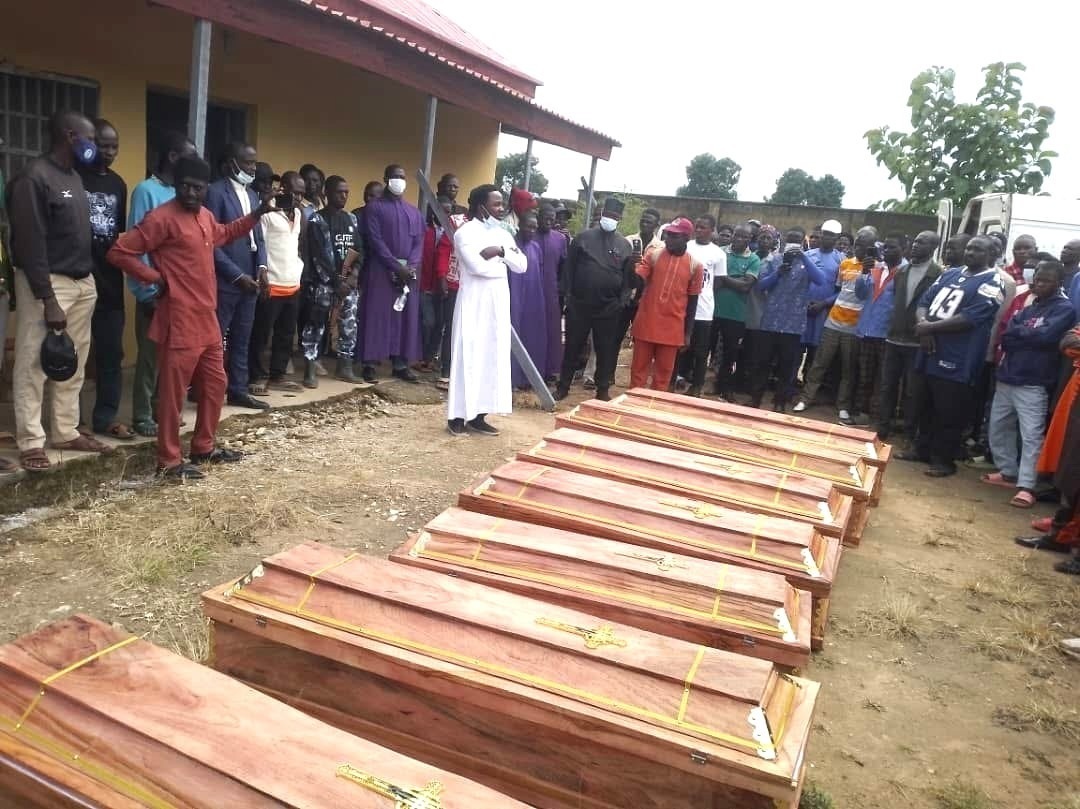
The United States has condemned the recent killing of nine relatives of Rev. Ezekiel Dachomo, a Nigerian pastor whose earlier appeal had warned that “fear has become a way of life” in the country’s Middle Belt.
Frank Garcia, the U.S. assistant secretary of state for African Affairs, raised the killings with Nigerian officials the previous week and said that more had to be done to stop such attacks, according to a statement from the State Department’s Bureau of African Affairs.
Garcia called the continued violence against Christian communities and other at-risk groups in the region “deeply alarming.” The agency said perpetrators had to be held accountable and security strengthened without delay.
“We extend our deepest condolences to the victims’ families and all those affected. As I discussed last week with Nigerian officials, we must do more to prevent violent acts like those yesterday,” the statement reads.
“The perpetrators must be held accountable, and urgent action is needed to strengthen security and protect Christians and other vulnerable communities. The United States remains committed to working with the Nigerian government and our partners to combat terrorism, counter violent extremism, and ensure that Christians and all Nigerians can live and practice their faith freely without fear of violence or persecution.”
The renewed focus had followed a video of Dachomo seeking U.S. intervention that President Donald Trump reposted.
In his prayer request Thursday, Dachomo wrote of walking each day into villages gripped by fear, comforting widows whose husbands were killed for their faith and praying with children left orphaned overnight. His team traveled knowing they might not return, heard gunfire at night, and kept on because the love of Christ compelled them, he wrote.
Nigeria’s roughly 230 million people divide almost evenly between Islam and Christianity, with Muslims forming the large majority in the northern states, 12 of which apply sharia law, and Christians predominating in the south. The Middle Belt, the central band that takes in Benue, Plateau, Kaduna and Nasarawa, is where the two faiths mix and where most of the killings tied to Christian communities occur.
Radical Islamist groups have killed dozens of people in the country’s north in July, among them nine of the pastor Dachomo’s wider family, according to Truth Nigeria, which first reported the deaths.
The July 11 attack on Rev. Dachomo’s family hit a remote village to the south of Jos, the Plateau state capital.
Several other attacks in Plateau and Benue states followed.
One left four people dead 56 miles to the southeast of Jos, in an area thought safe because nothing of the kind had struck there before.
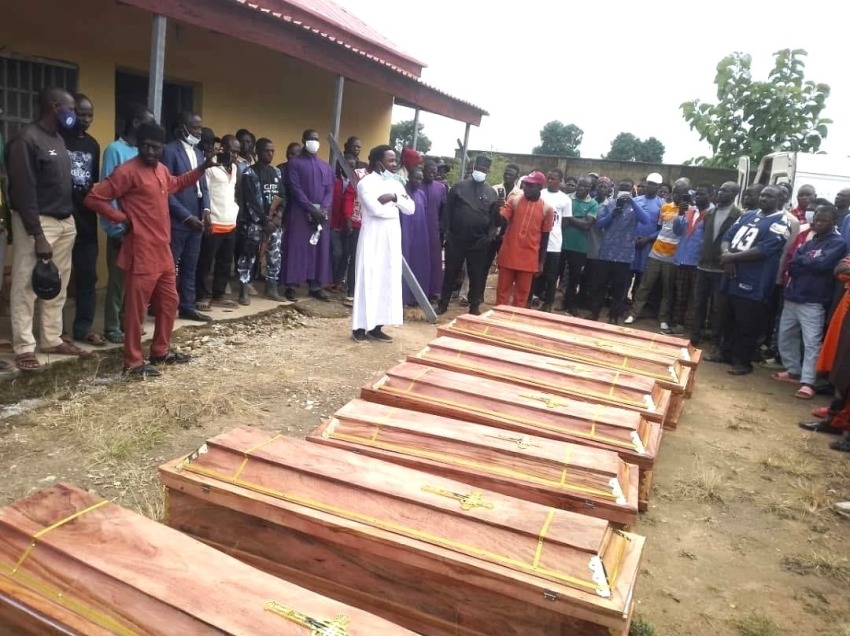
Gabriel Dewan, a former speaker of the Plateau State House of Assembly, told a mass funeral for the victims this week that the killings had come after unidentified helicopters were seen setting down in Fier district forests, in the Takkas area of the Pankshin Local Government Area, Truth Nigeria reports.
Dewan said that when helicopters land in isolated spots in the country’s northeast and northwest, it means weapons are reaching terrorists, and he urged the police and army to clear those areas. He said those responsible had to be arrested and prosecuted, and he asked for the U.S. role to reach the Middle Belt states.
The condemnation came amid fresh debate in the U.S. Congress and closer cooperation between Washington and Abuja on counterterrorism.
Members of the U.S. Congress recently raised the bloodshed and the Nigerian government’s response to the U.S. Ambassador to the United Nations Mike Waltz.
During a hearing this week, Rep. Chris Smith, R-N.J., chairman of the House Foreign Affairs Subcommittee on Africa, said Christians remained the main target of radical Islamists and that Muslims who spoke out faced danger too. He named Boko Haram, the jihadist group ISIS West Africa and Fulani militants, and said more had to be done.
“Yes, we are taking the persecution of Christians very seriously,” Waltz said. “And we’ve seen the Nigerian government move as a response to the president’s attention, our attention. … They’re cooperating with us more than they were on counterterrorism. They’re cooperating in terms of their security force capacity. They still have some work to do, frankly, in terms of the Sharia law that is in place in many of these local provinces. And make no mistake, churches are being burned, pastors are being executed, people are being arrested literally for just wearing a cross around their neck.”
Sen. Ted Cruz, R-Texas, criticized Nigeria’s handling of the crisis in a post on X and praised the House for keeping attention on it. Nigerian officials, he wrote, had created conditions that let mass violence proceed against Christians and other faith minorities through blasphemy and sharia laws, while turning away from jihadist attacks.
Cruz said he was pushing a bill to sanction the officials responsible. Those officials, he said, had run a public relations campaign against critics rather than answer U.S. concerns.
“They were confident in that campaign and in their ability to continue the status quo, and I am heartened that the House has just definitively proven them wrong,” Cruz wrote.