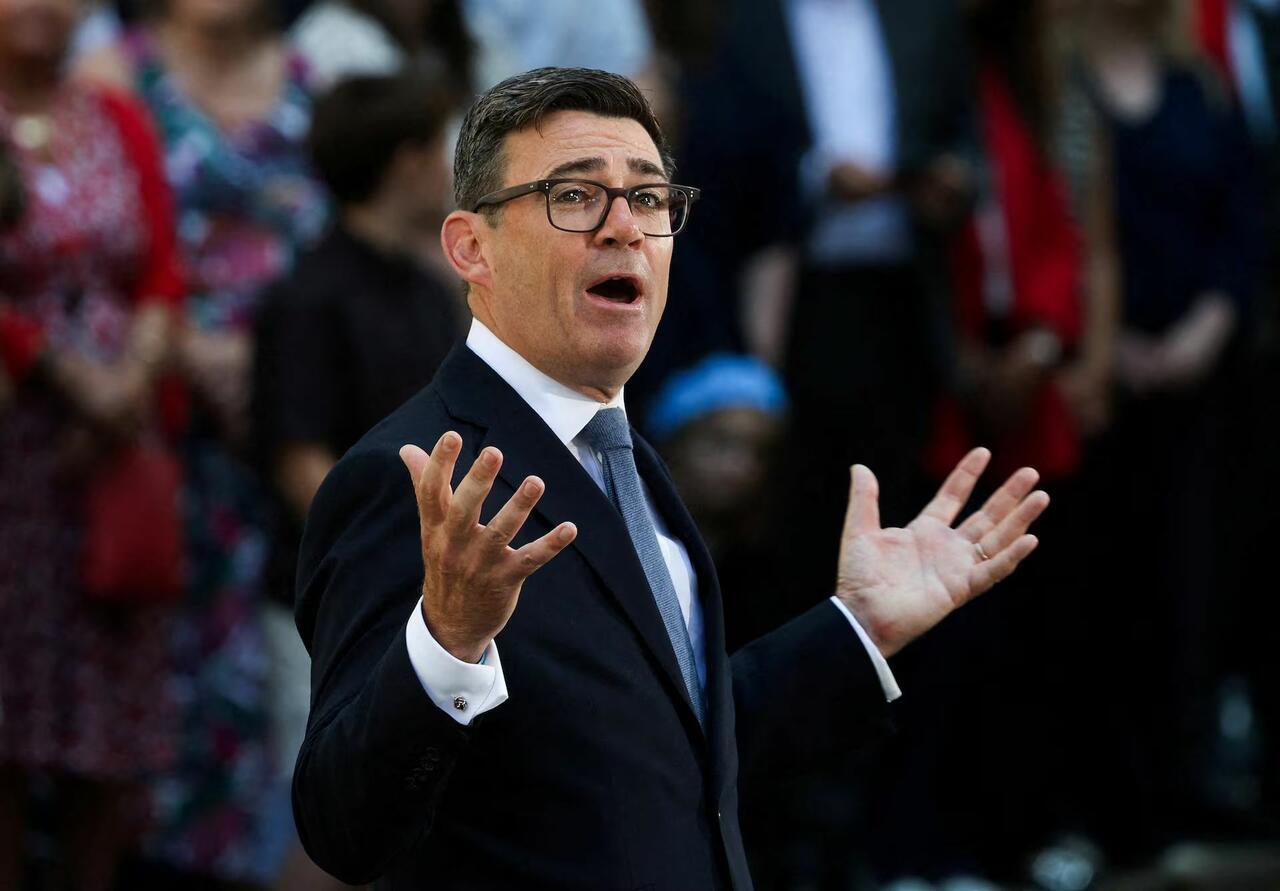
Andy Burnham has been UK Prime Minister for three days, and he has already settled into a routine: announce something cheap for households in the morning, pay for it by killing a progressive unicorn.

The tally so far:
Monday, within hours of kissing rings at the Palace, Burnham signaled he would fast-track oil and gas development in the North Sea – which is just words for now, but ‘un-Labour’ enough that Donald Trump welcomed it in the same post that dismissed Britain as a “Poverty Stricken Disaster.”
Tuesday: VAT stripped from domestic electricity bills from October 1, funded by cancelling Starmer’s £1.8 billion Digital ID programme outright. BritCard – the surveillance flagship that survived a near-three-million-signature petition and a year of civil-liberties fury – died in the end as a budget line, sold for parts to buy down winter energy bills.
And Wednesday: a £2 nationwide cap on single bus fares from January 1, 2027, running through that year, announced by a Prime Minister insisting cheaper transport was always possible: “I’ve done it before and I will do it again.” The funding? A £454 million package drawn entirely from a “reprioritisation” of the Department for Energy Security and Net Zero’s budget – the bulk of it from converting investment money earmarked for international climate finance into repayable loans. The climate budget pays the bus fare.
Whose Money Is It Anyway
The government’s line, delivered by Chancellor John Healey, is that all of this is funded from savings rather than borrowing, with no burden on taxpayers. Except – on the Digital ID swap, the OBR has pointed out that the £1.8 billion BritCard budget was never actually funded in the first place – meaning its cancellation conjures savings from a line item that existed mostly on paper. On the bus cap, the £454 million covers a scheme whose total cost is expected to top £500 million, with the gap filled by Department for Transport money “already allocated to buses.”
The climate-finance maneuver is the cleverest of the three, and the department has an answer ready. Converting grants to loans, DESNZ argues, frees the capital for bus fares while still allowing Britain to invest in international climate projects such as the Tropical Forests Forever Facility – the money goes out either way, it just comes back now. Which is true, if it comes back. A grant that becomes a loan books a saving today against a repayment that lands in somebody else’s parliament.
Critics are abuzz in response. Shadow Transport Secretary Richard Holden’s complaint begins with the observation that the Conservatives “introduced the £2 bus fare cap, expanded it, and pledged to keep it” – which is to say, the Tories’ first objection to Britain’s new left-wing government is that it is stealing their policies. He then asks how Labour intends to pay for any of it, and predicts borrowing or taxes will have to rise. On that second point he is asking the same question the arithmetic asks. A 20% business-rates cut for hospitality is reportedly next in the queue. There will presumably be something progressive left to defund by then.
The Mayor’s Playbook
Burnham, it appears, is basically going to run Britain the way he ran Greater Manchester for nine years; bills, bus fares, and no patience for Whitehall’s pet schemes. The £2 cap is literally his Manchester policy gone national – he kept it there out of his own budget when Starmer and Rachel Reeves raised the national cap to £3 in 2024 – and the loser, three days running, has been his own party’s managerial wing: the ID cards, the climate money, the net zero department’s budget. Ed Miliband, the climate agenda’s standard-bearer, can do the math from his new office – packed off to the Foreign Office on Monday evening – roughly 36 hours before his old department’s budget was raided to subsidize bus tickets.
The gilt market is letting all this slide for one simple reason: he is raiding, not borrowing. The 10-year yield jumped 8 basis points to 5.04% on Burnham’s first-day rhetoric, then retreated in relief once Healey – a defense hawk, not a spender – got the Treasury.